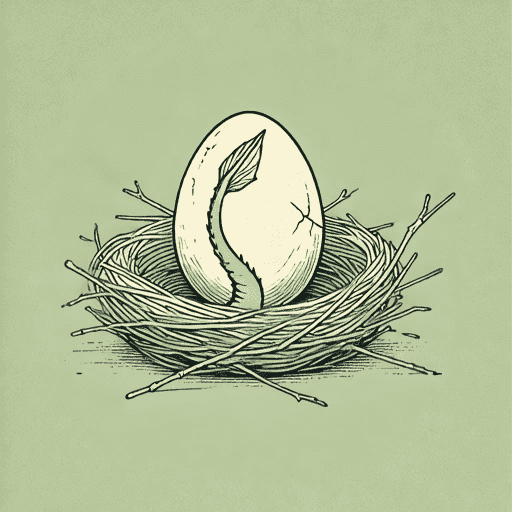
The Poisoned King
56 pages • 1-hour read
Katherine RundellThe Poisoned King
A modern alternative to SparkNotes and CliffsNotes, SuperSummary offers high-quality Study Guides with detailed chapter summaries and analysis of major themes, characters, and more.
Important Quotes
Content Warning: This section of the guide includes discussion of animal cruelty and death.
“The girl dug into the depths of her heart, and there she found a hunger for justice and a thirst for revenge.”
(Chapter 1, Page 1)
This novel’s opening “warning” statement establishes the central internal conflict that will drive the protagonist. The author uses the parallel metaphors “a hunger for justice and a thirst for revenge” to frame Anya’s motivation as a visceral, primal need. The juxtaposition of “justice” and “revenge” immediately introduces the core theme of The Moral Crossroads Between Vengeance and Justice.
“There is a child in trouble. She is at risk of death. She is connected, somehow, to you and the dragons.”
(Chapter 5, Page 15)
Naravirala’s prophecy serves as a critical narrative device, foreshadowing the link between the novel’s two protagonists, Christopher and Anya, before they meet. The vagueness of the connection—“connected, somehow”—creates suspense and establishes a sense of destiny or fate guiding the plot. This moment formally intertwines the separate crises of the dying dragons and the threatened princess, establishing the story’s central trajectory.
“‘We’re entangled in life,’ he said. ‘All that lives is sacred.’”
(Chapter 8, Page 26)
This quote, spoken by Anya’s father, Argus, concisely articulates the theme of The Sacred Interdependence of Humans and the Natural World. His philosophy directly contrasts with the exploitative actions of the story’s antagonist, Claude, establishing a clear moral dichotomy between those who respect life and those who destroy it for personal gain. The word “entangled” suggests a complex, inseparable relationship among all living things, a theme the plot later affirms through the collaborative efforts of humans and magical creatures.
“You are a princess. A princess exists to be looked at. To be seen, and admired, and coveted, and envied, and adored. That is your job. To be watched. It is your only job. Do you understand that?
(Chapter 9, Page 29)
King Halam’s speech defines the restrictive and objectifying nature of Anya’s royal role, highlighting the corrupt authority she is expected to obey. The repetitive syntax and the list of verbs—“seen,” “admired,” “coveted”—emphasize that she is valued as a passive object of observation rather than an active individual. This dialogue is crucial to Anya’s characterization, as it establishes the oppressive expectations that fuel her rebellion and her quest for agency.
“[A] child made of love and anger and waiting, waiting, waiting for something to change.”
(Chapter 10, Page 33)
This concise description summarizes Anya’s internal state after being forced to live in the castle. The author uses a triad of abstract nouns—“love and anger and waiting”—to define her character, emphasizing her core emotional conflict. The repetition of “waiting” underscores her profound sense of powerlessness and heightens narrative tension, positioning her on the precipice of the dramatic change about to unfold.
“A man may smile, and smile, and be a villain.”
(Chapter 12, Page 43)
This sentence concludes the chapter on King Halam’s murder, employing a direct literary allusion to a line from William Shakespeare’s Hamlet. The intertextuality frames Claude’s crime within a classic tradition of literary villainy. The aphoristic statement captures the antagonist’s hidden, corrupting nature, highlighting the contrast between outward appearances and his malevolent actions.
“He embraced his brother, a bear hug, and Argus laughed in surprise, then leaned into the hug.”
(Chapter 13, Page 47)
In a scene depicting the Argen family at a royal ball, this seemingly warm gesture is the moment Claude plants a vial of poison in his brother’s pocket. The author uses dramatic irony, as the reader soon understands this embrace is not an act of affection but of profound betrayal. The description of Argus’s surprised laughter emphasizes his trusting nature and complete ignorance of the treachery, heightening the tragedy of his subsequent arrest.
“You’ll see. The gloves will be off. Things will be very different.”
(Chapter 16, Page 60)
Spoken by a privy council member discussing Claude’s rise to power, this line functions as dramatic irony. The councilman uses a common idiom to predict a harsher political climate, unaware that Claude’s discarded, poison-stained gloves are the key evidence of his crime. The quote directly invokes the novel’s hands motif, which contrasts the honest, open hands of just characters with the concealed, deceptive hands of the villain.
“Wedged in among the stones, high above her reach, there was a pair of white leather gloves, embroidered in gold along the cuffs. The fingers, she could see, were stained with flecks of purple-red liquid: poison.”
(Chapter 18, Page 73)
This is the moment Anya discovers the physical proof of her uncle’s guilt hidden in the king’s chimney. The description of the gloves—white, embroidered, yet stained with poison—serves as a symbol of Claude’s character: a veneer of aristocratic propriety concealing a murderous interior. This discovery marks a crucial turning point in the narrative, confirming Anya’s suspicions and solidifying her resolve.
“He had chosen to clear the path. He needed all three of them dead: grandfather, father, child. One, two, three, king.”
(Chapter 20, Page 84)
As soldiers attempt to murder her, Anya has a moment of clarity about her uncle’s plot. The author uses staccato syntax and a simple, brutal list (“grandfather, father, child”) to mirror the cold, game-like logic of Claude’s ambition. The final phrase, “One, two, three, king,” reduces a series of horrific acts to a child’s counting rhyme, underscoring the monstrous nature of a plan that treats human lives as mere obstacles to be removed.
“Everyone’s trying to kill me and you want me to do a puzzle?”
(Chapter 22, Page 90)
Anya’s exasperated response to the sphinx’s riddle injects dark humor into a life-or-death chase scene. This dialogue highlights a clash between two worlds: Anya’s immediate, violent reality of human political betrayal and the sphinx’s ancient, mythological code of conduct. The juxtaposition emphasizes Anya’s pragmatic desperation while characterizing the sphinx as an entity bound by a logic beyond immediate human crises.
“She knew what it was, that burning in her body. It was a thirst for revenge.”
(Chapter 25, Page 106)
Following a conversation with the sphinx Naravirala, Anya identifies the source of the physical burning in her throat that has plagued her since her father’s arrest. This moment of anagnorisis explicitly defines her central motivation, transforming a physical symptom into a conscious psychological drive. The declaration sets up the novel’s core thematic tension, The Moral Crossroads Between Vengeance and Justice, by framing her quest as a potentially destructive personal vendetta as well as a fight for freedom.
“‘My fire is gone,’ said Jacques. ‘I expended it on the island of Arkhe. Even my breath comes less easily than it did.’”
(Chapter 28, Page 131)
In a moment of vulnerability, Jacques admits to a weakness that subverts the archetypal power of a dragon. This admission serves a critical plot function by eliminating a straightforward, brute-force solution to Anya’s problems, forcing the characters to seek a more complex path to justice. The characterization of a dragon defined by loss rather than might introduces a sense of shared fragility among the magical creatures threatened by Claude’s poison.
“My father told me: worship gold, and you’ll never feel you have enough of it, and you’ll feel angry and weak and frightened your entire life. He said it was a terrible curse, to love something you’ll never have enough of.”
(Chapter 30, Page 141)
Anya recounts her father’s wisdom, establishing a core moral philosophy that directly opposes her uncle Claude’s avarice. This quote defines the central conflict as an ideological struggle between selfless wisdom and the corrupting influence of greed. The metaphor of gold worship as a “terrible curse” foreshadows the ruin that Claude’s ambition will bring upon himself and the kingdom, aligning with the theme of The Moral Imperative to Challenge Corrupt Authority.
“Mankind is not to be trusted with hoards of gold. It poisons him. No creature is safe in a world in which any one of mankind has limitless gold. That way lies only chaos. Dragons keep that chaos at bay.”
(Chapter 32, Page 154)
The dying dragon Arach articulates a worldview that casts dragons as ancient guardians against the inherent dangers of human greed. The direct statement that gold “poisons” mankind establishes a parallel between the literal poison that kills the dragons and the metaphorical poison of avarice that infects Claude. This speech elevates Claude’s theft of the hoard to a disruption of the world’s moral order.
“Haltingly the jaculus read the ingredients. ‘A fillet of snake. The toe of a frog … Fur shaved from the back of a bat. Tongue of a kludde. Eye of the chimaera. The eggshell and blood of a newborn gagana, killed in the first minute of its life …’”
(Chapter 36, Page 177)
Jacque’s reading of the dragonsbane recipe reveals the depth of Claude’s depravity through a list of grotesque ingredients. This catalog of desecrated creatures exemplifies the theme of The Sacred Interdependence of Humans and the Natural World by showing its violent perversion. The requirement of blood from a “newborn gagana” contextualizes the earlier attempt to steal Koo’s egg as part of this massacre.
“As great as your joint intellect undoubtedly is, may I point out you are both spectacularly wrong? … Christopher—Anya needs to halt her uncle. … so you, too, need him stopped. Christopher needs to save the dragons. … so you, too, need the dragons saved.”
(Chapter 36, Pages 180-181)
Nighthand’s speech resolves the central tension between the protagonists’ goals with direct, logical force. The use of parallel sentence structure—”you, too, need him stopped” and “you, too, need the dragons saved”—syntactically links their separate quests, making their interdependence explicit. This moment serves as a narrative turning point, unifying their individual motivations into a single, shared purpose.
“‘Do not,’ Nighthand said, […] ‘let Claude Argen decide how you feel about the world. Fight him, yes. But keep the fight outside your body, not inside it. […] Do not let men who are not fit to touch the corner of your shoe decide how you feel about being alive.’”
(Chapter 37, Pages 186-187)
Nighthand offers Anya crucial wisdom that distinguishes righteous action from self-destructive rage, directly addressing the theme of The Moral Crossroads Between Vengeance and Justice. The spatial metaphor comparing an external fight with an internal one provides a clear framework for resisting the psychological poison of hatred. This advice foreshadows the moral choice Anya will face and frames her ultimate victory as an internal one over her own desire for vengeance.
“But you heard what the manticore said. They’ll kill you if they see you: catch you, tie you, poison you. It told you. You won’t get into the castle alive.”
(Chapter 43, Page 214)
Christopher’s repetition of the manticore’s threat triggers a moment of anagnorisis for Anya. The declarative sentence, “You won’t get into the castle alive,” transforms from a prediction of certain death into the foundation of a plan. Her transformation of an obstacle into the key to overcoming it serves as the narrative catalyst for the story’s climax.
“Anya curtsied: the curtsy that had been drilled into her since her first toddling steps […] It is the gesture with which fealty is given, or gratitude offered, or honor paid. It’s almost always misused: used to signal unearned obeisance to the born rich, the born powerful. It was not misused, in that moment, on that day.”
(Chapter 46, Page 226)
In this moment of authorial intrusion, the narrator explains the significance of Anya’s gesture. By performing a curtsy—a symbol of hierarchical respect—to the small, fearful dragon Jacques, Anya reappropriates the gesture to honor bravery and sacrifice rather than inherited status. The gesture foreshadows Anya’s eventual decision to dismantle the monarchy and its unearned power structures, a key element of the theme of The Moral Imperative to Challenge Corrupt Authority.
“Anya might look like a doll the world had chosen to play with, but that was deceptive. She was furious and generous and loving. She was like an arrow in flight. Her friendship felt rare—not because she was a princess, but because she seemed to offer friendship in the way that a bird does; cautiously, and then all at once. It was like being befriended by an insistence.”
(Chapter 49, Pages 237-238)
From Christopher’s perspective, this passage employs a series of similes and metaphors to characterize Anya beyond her royal title. The simile “like an arrow in flight” captures her focused determination and contrasts sharply with the initial image of a passive “doll.” The description of her friendship as being “like being befriended by an insistence” is an oxymoronic construction that conveys her unique blend of forcefulness and genuine care, highlighting a personality forged by crisis rather than privilege.
“Anya splashed your hands and hair with it, your medallion, your shoes and jacket and skin, before she drank the poison, in the dark. No more than flickers of liquid. But it sticks.”
(Chapter 51, Page 243)
Christopher’s accusation reveals the mechanics of Anya’s plan, turning the symbol of poison back onto its perpetrator. The repetition of “your” emphasizes Claude’s ownership of the crime, while the detailed list—“hands and hair,” “medallion,” “shoes and jacket and skin”—paints a comprehensive picture of his guilt. The simple, declarative statement, “But it sticks,” conveys the inescapable nature of Claude’s actions, demonstrating how Anya has engineered a form of justice that makes his hidden, internal corruption physically manifest.
“For a long, stretching second they faced each other, dragon and girl. Then Arach nodded. He moved his vast body to stand behind her, casting his shadow over her; a bodyguard of mammoth size.”
(Chapter 52, Page 248)
This moment visually represents the theme of The Sacred Interdependence of Humans and the Natural World. The silent, mutual understanding between Anya and Arach creates an alliance that transcends species, based on shared trauma and a desire for justice. The imagery of Arach becoming her “bodyguard of mammoth size” physically realizes this bond, elevating Anya from a lone princess to a figure of mythic authority backed by the power of the natural world she respects.
“Her hatred for Claude had not been healed by his death. Her revenge had yoked them together forever. She hated him still. It had seeped into her soul. Hatred was a poison. It had poisoned him, and it would poison her.”
(Chapter 53, Page 254)
Revealed through the loquillan’s vision, this passage marks the novel’s central thematic climax, distinguishing justice from vengeance. The metaphor “Hatred was a poison” makes an explicit connection between the story’s literal weapon and the internal, corrupting force of revenge. The verb “yoked” illustrates how killing her uncle would not free Anya but instead bind her to him permanently, proving that personal revenge is a self-destructive act.
“Anya clung to her father, arms round his neck, legs round his middle, holding so tight he could not breathe. What need had he to breathe? Oxygen was for other people. He had his living child in his arms.”
(Chapter 54, Page 257)
The narration uses hyperbole to communicate the overwhelming power of Argus’s relief and love, elevating the emotional reunion to a plane where basic biological needs are irrelevant. Shifting into a close third-person perspective, the text grounds the fantastical plot in a raw, physical expression of paternal joy. The simple, declarative final sentence, “He had his living child in his arms,” serves as the emotional resolution to Anya’s quest, which began with the fight to save her father.

Unlock every key quote and its meaning
Get 25 quotes with page numbers and clear analysis to help you reference, write, and discuss with confidence.
- Cite quotes accurately with exact page numbers
- Understand what each quote really means
- Strengthen your analysis in essays or discussions