58 pages • 1-hour read
The Poppy Fields
A modern alternative to SparkNotes and CliffsNotes, SuperSummary offers high-quality Study Guides with detailed chapter summaries and analysis of major themes, characters, and more.
Important Quotes
Content Warning: This section of the guide includes discussion of illness, death, and mental illness.
“They have each been told that the only way out of a hardship is through, but nobody ever told them they had to stay awake.”
(Prologue, Page 2)
This novel explores The Individual Nature of Grief and Healing while examining the human impulse to sidestep the more difficult aspects of the healing process. For some, the sleep treatment represents just this: the opportunity to sleep through the first, most difficult stages of grief and emerge only at a time when the pain becomes more manageable.
“Ava knew that her hands looked ugly, but they’d still built her a beautiful life.”
(Chapter 1, Page 4)
Ava is initially characterized by her art and her anxiety. She picked up drawing as a child to manage her fears, and it became a career. When she is nervous, she bites her cuticles, so for Ava, her hands symbolize both her anxiety and the tools she uses to manage it.
“Sasha used to be one of them, used to fit alongside these fictional faces. She was the heroine, bubbly and bright. She had everything she’d ever wanted.”
(Chapter 4, Page 12)
Sasha is initially characterized through loss. She does not clarify the exact details, but her engagement came to an abrupt end. Sasha is extroverted and relationships matter to her, so the loss of her fiancé is particularly upsetting. This passage highlights her sense that she is no longer the “heroine” of her own life and has failed in some undefined way.
“Ava could have spent the entire day deliberating, weighing, and worrying. Anxiety came easily to her. Spontaneity did not.”
(Chapter 9, Page 34)
Anxiety is one of Ava’s key character traits, and it is on display throughout the entirety of the novel. She is fearful of new situations, germs, strange men, and a host of other worries. While this trait helps to paint a portrait of Ava herself, it also highlights the differences between Ava and her sister, helping to establish the reasons for the sisters’ estrangement.
“Ray had to turn his face, relieved that Ava had chosen the seat behind Sasha and couldn’t see his reflection in the mirror. He’d started seeing reminders of Johnny again. Not on the surface, and not in any significant sense, but in the way that we often see impressions of the people we’ve lost in even the smallest and strangest details of others.”
(Chapter 12, Page 47)
Stoicism matters to Ray, but he is actually a highly emotional individual. He loves Johnny and values their bond as brothers, and he struggles to process his feelings in the wake of his brother’s death. This scene highlights both Ray’s stoicism and his inability to navigate his grief: He is happy that Ava does not notice how upset he is and how distracted he is by thoughts of his brother.
“Grief. The moment when you realize that your world and the world are entirely separate.”
(Chapter 13, Page 58)
Each character views grief through a slightly different lens, highlighting the individual nature of grief and healing. For some, it is a distinct kind of loneliness in which the bereaved retreats within, focusing on their own pain rather than on the world around them. With its emphasis on “your” and “the,” this quote draws a line between the two, emphasizing the isolation felt during grief.
“I adopted PJ during a tough time, so the name was sort of…a hope.”
(Chapter 14, Page 62)
Ava’s dog is named after Pelorus Jack, a 19th-century dolphin that famously escorted ships to safety. Ava is an anxious individual who often seeks out caretakers. Her grandmother, her first caretaker, was a loving woman who helped Ava manage her anxiety as a child. She finds both Ray’s and Sasha’s professions soothing because they are, in their own ways, caretakers. Ava loves her dog, whom she’s nicknamed “PJ,” and his name was meant to signify his role as a caretaker of sorts, someone to help her through a difficult period in her life. With each of these new relationships, the novel illustrates The Formation of Surrogate Families Through Shared Trauma.
“Sasha felt like an evil person, when all her life she’d been good.”
(Chapter 20, Page 88)
The Poppy Fields asks each applicant why they want to undergo treatment, and there is much discussion among the staff about their reasons. Sasha’s motivation for sleep-induced healing is a large part of her characterization: She feels guilty for having come so close to calling off a wedding with a man who tragically died right before the ceremony was to take place. This quote emphasizes how she feels as if her whole identity has shifted in the wake of Dean’s death.
“I think if you’re capable of greatness, Ellis said, you have to use it to better the world.”
(Chapter 21, Page 96)
Ellis is not motivated by greed or the desire to run a profitable business. She is highly intelligent, has worked hard to better her career, and is grateful for the talents and opportunities she has been given. Ethics play a large role in Ellis’s identity, and she develops her treatment with the sole purpose of helping people. While others in the startup world are looking to make money and a name for themselves, Ellis wants to be guided by empathy.
“Ray didn’t want to cry. He preferred to run.”
(Chapter 22, Pages 105-106)
Ray is characterized in part by stoicism. He feels a tremendous amount of grief about his brother’s death, but he does not believe that “giving in” to his emotions will be productive. Instead, he exercises, goes to work, maintains his schedule, and does his best to project strength.
“It’s just this whole thing, sleeping through your problems, Ray said, doesn’t it seem kind of weak?”
(Chapter 26, Page 125)
Grief takes a slightly different shape for each person in this narrative, and for Ray, it is tinged with guilt. He is ashamed that when his brother came to him for help, rather than responding with genuine concern, he perpetuated their father’s toxic masculinity, showcasing The Impact of Family Relationships on Identity Formation. He regrets calling Johnny weak and wonders if he’d given more credence to Johnny’s grief, if Johnny might have pursued a more conventional method of dealing with his sorrow.
“The glass of scotch was nearly empty and the clock was ticking towards midnight, and Ellis’ attempts to think of anything other than stupid birthday ruminations had led to her memory of applicant ID 223-409, Sandy Russo.”
(Chapter 31, Page 148)
In large part because she is motivated by empathy and not the desire to generate profits, Ellis is particularly worried about the cases that go wrong. Yasmin and Flynn are able to focus on the 75% of sleepers who do not experience emotional moderation after treatment, but Ellis frets about the other 25%. These concerns are emphasized by the fact that she is awake in the middle of the night, ruminating on her past patients.
“Ellis was the assured perfectionist and Ava the quiet creative one, they were each other’s best friends during the early years of their youth.”
(Chapter 31, Page 149)
Fraught family relationships loom large over this narrative, and each of the main characters has been shaped by broken bonds to loved ones in some way. At this point, Erlick has revealed that Ellis is Ava’s sister, Emmy. The women are estranged as adults, and each acutely feels the loss of the other. Ava’s desire to reconnect propels her to the Poppy Fields, and Ellis’s thoughts of her sister pop up when she is feeling the impact of stress in her life.
“Sky mulls this over. She’d been desperate to get her license, thirsting for those few first drops of freedom even if she needed permission to borrow the family car.”
(Chapter 33, Page 158)
Sky is largely defined through her youth and her desire to travel and see the world. She wants to expand her horizons and is not willing to plan for the future. The others are struck by how young she seems. While Sky might lack maturity, she is fundamentally kind and open-minded.
“I guess a part of me feels that sleeping is somehow disrespectful to her, like it’s important to feel the pain.”
(Chapter 34, Page 169)
Several characters wrestle with this idea: They wonder whether grief is part of love and, as such, needs to be experienced. Ultimately, the novel allows for individualization, arguing that the sleep treatment is just one of many psychological tools to combat grief. For some, the grieving process is essential and cannot be avoided, and the pain is part of the way they pay homage to their loved one.
“Sasha loved being in love.”
(Chapter 37, Page 181)
This quote both helps to establish how important romantic love is to Sasha and explains the exact shape of her grief. Because the loss that propels Sasha toward the Poppy Fields is that of a romantic partner, and one whom she believes she wronged (at least in her heart), it is especially difficult for her to deal with. The quote highlights how Sasha’s feelings aren’t so much about Dean as about the experience of love itself, emphasizing how much their relationship was about fulfilling her expectations for her life.
“I trusted you. I thought we were friends, but you’ve been lying since we met.”
(Chapter 42, Page 198)
Ava admitting that her sister created the Poppy Fields is the group’s first real test of friendship. Because both Ray and Sasha have a complex relationship with the Poppy Fields, they feel betrayed by Ava’s connection to it. Also, because they have shared so much of their own personal tragedies with Ava, they are hurt by the fact that she did not feel comfortable opening up to them, emphasizing the important role that trust plays in the formation of their new chosen family.
“Brothers and sisters, we don’t always see eye-to-eye. We don’t always have the relationship we want.”
(Chapter 44, Page 207)
Both Ava’s and Ray’s sibling bonds shaped them as individuals, and for each character, the way that those bonds fractured was also deeply impactful. Ava and Ray have each felt a complex mixture of love and anger toward their siblings and continue to wrestle with those feelings as they head toward California.
“Emmy never shopped for Granny Mae’s food or picked up her prescriptions. She never sat with Mae in respectful silence on the anniversary of Johanna’s death.”
(Chapter 44, Page 208)
Ava and Ellis grew apart as children, but there are also more recent issues in their relationship. Ava resents Ellis for not having helped take care of their grandmother when she fell ill and feels that her sister prioritized work over family. Ava is a caring, empathetic individual, so for her, this particular slight is important and difficult to forgive, and her pointed memories of specific absences signify how this feeling has built up over time.
“Maybe Sasha could understand why Ava had chosen to lie.”
(Chapter 45, Page 217)
Sasha feels betrayed by Ava’s omission, but she is ultimately a caring and empathetic person. After some alone time to process, she admits to herself that she understands Ava’s decision. She sees that it was actually rooted in fear and empathy rather than malice: Ava was afraid of judgment and did not want to further hurt Ray after hearing the story of Johnny’s death.
“She realized in that moment that she was going to miss him once they reached the fields. She was going to miss all of them, this motley gang they’d gathered.”
(Chapter 47, Page 232)
Sasha, Ava, and Ray form a surrogate family based on their shared experiences of loss. Although each character’s loss is unique, they each understand what it means to have one’s life reshaped by losing a loved one and the difficulty of grief. Here, Ava acknowledges how close they’ve become and realizes that friendship and community have long been missing from her life.
“I’m not going to go in there with you,’ Sasha explained. ‘You mean you don’t want to apply again, try to sleep?’ Ray asked. ‘No,’ Sasha said calmly, ‘not anymore.’”
(Chapter 52, Page 256)
Each of the characters in this novel ultimately manages their grief differently. Sasha realizes that she does want to experience the full set of stages she will go through during the grieving process. This change of heart happens in part because she forgives herself for her ambivalence about Dean. She realizes that it was guilt she wanted to avoid, not grief. Grief, she has come to believe, is part of love, and she now wants to experience it.
“I slept here for a month, and I woke up with the side effect.”
(Chapter 55, Page 268)
Ellis’s revelation that she has withdrawn from her family because she also experienced the side effect is the novel’s major plot twist. It also adds depth and detail to her character, demonstrating that although Ellis is work oriented, her final withdrawal from her family was the result of the side effect rather than a sincere wish to abandon her sister.
“After he died I had to think, if it hurts so much now, I must have been pretty darn lucky.”
(Chapter 56, Page 272)
One of this book’s broader arguments is that grief is an inescapable part of the human condition. When an individual experiences loss and feels grief, it is a sign that they had a meaningful relationship. While grieving is a difficult process, there is no way to sidestep it, and it is important to remember that it is part of love.
“Poppies are a ruderal species, which means they grow from rubble. If something so spectacular can still blossom in even the most disturbed earth, doesn’t that mean there’s hope for even the most battered hearts to heal?”
(Chapter 60, Page 301)
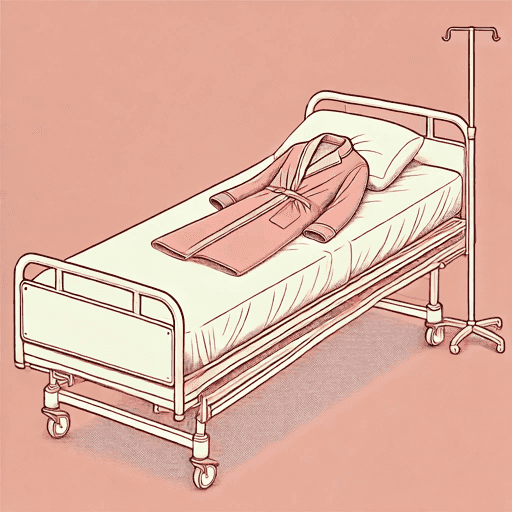
Poppies are one of this novel’s key symbols, and Erlick pushes back against their connotation of narcotics, instead highlighting some of their other characteristics, in the same way that she highlights other aspects of the grieving process. They represent the possibility of healing even for individuals grieving serious losses. Ellis views her treatment not as a way to bypass grief but as one tool available to people who have struggled to overcome grief. She dresses her sleepers in red pajamas as a nod to poppies, representing the healing process.

Unlock every key quote and its meaning
Get 25 quotes with page numbers and clear analysis to help you reference, write, and discuss with confidence.
- Cite quotes accurately with exact page numbers
- Understand what each quote really means
- Strengthen your analysis in essays or discussions