The Push: Mother. Daughter. Angel. Monster?
A modern alternative to SparkNotes and CliffsNotes, SuperSummary offers high-quality Study Guides with detailed chapter summaries and analysis of major themes, characters, and more.
Summaries & Analyses
Quizzes
NEWReading Tools
Games
Themes
How Patriarchal Norms Warp Expectations of Motherhood
One of the novel’s earliest and most important quotes is, “We all expect to have, and to marry, and to be, good mothers” (7). It’s worth pondering where these expectations come from. To some extent, motherhood is a biological and evolutionary imperative, as newborns across the animal kingdom cannot survive without a mother’s support. Humans, however, with their complex brains and complex societies, cannot divorce this imperative from the social conditioning they receive from television, movies, commercials, and their own parents. If a mother does not express love for her child in ways that are familiar or expected, many assume that something is wrong with the mother. These assumptions are even more pronounced when a child is accused of antisocial or criminal behavior. The phrase “His mother didn’t love him or her” is pervasive in discussions of serial killers and child murderers, as if a mother is to blame for the sins of her child. The Push examines the extent to which mothers have internalized this messaging during the scene at the support group for parents of individuals convicted of crimes. One mother bemoans looks she gets from the prison guards and her lawyer “like I’m the one who did something wrong. But I didn’t. We didn’t do anything wrong” (161)—to which another mother replies, “Didn’t we?”
These attitudes, however, downplay the role of fathers and the expectations of a patriarchal society in perpetuating childhood trauma. This is abundantly evident in Blythe’s family history. For example, if an “original sin” kickstarted her family’s cycle of trauma, it’s when Etta’s father forces her and her husband Louis to stay on the family farm rather than allowing Louis to continue his medical studies. This leads to Louis’s gruesome death, an extraordinarily traumatic moment for Etta with effects that linger for the rest of her life. In a move that reflects how poorly doctors dealt with psychological trauma in mid-century America—particularly women’s trauma—Etta is prescribed powerful sedatives, which leave her in a drugged haze for Cecilia’s early infancy, depriving the child of much love during her formative months and years. Etta’s struggles with addiction continue for years, and the novel strongly implies that addiction was a major factor in her abusive, neglectful treatment of her daughter.
Cecilia too falls victim to patriarchal expectations, and Blythe pays the price for it. After becoming pregnant, Cecilia is steadfast in her refusal to give birth to the child. She is an aspiring poet who only months earlier arrived in the city, and the last thing she wants is a child. Seb, however, is equally steadfast in his refusal to help her pay for an abortion. No ideological or religious motivation for his refusal is apparent; rather, Seb knows that a child will bind them together, and thus his refusal is an exercise in control. This does not exonerate Cecilia for her neglect, mistreatment, and eventual abandonment of Blythe. It does, however, complicate the narrative Blythe has in her mind of an unforgivable mother who shoulders all the blame for her daughter’s unhappy childhood.
Compared to Etta’s father or Seb, Fox exerts a softer, more passive form of patriarchal control. He is habitually dismissive of Blythe’s insistence that she cannot handle what’s expected of her as a mother. Along with Helen, he won’t allow the night nurse to stay more than a month even though she’s a savior for Blythe’s mental health. Blythe must practically beg him to send Violet to daycare. Fox had a dramatically different kind of mother than Blythe is prepared to be, and he refuses to open his mind to other ways to be a good mother. As a result of these conflicts, Blythe feels inadequate simply because she cannot live up to Fox’s expectations, leaving her alienated from both her husband and her daughter.
The Durability of Inherited Trauma
The novel’s chief preoccupation involves how trauma is inherited over generations, specifically through mothers and daughters. In the most basic terms, the trauma begins with Etta who, depressed and addicted to sedatives, physically and emotionally abuses Cecilia. Etta nearly murders Cecilia while simply giving her a bath; then she refuses to help Cecilia clean up after she soils herself from the harrowing experience. Equally traumatic for Cecilia is when Etta tricks her into crawling into the pickle cellar so that she can lock her inside for hours.
These abuses affect Cecilia’s confidence and emotional well-being in that she has no framework for what a healthy mother-daughter relationship looks like. She even has the self-awareness to know, both before and after giving birth to Blythe, that she lacks the emotional toolkit to do what is expected of her as a mother. Her mistreatment of Blythe is less physically severe than what she received from Etta; tellingly, the only time Cecilia hits Blythe, knocking her daughter’s tooth out for insisting on opening the basement, it’s because she’s reminded of the cellar Etta locked her inside. Nevertheless, Cecilia can barely hide her resentment toward Blythe. At best, she ignores Blythe; at worst, she lashes out whenever Seb compels her to make even the slightest sacrifice of time or energy on behalf of her daughter—as when Cecilia grows enraged at Seb after she complies with his demand to go to Blythe’s tea party at school. Although Etta and Cecilia’s abuse manifests in markedly different ways, Blythe is just as ill-equipped as Cecilia was to be the kind of mother her husband expects her to be.
The picture of how this inherited trauma emerges in Blythe and Violet’s relationship is skewed because readers see only Blythe’s perspective. Nevertheless, it’s telling that the trauma persists even though Blythe approaches motherhood differently than her mother and grandmother did: Unlike Cecilia, Blythe is excited to have a child; and unlike Etta, she’s not in a state of immense grief and drug addiction when her child arrives in the world. Still, the absence of a mother who modeled nurturing behavior makes the challenges of early motherhood even more intractable for her. When things get difficult, Blythe defaults to the kind of toxic behavior that the other matriarchs in her family might have engaged in, like letting Violet cry for hours or sit in a soiled diaper. Meanwhile, if readers assume that Violet is the murderer that Blythe—and later Gemma—think she is, then it seems unlikely that Violet will find a way to end that cycle if she has a daughter, even if it plays out differently. Though durable, trauma is not inherited in a linear way; it takes different forms depending on the circumstances, as shown by each woman’s unique dysfunction.
The Unreliability of Memory
Much of the suspense in The Push stems from readers’ inability to trust the reliability of the narrator’s memory and impressions. Most of the novel is written in an epistolary style, made up of letters from a woman to her former husband. Right at the start, Blythe writes, “This is my side of the story” (4)—and in any narrative, one may interpret and twist facts and experiences to fit in countless conscious and unconscious ways. This is even truer when the narrative exists in as fraught a context as a husband and wife who lose a child.
Even Blythe is unsure of her own memories. This is shown early on when she describes Elijah’s death. Of the moment Elijah passes Violet atop the playground structure, Blythe says, “I saw her leg lift. At just the right moment” (102). Later, however, she concludes, “And then I decided: No. She didn’t trip that child. She wasn’t close enough to him. No, I was not the mother of someone who could do something like that” (103). Note that Blythe says she “decided” Violet did not murder Elijah, expressing a sense of agency in determining what did and did not happen. In her mind, the truth of what happened to Elijah is shaped as much by her immediate perceptions as by her idea of who she is as a person and what kind of daughter that person might have.
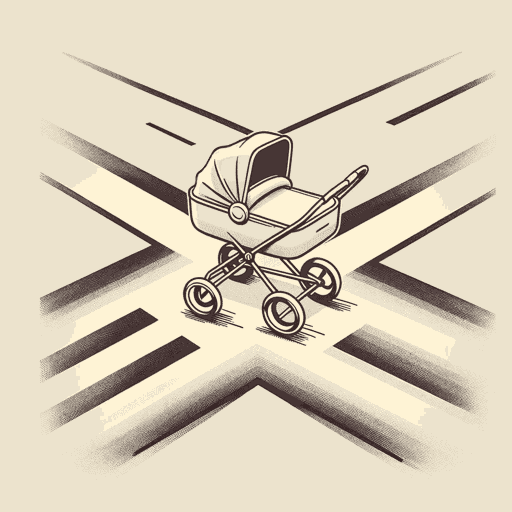
This uncertainly is even more pronounced regarding Sam’s death. In the moment, Blythe is certain that Violet pushed Sam’s stroller into the street. Gripped in the torment of such an unspeakable tragedy, all her worst fears and assumptions about Violet come together to create a firm narrative of what happened. However, as time goes on, Blythe comes to doubt this interpretation of events. Returning to the scene of the accident, she finds that the groove she remembered so clearly between the street and curb, which should have stopped the stroller had it rolled by the force of gravity alone, is not there. The grade of the road is also much steeper than she recalled.
Blythe’s uncertainly also manifests in smaller but no less significant ways. For example, the extent to which Blythe recalls Sam’s infancy so much more favorably than Violet’s may be rooted in equally unreliable impressions. Although pain and sleeplessness accompanied both children’s infancies, Blythe remembers loving every moment of raising Sam. Sam is her angel who died before he could lose his innocence; she idealizes him as much as the child in the painting she buys at the flea market. Violet, on the other hand, is the girl she believes murdered Sam. It makes sense, then, that she would view the pain of pregnancy and difficulty of breastfeeding as mere components of a larger, beautiful bond between mother and child when thinking of Sam but not when thinking of Violet.
Finally, her unreliability influences readers’ views of Fox. From Blythe’s perspective, Fox is a man who places unfair expectations of his wife, refuses to acknowledge her fears about Violet, and ultimately cheats on his grieving wife with a younger woman. However, this behavior could also exemplify the actions of a good father who only wants what’s best for Violet. The narrative even reveals that Violet met and got along with Gemma long before her relationship with Fox became sexual, which may be what attracted Fox to Gemma in the first place—in fact, this is probably how Fox would frame the infidelity if he were the one writing the letters. Ultimately, the truth likely lies somewhere in between Blythe’s recollections and the most charitable interpretation of Fox’s actions. He acknowledges this near the novel’s end when, in the closest thing the two characters have to a reconciliation, Fox says, “[Violet] wasn’t always easy. But she deserved more from you. [...] And you deserved more from me” (299).

Unlock every key theme and why it matters
Get in-depth breakdowns of the book’s main ideas and how they connect and evolve.
- Explore how themes develop throughout the text
- Connect themes to characters, events, and symbols
- Support essays and discussions with thematic evidence

Featured Collections
Canadian Literature
View Collection
Goodreads Reading Challenge
View Collection
Marriage
View Collection
Memory
View Collection
Mothers
View Collection
New York Times Best Sellers
View Collection
Psychological Fiction
View Collection
Summer Reading
View Collection
SuperSummary Staff Picks
View Collection