The Resistible Rise of Arturo Ui
49 pages • 1-hour read
Bertolt BrechtThe Resistible Rise of Arturo Ui
A modern alternative to SparkNotes and CliffsNotes, SuperSummary offers high-quality Study Guides with detailed chapter summaries and analysis of major themes, characters, and more.
Symbols & Motifs
Chicago
The Resistible Rise of Arturo Ui is set in 1930s Chicago. The play deliberately repurposes the American city as an allegory for the rise of fascism in Germany in the 1920s and 1930s. Brecht presents Chicago as beholden to many of the same forces which marked the rise of fascism, turning the city into a symbol of The Dangers of Greed and Self-Interest.
There is violence in the streets, most of it caused by petty criminals, but some of it is directed with a political aim. Ui, like Hitler, uses this street violence as a way to further his grip on power. Similarly, the economic situation in Chicago mirrors that of Germany during the 1920s. Chicago is still suffering from many of the lingering effects of the Great Depression, which is causing an economic slowdown in terms of vegetable sales. In showing how the Trust engages in corruption and collusion with Ui to further their own interests, Brecht reveals how social and economic factors can enable the rise of a political force like fascism. The swift degeneration of the city into a violent, lawless place that utterly lacks strong democratic institutions or the rule of law thus embodies the destruction and chaos authoritarian ideologies can unleash wherever they take hold.
Furthermore, Brecht uses the city of Chicago—a city located in the American Midwest—to suggest that fascism is not an inherently German or European idea. America is not immune to the rise of fascism and so Americans should not be complacent, Brecht warns, which is why he uses Chicago as a symbol of how fascist ideas can take root in any culture if people are not vigilant.
Macbeth
Throughout the play, the dialogue is sometimes deliberately lifted from Shakespeare’s plays, particularly Macbeth, turning these literary allusions into an important motif that illustrates The Inevitability of Betrayal. Like Macbeth’s confrontation with the ghost of Banquo, Ui is haunted by the friend he betrayed when he is visited by Roma’s ghost, who brings him into dialogue with his own guilty conscience. While this is a moment of pathos for Macbeth, however, Ui is immune to any such dramatic sympathy. He may employ Macbeth’s lines, but he does not react in the same way. While Macbeth does seem genuinely unnerved by guilt, Ui quickly forgets his dream about Roma and orders his men to fire their machine guns at the place where Roma’s ghost was standing. Significantly, Roma warns him that Ui will also be betrayed, implying that Ui will inevitably be undone by the same reckless violence and paranoia he has deployed against others.
Ui is also different in the sense that the play ends at the moment of his greatest triumph. Shakespeare’s tragic heroes like Macbeth are all undone by the end of their respective plays. They are referred to as “tragic heroes” because there is a tragedy in their rise and fall. However, Ui’s story only shows “the rise.” Adolf Hitler died, but only after causing the deaths of millions of people. There is little that is tragic or dramatic about Hitler’s end, so the cutting short of Ui’s story invites the audience to question the cost of his downfall in contrast to the cost of resisting his rise.
Hats
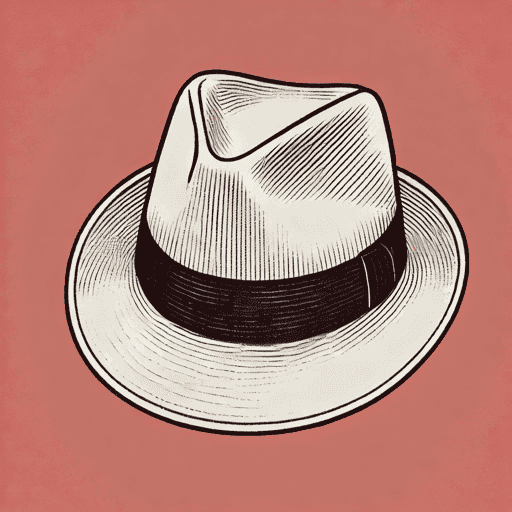
The imagery associated with gangster movies and television, essentially the setting in which The Resistible Rise of Arturo Ui takes place, involves a certain type of hat which is worn by every character on stage. This helps situate the play aesthetically in a specific time and mood, evoking classic gangster media as well as the historical setting. Within the play, hats symbolize the inherent violence of the fascist creed and the inevitability of betrayal even for those within Ui’s inner circle.
Giri is based on Hermann Göring, who was involved in the initial violence of Hitler’s rise to power, the creation of the Gestapo, and many war crimes. Like his historical counterpart, Giri is an unrepentant murderer. He happily employs violence to further his political goals. As Givola mentions to Ui, Giri has a habit of stealing the hats from the people he kills. Giri then wears these hats in public, broadcasting to the world how little he fears any kind of legal reprisal. Givola worries that this is inviting trouble, but Ui does not intervene. For Ui, as for Giri, there is a symbolism in this act that is politically useful. By wearing the hats, Giri uses them as intimidation, threatening other people to stay in line. In a world predicated on performance and violence, these implied threats are very effective.
Roma is betrayed by Ui, then executed by Giri and Givola. He may have been Ui’s most loyal lieutenant, but he becomes a victim of the same paranoid violence he previously employed against others. Likewise, by wearing Roma’s hat, Giri unconsciously symbolizes this inevitable inward turn. While Giri is just continuing his habit of wearing the hats of his victims, Roma’s hat has a different message: Now, the hat symbolizes the extent to which men like Giri are willing to turn on one another, warning the world that the violence carried out by men like Giri always bounces back against them.

Unlock the meaning behind every key symbol & motif
See how recurring imagery, objects, and ideas shape the narrative.
- Explore how the author builds meaning through symbolism
- Understand what symbols & motifs represent in the text
- Connect recurring ideas to themes, characters, and events