The River Has Roots
41 pages • 1-hour read
Amal El-MohtarThe River Has Roots
A modern alternative to SparkNotes and CliffsNotes, SuperSummary offers high-quality Study Guides with detailed chapter summaries and analysis of major themes, characters, and more.
Background
Content Warning: This section of the guide includes discussion of death.
Authorial Context: Amal El-Mohtar
Amal El-Mohtar is a poet and speculative fiction author, born in Canada to Lebanese immigrant parents. Except for two years spent in Lebanon as a child, she has lived in Ottawa her entire life. El-Mohtar is a prolific writer of speculative short stories and poetry, as well as the editor of the fantastical poetry magazine Goblin Fruit. She has received the Rhysling Award for Best Short Poem three times, and her short story “Seasons of Glass and Iron” won the Nebula, Locus, and Hugo Awards in 2016. She released her collection of short fiction, The Honey Month, in 2010 and has a second short fiction collection, Seasons of Glass and Iron, forthcoming in 2026. However, she is perhaps best known for her novella This Is How You Lose the Time War, co-written with Max Gladstone. This is a romantic science fiction epistolary novella that swept the science fiction/fantasy awards season in 2019, winning the Nebula, Locus, Hugo, BSFA, and Aurora Awards for Best Novella/Shorter Fiction (“Amal El-Mohtar and Max Gladstone: Letter Space.” Locus Magazine, 10 Feb. 2020).
El-Mohtar credits her Lebanese descent with influencing and inspiring many themes in her work, especially in The River Has Roots. In the Acknowledgements, she explains that the story of Esther and Ysabel becoming lost in Arcadia is autobiographical, based on an incident when she and her sister became lost while chasing a chicken in Lebanon. Additionally, she draws connections between Arcadia, which the humans in the novella view as “insubstantial [and] ephemeral,” and the way “[r]ight-wing talk show hosts [claim] that Israel cannot be invading Lebanon because Lebanon isn’t a country” (133). She explicitly states that she “wrote and revised this book under the mental duress of seeing horrific war crimes against [her] people denied, excused, laundered, in the same language [she] use[s] to tell stories” (133), thus underscoring the real-world dimensions of her thematic interest in The Power of Language.
El-Mohtar has also spoken about the importance of friendship, particularly between women, and its relative lack of representation in literature, including the fairy tales that she discovered early in life. In one interview, she described friendship as resisting the transactional qualities that often define romantic relationships, including those that are ostensibly subversive because they are queer (“Amal El-Mohtar, Pocket Interview No. 3.” Storyological, 22 Aug. 2017). The River Has Roots can be seen as El-Mohtar’s response: The story contrasts Pollard’s transactional interest in Esther with Rin’s selfless love while devoting the bulk of its attention to a platonic relationship between two sisters.
Literary Context: The “Two Sisters” Murder Ballad
The River Has Roots is based on the traditional murder ballad known as “The Two Sisters.” Murder ballads are a sub-category of traditional folk ballads that tell narratives about crime, murder, and death, usually of a gruesome nature. Many of these ballads originated in medieval England, Scotland, or Scandinavia, usually relating both the murder and the justice or revenge that follows. In most cases, the murder victim is a woman.
The murder ballad of “The Two Sisters” came from England or Scotland, dating back to at least 1656. The tale was collected by renowned folklorist Francis Child as Child Ballad 10 in his respected collection The English and Scottish Popular Ballads, released in installments from 1882-1898. Several variations of the tale, with titles such as “The Twa Sisters,” “Binnorie,” “The Cruel Sister,” or “The Bonny Swan,” have also been collected in the Roud Folk Song Index, a database of approximately 250,000 traditional folk songs compiled by Steve Roud beginning in 1970.
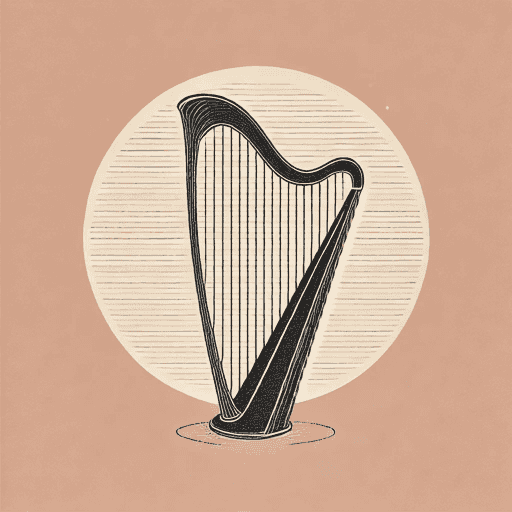
As with most folklore and fairy tales, there are many variations on “The Two Sisters,” though the basic components stay roughly the same. In the tale, the two sisters of the title visit a body of water, usually a river, where the eldest sister drowns the younger sister in a bout of jealousy over a man. In some versions, the man has scorned the eldest in favor of the younger, and in others, the man is secretly courting both at the same time. Someone finds the murdered sister and makes a musical instrument (often a harp) out of her body, using the bones for the frame and the hair for the strings. The musical instrument then plays itself, singing to reveal the murder and bring justice to the eldest sister.
El-Mohtar’s version defies the patriarchal themes of the original version, even noting, via Esther’s internal monologue, that many such tales pit women against each other for the sake of a man and reduce the older sister to a cruel, selfish stereotype. Instead, El-Mohtar imagines two sisters who love and protect each other, placing a controlling and jealous man in the role of murderer to explore themes of The Importance of Sisterhood and Familial Bonds and Resistance to Patriarchal Oppression.
“The Two Sisters” murder ballad template has inspired many other creative expressions, from songs to short stories to novels. Folk singer Loreena McKennitt performed a version called “The Bonny Swans” on her album The Mask and the Mirror, which El-Mohtar cites as an early inspiration. Additionally, Lucy Holland’s fantasy novel Sistersong is inspired by the ballad, and the novel Minor Mage by T. Kingfisher (known for her folklore-inspired work, such as Nettle & Bone) features a character who fashions musical instruments from murder victims.

Unlock all 41 pages of this Study Guide
Get in-depth, chapter-by-chapter summaries and analysis from our literary experts.
- Grasp challenging concepts with clear, comprehensive explanations
- Revisit key plot points and ideas without rereading the book
- Share impressive insights in classes and book clubs