55 pages • 1-hour read
The Road to Tender Hearts
A modern alternative to SparkNotes and CliffsNotes, SuperSummary offers high-quality Study Guides with detailed chapter summaries and analysis of major themes, characters, and more.
Part 1Chapter Summaries & Analyses
Content Warning: The source material and guide feature depictions of mental illness, child abuse, child death, death by suicide, substance use, illness, and death.
Part 1: “An Ancient Knowledge”
Part 1, Chapter 1 Summary
The story begins in Pondville, Massachusetts, in the spring of 2014. Dr. Gust works at the local nursing home, which has a pet cat named Pancakes. Pancakes has gained a reputation for predicting death: Whenever he spends time near a particular resident, that resident often dies shortly after. Pancakes won’t leave Dr. Gust’s office, which makes Dr. Gust nervous. He is 57, recently divorced, and hopeful about a long future. Reluctantly, Dr. Gust takes Pancakes, called a “four-legged and pawed Grim Reaper” (7), to the local animal shelter. Later that night, Pancakes escapes by picking the lock with his claws and walks out of town. The narrator emphasizes that the story isn’t just about cats, but about the burden of being human in a world where bad things happen.
Part 1, Chapter 2 Summary
PJ Halliday is 63 and lives alone in the home he once shared with his ex-wife, Ivy, and their two daughters, Sophie and Kate. Kate died tragically the night of her high school prom, and Sophie, now 22, has moved out. PJ remains friends with Ivy, who lives down the street with her partner, Fred. PJ was once a postman but lost his job after crashing the mail truck and receiving several DUIs. He has alcohol use disorder and is in poor health after three heart attacks. Each morning, PJ walks to Ivy and Fred’s home, where he has breakfast with them and reads the paper. PJ is sensitive to news stories involving children and animals, so Ivy cuts them out of the newspaper before PJ arrives. PJ recently won over a million dollars in the lottery. He is very generous and has donated money to many causes in his community.
Ivy and Fred are preparing to leave for a trip to Alaska, and PJ is distraught over being left alone. They considered inviting him, but PJ doesn’t like to fly. PJ reads the obituary section in the newspaper, and next to Dr. Gust’s obituary, there is an obituary for Gene Barlett, PJ’s friend from childhood. Gene was married to Michelle Cobb, PJ’s first love. Decades ago, PJ was drafted and sent to fight in Vietnam, separating him from Michelle. Gene, whose bone spurs spared him from the draft, stayed behind and married Michelle. Michelle now lives in the Tender Hearts Retirement Community in Tucson. PJ sends condolence flowers to Michelle but chooses a Valentine’s arrangement that includes a teddy bear. Fred is going to propose to Ivy on the trip to Alaska and asks for PJ’s blessing. PJ is thrilled Fred and Ivy are getting married and offers to plan the bachelor party. PJ spends the rest of the day at the local bar, as he does most days. He misses a phone call at home from the Massachusetts Department of Children and Families.
Part 1, Chapter 3 Summary
Elaine Meeklin is PJ’s niece and lives with her husband, Frank, and their two children, Ollie and Luna, just a few streets over. Frank, a police officer, is having an affair with his secretary. Elaine’s father used to live with them, but 19 months ago, Elaine discovered that he was exposing himself to Luna and threatened to put him in a nursing home. Her father died by suicide, causing Elaine to experience profound grief and depression. Elaine never told Frank about the abuse, but Luna told Ollie. Luna began having trouble at school.
Elaine learns about Frank’s affair and puts Visine in his coffee to poison him. Frank doesn’t finish his coffee, and unbeknownst to Elaine, Ollie puts the rest of his coffee in his water bottle to take to school. He needs caffeine to help him be brave because today he plans to tell the school why Luna has been having trouble. On his way to work, Frank stops to buy flowers for his mistress and collapses on the street. A woman accidentally runs over him and thinks she killed him. Authorities alert Elaine of Frank’s death, and she thinks she’s gotten away with murder. She goes to the kids’ school to tell them and walks in on Luna giving a class presentation on her family tree, wherein she claims another man is her father because her mother once showed her diary entries about her threesome with Mark Stackpole. Elaine leaves without telling the children. On her way home, a cat walks in front of her car.
Ollie drinks some of the poisoned coffee and becomes violently ill. The school nurse calls Elaine to tell her, and she realizes she accidentally poisoned her son. The nurse sends Ollie to the hospital. Luna’s teacher calls Elaine to offer condolences about Frank’s death, and Elaine misunderstands and thinks Ollie has died. She shouts on the phone, “I killed him! I killed my baby!” (37). Thinking she’s murdered her husband and son and confessed to the crimes, Elaine prepares to die by suicide. She composes a will in which she leaves Luna in the care of her uncle, PJ Halliday. The school nurse calls to tell her Ollie is fine, but Elaine never gets the message, having already died by suicide. The story appears in the newspaper, but PJ doesn’t see it because Ivy cut it out.
Part 1, Chapter 4 Summary
Pondville is no stranger to tragedy, but the murder-suicide shocks everyone. Vultures circle the empty Meeklin home. There is much concern about the children, who must live with a foster family until authorities deem PJ a proper guardian. PJ only has a landline and never answers the phone. As a lottery winner, he doesn’t answer calls from unknown numbers and doesn’t have voicemail.
Part 1, Chapter 5 Summary
While Fred and Ivy are gone to Alaska, PJ decides to stop drinking. The detox process is painful, but PJ wants to be a better man. Soon, he can reapply for a driver’s license after his punishment for multiple DUIs ends, and he plans to drive cross-country to see Michelle and ask her to be his date to Ivy and Fred’s wedding. PJ still doesn’t know about the Meeklin children.
Part 1, Chapter 6 Summary
PJ runs out of food because Ivy does his grocery shopping for him. Fred left him the keys to his Volvo to drive to the store, but PJ instead walks to their house and eats their food. On the way, he sees his neighbor Stan working in his yard. An orange cat walks past, and PJ lies and says it’s his cat. A wasp stings Stan on the hand. Walking away, PJ sees Stan lying on the ground but assumes he’s looking for the wasp nest. The cat, aware that Stan is dying from anaphylactic shock, follows PJ .
The cat darts into the house and disappears. PJ calls the animal shelter, and Alana tells that him the cat’s name is Pancakes and that if returned to the shelter, Pancakes will likely be euthanized. PJ decides to take the cat with him on his road trip. PJ begins mapping the trip and fantasizing about starting a new life in Arizona with Michelle.
The 15th anniversary of Kate’s death is approaching, and PJ remembers that awful day. After her senior prom, Kate attended a bonfire, where she consumed an excessive amount of alcohol, fell into a cranberry bog, and drowned. PJ blamed himself because he knew Kate had begun drinking and worried she’d learned it from him. PJ retreats further into his memory to when his daughters were much younger and Ivy was recently diagnosed with breast cancer. Ivy was losing her hair, and Kate wanted to cut her hair to show support for her mom, but at the last minute chose not to cut it. At the time, PJ thought Ivy’s cancer diagnosis was a tragedy, but he later learned “[…] that the worst thing that can happen to anyone is the death of a child” (58).
Part 1, Chapter 7 Summary
PJ falls asleep at Ivy and Fred’s house. Their phone rings, and it’s Belinda Bell, a social worker, who’s been trying to reach him. Belinda recounts the story of the Meeklins and explains that Elaine appointed him as the children’s guardian. PJ is confused because he and his brother haven’t spoken in 40 years. Feeling like he failed his own children, PJ sees this as a “second chance.” Since his home is a mess, he gives Belinda Ivy’s address for the home inspection. Belinda sends PJ an email with a list of items the children need. He takes the Volvo to buy two new beds. PJ briefly considers canceling the road trip but thinks he might be able to take the children along with him.
Part 1, Chapter 8 Summary
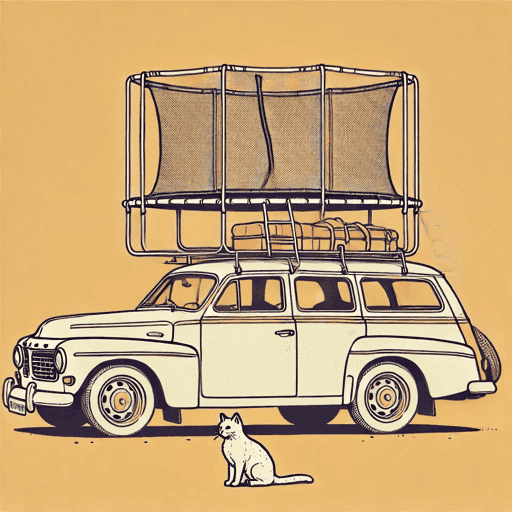
Belinda picks up Ollie and Luna from the foster home to transport them to their new home with PJ. Luna refuses to speak to adults and allows Ollie to communicate on her behalf. Since she discovered her mother’s body, Luna hasn’t removed her coat. She still insists that Frank wasn’t her father and demands a DNA test to prove it. When they arrive at their new home, PJ is waiting for them outside. Belinda escorts them inside to inspect the home for safety. Along with beds, PJ has purchased a trampoline, and the kids love it. They happily jump while eating the candy he bought them.
While inspecting the children’s bedroom, Belinda finds a box full of the newspaper articles Ivy has removed from the daily paper for PJ. PJ must continually lie to convince her that this is his home. He insists that he and Ivy remain close friends. PJ orders pizza for dinner, but Luna won’t eat and instead plays the piano in the living room. Ollie is shocked because he didn’t know she could play. PJ recognizes the Debussy piece she plays, which his mother taught him. When he asks Luna whether their mother taught her as well, she has a flashback to her grandfather’s sexual abuse and vomits all over the piano. She runs to the bathroom, locking herself inside. Pancakes is in the tub, and when she pets him, she feels better. She confesses to the cat that she plans to run away. Luna escapes through the window, and Pancakes follows her, already aware of her destination. Pancakes had been in the Meeklin home, which had “reeked with death” (76) in the time before the tragedy and had slept on Luna’s bed. Belinda and PJ try to get Luna to leave the bathroom but decide to leave her alone to recover.
Belinda gives PJ the children’s paperwork and tells him about Luna’s assertion that her father is a soap opera star who once lived in Pondville and now lives in Los Angeles. Faced with the reality of being alone with the children, PJ has second thoughts and wonders if the children should stay somewhere else. He suggests to Belinda that they should allow the DNA test, thinking it might be his way out. Ollie doesn’t want the test. PJ remembers what it was like to grow up without a father and has empathy for the boy. Belinda encourages PJ not to give in to Luna’s demands. After she leaves, PJ shows Ollie the PlayStation he bought for them.
Part 1, Chapter 9 Summary
Ollie removes the bathroom door and discovers that Luna has run away. PJ wants to call the police, but Ollie begs him not to since the police are all friends of his father’s. Ollie runs off in search of Luna. PJ considers calling Belinda, but he knows she will remove the children from him if she finds out he lost them on the first day. He already regrets taking the children in, but seeing their photo on their paperwork reignites his empathy and desire to help them. He calls Sophie to ask for help, but as always, she doesn’t answer or return his calls.
Ollie finds Luna at their old house with Pancakes. Luna was searching for the box full of cash her mother kept hidden under the bed, but she couldn’t find it and thus couldn’t enact her plan to run away. Ollie is hurt that Luna would run away and leave him behind. Luna is angry that Ollie told her secret to the school nurse. Ollie apologizes, saying that if she returns to PJ’s home, he will help her search for her real father. Luna agrees, saying she never wants to return to this house again because it is full of bad memories. The vultures watch Ollie and Luna leave the house and say “Alive, alive, alive” (84).
Part 1, Chapter 10 Summary
PJ always enjoyed putting his daughters to bed. After getting Luna back home, he tucks the kids into their new beds. Luna has a signed photo of Mark Stackpole, the actor she claims is her father. She got the picture when she wrote to Mark, telling him she was his daughter. PJ tells Luna about his road trip to Tucson and says they can find her father while they’re out west. The kids have a few weeks of school left before summer break, but when they were sent to the foster home, the school was unsure if they would return, and went ahead and gave them their grade-level diplomas. Luna suggests they skip the end of school and leave immediately for the trip. Before he leaves the room, he tells Luna that his brother, their grandfather, was an “asshole” and he knows he did something to hurt her, but it’s not her fault, and she doesn’t owe him forgiveness. Luna is comforted by hearing him “[…] say something aloud she had wished and wished her parents had said” (90).
Putting the kids to bed reminds PJ of how much he misses Kate, and he knows that they must go on the road trip so he can distract himself from his grief. He wants a drink and walks to his house for beer, but he finds none. He goes to Kate’s room, which has remained untouched since her death, puts on one of her hats, which seems to speak to him, and walks to a familiar park bench that faces the cranberry bogs where Kate died. Headlights shine on him as a car approaches.
Part 1, Chapter 11 Summary
Sophie is used to finding her father on the stone park bench that was placed near the site of Kate’s death as a memorial, but he’s usually drunk. This night, he is sober and on the way home, and he explains the messages he’s left her about the children. Sophie didn’t know her father had a brother, and she thinks the idea of him adopting children is preposterous, considering he can barely care for himself. This is reinforced by the fact that her dad left the kids at home alone. She checks on them in bed to ensure they’re okay, and the reality of their trauma hits her as she recalls her life after Kate’s death. Sophie feels she must help Ollie and Luna since she understands what it’s like to be their age and deal with grief.
PJ explains his plan to drive cross-country, but he lies about finding the children’s father, making Sophie believe that the kids staying with him isn’t a permanent arrangement. PJ also lies and says Fred told him he could take the Volvo on the trip. He also explains his plan to reunite with Michelle and ask her to be his date to Ivy and Fred’s wedding. Sophie, who is recently unemployed and struggling to get out of bed most days, agrees to go on the road trip to watch over the children.
Part 1, Chapter 12 Summary
Since she lost her job, Fred has been supporting Sophie without telling Ivy because she doesn’t want her to worry. This includes paying for Sophie to see a therapist. Though it’s nearly 1:00 am, Sophie goes on a run, something she does often.
Part 1 Analysis
While the opening chapters establish the bleakness of PJ’s circumstances, they also lay the groundwork for transformation. Through the intertwined experiences of PJ; his daughter, Sophie; and the orphaned children, Luna and Ollie, Hartnett foregrounds Grief as a Transformative Force. PJ’s grief is an ongoing condition. The loss of his daughter, Kate, looms over him, straining his relationship with his surviving daughter and deepening his sense of personal failure. His three heart attacks are physical reminders of mortality and symbolize the toll that unresolved grief can take on the body and spirit. Hartnett does not present grief as something to be overcome; instead, she shows how it shapes PJ’s identity, evident in his need for Ivy and Fred’s emotional support. Ollie and Luna’s loss is both sudden and incomprehensible, forcing them into the care of a man they barely know. Hartnett underscores how grief fractures families and destabilizes lives, but it is also the condition that brings these disparate characters together. The novel suggests that grief, though painful, creates the possibility for new connections, however tenuous, to emerge. Luna and Ollie’s paths forward are defined less by what they have lost, since their parents were abusive, than by how they learn to live with absence. PJ has lost his daughter, Kate, his marriage, his health, and parts of his purpose, and now he faces the immeasurable task of caring for traumatized children.
PJ, despite his age and regrets, is given opportunities for new beginnings, forcing him to reevaluate his choices as his story offers Redemption Through Responsibility. His discovery that his high school crush, Michelle Cobb, has been widowed presents him with the possibility of rekindling an old love, an idea that awakens a spark of vitality in a man otherwise resigned to decline. Michelle represents not just romance but the chance for PJ to revisit a life path he abandoned, to ask whether it is ever too late to pursue happiness. Defending his romantic fantasy to Sophie, he says, “I think I owe myself one great adventure” (87). With this statement, PJ claims responsibility for his own happiness, framing his quixotic cross-country road trip as the payment of a debt to himself, incurred through years in which grief and guilt led him to neglect his desires.
Fred and Ivy’s engagement, and their decision to leave PJ alone, induce him to give up drinking. Sobriety forces PJ to sit with his pain rather than numb it, fostering emotional groundwork that equips him, however imperfectly, to face Luna and Ollie’s compounded grief. By choosing sobriety, PJ demonstrates his ability to take responsibility for himself, which foreshadows his capacity to take responsibility for others. His decision is a small but necessary step toward reclaiming purpose. PJ is forced into a role of responsibility not just for himself but for two traumatized children. Though initially reluctant, PJ’s acceptance of the children signals a step away from passive despair and toward responsibility. He cannot bring back Kate or repair his marriage, but he can choose to show up for these children in the present. PJ’s story highlights how flawed and grieving people can still create connections that keep them going.
Despite the heavy emphasis on grief and trauma, the story also emphasizes the possibility of Finding Connection Amid Life’s Fragility by juxtaposing the pain of loss with the tenderness of human connection. Ivy and PJ’s unconventional post-divorce relationship exemplifies how love in its varied forms remains the best way to respond to loss. Romantic love hovers in the background through PJ’s nostalgia for Michelle Cobb, which reveals both the durability of desire and the hope that new love might still be possible in later life. The story explores parental love through PJ’s memories of Kate and his fractured but enduring connection to Sophie. Their relationship is marred by unresolved grief and PJ’s alcohol use, yet Sophie remains part of PJ’s life, and the possibility of reconciliation glimmers beneath their tension. Luna and Ollie’s presence compels PJ and Sophie to confront the responsibility and possibility of loving people who were once strangers but are now integral to their family, and to address their own unresolved relational issues to care for these vulnerable children effectively. The forced proximity of the road trip offers the opportunity to repair what’s broken and start anew.
Hartnett employs her signature technique of giving voice to inanimate objects, including PJ’s house, his hat, and various animals, to externalize his inner world and symbolize his profound loneliness. By allowing these objects to observe and comment on PJ’s life, Hartnett creates a chorus of quiet witnesses who echo his feelings of abandonment and disconnection. The house feels the emptiness, recalling when it was once filled with warmth and family. Similarly, the hat takes on a personality of its own, representing PJ’s attempt to hold onto Kate’s memory. Pancakes the cat is a symbol refracting the novel’s themes of grief, redemption, and love. He is a symbol of mortality and embodies the inevitability of loss. Still, he is also a creature in need of care, and he draws near to humans in search of connection. At the nursing home, the cat comforts dying residents even as it unsettles the living, embodying the paradox of affection and fear that defines human relationships in the face of mortality. Pancakes is both comic relief and a bridge between the living and the dying, forcing characters to confront mortality while also offering comfort.

Unlock all 55 pages of this Study Guide
Get in-depth, chapter-by-chapter summaries and analysis from our literary experts.
- Grasp challenging concepts with clear, comprehensive explanations
- Revisit key plot points and ideas without rereading the book
- Share impressive insights in classes and book clubs