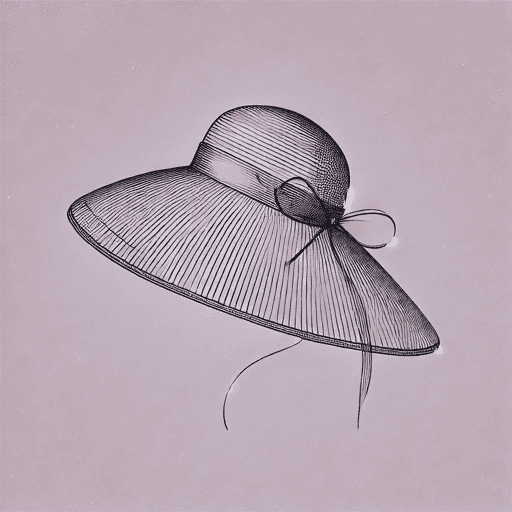
The Ruined Maid
18 pages • 36-minute read
Thomas HardyThe Ruined Maid
A modern alternative to SparkNotes and CliffsNotes, SuperSummary offers high-quality Study Guides with detailed chapter summaries and analysis of major themes, characters, and more.
Further Reading & Resources
Related Poems
Content Warning: This section of the guide includes discussion of gender discrimination and sexual content.
“In the Days of Crinoline” by Thomas Hardy (1914)
Like “The Ruined Maid,” the poem “In the Days of Crinoline” presents a link between clothing and female sexuality. As soon as the wife of a vicar gets out of his sight, she puts on an “ostrich-feathered hat” (which is reminiscent of ’Melia’s three-feathered hat), to replace her dowdy bonnet. She then heads for town, from where she later returns with a lover and they disappear into the woods together. After their tryst, she replaces the hat with the humble bonnet and returns to her husband, who never suspects a thing.
“In Church” by Thomas Hardy (1914)
The atheist Hardy did not enjoy Christian church services, and “In Church” he satirizes a vain clergyman who mesmerizes his congregation with his voice and dramatic gestures. After the sermon, when the clergyman goes back to the vestry, he inadvertently leaves the door slightly ajar, and a young girl from his Bible class, who adores him, observes him repeating, obviously with great pride and self-satisfaction, the well-practiced gestures and poses that had so moved his congregation.
“At Tea” by Thomas Hardy (1914)
Hardy often shone the spotlight on unhappy marriages, and in many of his “satires of circumstance,” things are not quite what they appear to be. In “At Tea,” a young wife and her husband take tea with a female guest. The wife is proud of her husband and feels that she is in a position where others would envy her. However, what she does not know is that the guest was in fact her husband’s first choice as bride, but fate would not allow it. The guest behaves amiably and betrays nothing of this history, even though she is aware of it, while the husband “throws her a stray glance yearningly.”
Further Literary Resources
“Hardy and Victorian Popular Culture: Performing Modernity in Music Hall and Melodrama” by Richard Nemesvari (2010)
In this essay, which appears in The Ashgate Research Companion to Thomas Hardy, Nemesvari discusses “The Ruined Maid” in terms of the stereotype of the upwardly mobile “fallen” woman in music hall songs. The poem is a “comedy of unapologetic advancement” where ’Melia “asserts her autonomy by publicly performing a part in the urban drama that requires only self-assurance (along with proper costuming and props) to pull off.” Nemesvari further points out that ’Melia has made herself “just another commodity available for purchase in the commercialized city, but the poem resolutely chooses to ignore this, and concentrates instead on her subversive potential.”
“A Short Analysis of Thomas Hardy’s ‘The Ruined Maid’” by Oliver Tearle
This essay is a concise analysis of the poem in one of Tearle’s “Interesting Literature” essays. The poem is written “in the jaunty and light-hearted form and metre associated with much nineteenth-century satirical poetry.” It poses “some curious questions about attitudes to gender (or, let’s face it and be specific about it, to women and sex) in Victorian society.”
Gender and Poverty in Nineteenth-Century Europe by Rachel G. Fuchs (2005)
In her discussion of sex work in 19th-century Europe, Fuchs quotes several stanzas from “The Ruined Maid.” She comments, “some women stayed in commercial sex work because the money was good and they liked the finery, despite the degradation.” The majority, however, became sex workers because otherwise they could not afford housing or food. In England, most worked in domestic service or needlework and there was no other work available. One underaged sex worker in Kiev, Ukraine, reportedly said (in another echo of Hardy’s poem), “Work all day? What for, when someone like me can wear a hat and beautiful dress, and have white hands just like a lady?”
Listen to Poem
Classic Poetry with Lark reads “The Ruined Maid” by Thomas Hardy
This reading of “The Ruined Maid” was uploaded to YouTube in 2015 by Classic Poetry with Lark. The reader is unnamed. The text is displayed on screen.

Unlock all 18 pages of this Study Guide
Get in-depth, chapter-by-chapter summaries and analysis from our literary experts.
- Grasp challenging concepts with clear, comprehensive explanations
- Revisit key plot points and ideas without rereading the book
- Share impressive insights in classes and book clubs