The Scorpio Races
61 pages • 2-hour read
Maggie StiefvaterThe Scorpio Races
A modern alternative to SparkNotes and CliffsNotes, SuperSummary offers high-quality Study Guides with detailed chapter summaries and analysis of major themes, characters, and more.
Background
Content Warning: This section of the guide includes discussion of death, child death, graphic violence, and animal death.
Cultural Context: Celtic Mythology and Water Horses
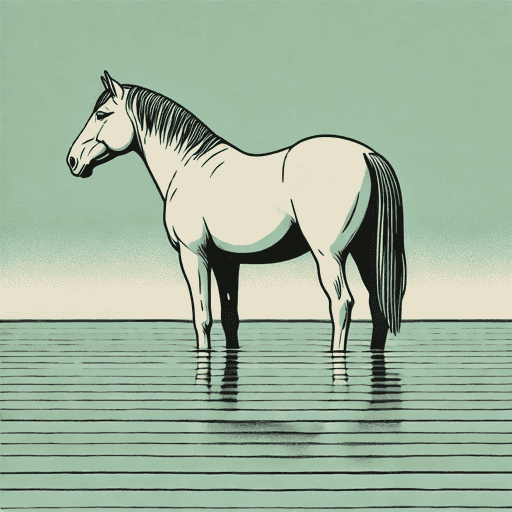
In Celtic mythology, water horses, or kelpie, are supernatural beings associated with lochs, rivers, and the sea. They are typically described as shapeshifting creatures that appear as beautiful horses near water but reveal a monstrous nature once mounted. They are also said to be able to shift into women, luring men to the ocean and their deaths. They are “particularly attractive to children […and their] sticky magical hide will not allow them to dismount. Once trapped this way, the kelpie will drag the child into the river and then eat” them (Johnson, Ben. “The Kelpie, Mythical Scottish Water Horse.” Historic UK). The kelpie reflects a broader mythological pattern in which nature is both life-giving and destructive, demanding respect as humans try to control it.
In The Scorpio Races, Stiefvater adapts this Celtic mythology through the capaill uisce that emerge from the Scorpio Sea each October. Like their folkloric counterparts, these water horses are breathtakingly beautiful but lethally dangerous, capable of dragging riders to their deaths or attacking livestock and townspeople, even as Puck repeatedly notes that they have a “magic” about them that draws humans in. The water horses’ attraction to blood and the sea also mirrors traditional accounts. However, the novel expands the mythology by integrating the creatures into the culture and economy of Thisby. The capaill may be predators, but they are also captured, trained, raced, and even sold, creating a ritualized interaction between humans and the supernatural. By grounding the novel’s central conflict—the Scorpio Races—in mythological tradition, Stiefvater preserves the danger traditionally associated with kelpies while exploring how a community constructs identity and livelihood around forces it cannot control, examining The Conflicting Beauty and Danger of Nature.
Genre Context: Low Fantasy and the Bildungsroman
Low fantasy is a literary genre in which fantastical or supernatural elements are presented as parts of a broadly realistic world (often the real world), as opposed to high fantasy, where entire imaginary realms and magical elements are constructed. The bildungsroman, meanwhile, is a coming-of-age narrative that traces a protagonist’s psychological and moral growth from youth into maturity. When combined, low fantasy and the bildungsroman allow authors to externalize internal development: Magical elements often function as symbolic challenges that mirror the protagonist’s emotional or social struggles. In such works, growing up is about learning to navigate complex realities of adulthood like identity, loss, and responsibility, and these complexities are heightened by the narrative’s extraordinary elements. For example, Natalie Babbitt’s 1975 novel Tuck Everlasting takes place in the 19th-century United States but uses the conceit of the fountain of youth to explore its young protagonist’s evolving understanding of life’s purpose.
In The Scorpio Races, fantasy is confined to the capaill uisce on Thisby, and the water horses are themselves integrated into the book’s realism: The island’s residents build traditions, festivals, and economic structures around them. Within this setting, the novel functions as a bildungsroman, exploring the growth and development of both Puck and Sean. Puck’s decision to enter the races begins her change from dependent younger sister to self-reliant young woman. The magical danger of the water horses externalizes the risk of adulthood, as she is forced to deal with financial insecurity, loss, and independence. Similarly, Sean begins to change as he recognizes his unhappiness under Benjamin Malvern’s authority and his need for autonomy and freedom. For both, the answer to their problems lies in the Scorpio Races, as the capaill uisce become a catalyst for their maturation. By embedding the protagonists’ development within this world, the novel uses fantasy to intensify and illuminate the challenges of growing up.

Unlock all 61 pages of this Study Guide
Get in-depth, chapter-by-chapter summaries and analysis from our literary experts.
- Grasp challenging concepts with clear, comprehensive explanations
- Revisit key plot points and ideas without rereading the book
- Share impressive insights in classes and book clubs