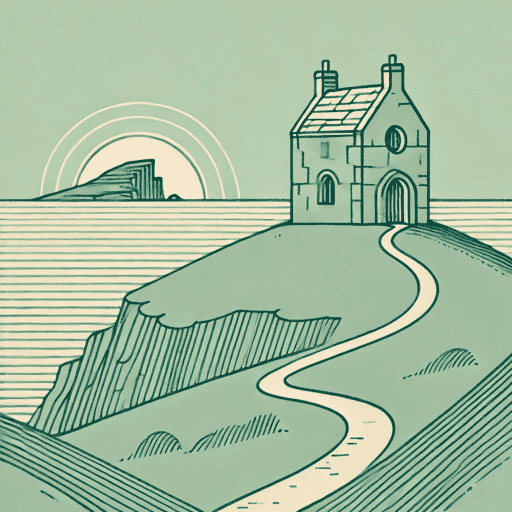
The Second Death of Locke
64 pages • 2-hour read
V. L. BovalinoThe Second Death of Locke
A modern alternative to SparkNotes and CliffsNotes, SuperSummary offers high-quality Study Guides with detailed chapter summaries and analysis of major themes, characters, and more.
Themes
The Conflict Between Personal Bonds and Professional Duties
The Second Death of Locke explores the tension between personal loyalty and institutional duty, ultimately arguing that a person’s devotion to the people who are most important to them is a more binding commitment than any national cause. As Grey and Kier repeatedly prioritize each other’s safety and well-being over their military orders, the narrative suggests that commitments based on love often place individuals in conflict with the very systems they have sworn to serve. Grey and Kier’s determination to prioritize each other is first established through their illicit decision to undergo a forbidden binding ritual. Within the context of a world in which all magic is waning, the act of rendering a mage/Hand pairing exclusive further limits an increasingly precious resource. Yet despite their knowledge that binding is punishable by death, Grey and Kier engage in this irreversible process, formalizing their personal allegiance as their own highest law, which clearly supersedes military protocol in their eyes. This perspective is reinforced by the cynical comment of the veteran Hand, Mare Concord, who warns Grey, “We’re going to die under Scaelas’s banner, and for what?” (11). Mare’s bitter words frame institutional duty as a thankless, fatal path, unlike the egalitarian and life-affirming nature of Grey and Kier’s partnership.
As the pair’s journey continues, the stakes of their choices escalate severely, and they graduate from breaking rules to openly risking their lives for one another on a daily basis. However, they are not the only characters who choose to place personal commitments above professional ones, for their mindset infects their entire company with an element of insouciant insubordination. Even the staid Eron, who is known to enjoy a “perfect performance record” (259), willingly risks blemishing his excellent professional reputation by allowing Grey to temporarily assume his identity in order to hide her own. Similarly, Ola and Brit eventually set aside their disagreements with Grey and rally around her cause, forging into great danger at her side simply because they are all comrades who have survived intense ordeals together.
On a broader political level, Lord Scaelas and Sela’s mother, Cleoc, both make similar commitments when they put their own resources at Grey’s disposal to help her regain her lost isle. Although Grey is a risky ally at this early point in her own political career, Scaelas and Cleoc commit themselves to helping her; Scaelas is deeply influenced by his status as her godfather and his past friendship with her father, while Cleoc is grateful to Grey and her companions for keeping her daughter safe. Although both leaders will ultimately benefit from this alliance, they nonetheless prioritize their emotions over their broader responsibilities to their individual nations, taking a significant risk by aiding Grey in the conflicts that now surround the resurrected Isle of Locke.
Surrounded by devoted companions and an eternally committed partner, Grey reciprocates this level of devotion in her confrontation with the goddess Kitalma. Faced with the choice of resurrecting the fallen Kier at the cost of either his freedom or her own immense power, she does not hesitate to place Kier’s well-being before her own responsibilities to her resurrected island-nation. As the living source of all magic in Idistra, Grey has an institutional duty to prioritize Locke and its power, but her willingness to sacrifice that power for Kier’s life demonstrates that her most sacred duty is to him. Through these dramatic acts of devotion, the novel consistently validates characters who allow their love for their partners and comrades to influence their choices, often forsaking institutional loyalty entirely. In this context, upholding one’s personal bonds becomes the most meaningful and legitimate course of action.
The Burden of Secrets
In The Second Death of Locke, Grey’s immense power and hidden identity create a destructive burden that isolates her and demands intense sacrifices. Although her secret status as the heir to Locke is the source of her vast magical wellspring, this advantage is offset by the ongoing strain of navigating the aftermath of her family’s deaths even as she counters constant threats against her own life. In her view, true power is inherently tied to loss and necessitates the erasure of her deepest self. The psychological weight of Grey’s secret is evident in her recurring nightmares, for her violent visions of the island’s destruction capture the terror of her unprocessed trauma. As the novel eventually reveals, her unique magical power is intrinsically linked to the demise of her family and her nation, and every use of her talent thus becomes a fresh reminder of her loss. As she struggles beneath the strain of hiding who she really is, the heightened tension of Idistra’s political situation threatens to destroy the fragile peace she has found in Kier’s company.
From the very beginning, Kier willingly shares the burden of Grey’s secret, aiding in the forgery of a letter that perpetuates the illusion that her deceased brother, Severin, may have survived the island’s destruction; this ploy is meant to shield Grey from discovery and discourage any pursuers. When they engage in this desperate act, Kier, Grey, and Lot are still no more than teenagers. and this fact highlights the dire nature of the situation that dogs Grey into her adulthood. Ultimately, her dangerous secret has condemned her to a life of concealment and fear, and the constant threat of her past drives her every thought and action in the present.
Although Grey has survived by keeping the truth of her origin and abilities a secret from all but Kier, the weight of these unspoken truths puts her in deep danger, and the issue is compounded by the fact that she and Kier are secretly bonded to one another. This latter secret becomes life-threatening when she is separated from Kier and cannot lend her magic to Brit during a deadly attack in an inn. As a furious Ola later confronts Grey, the protagonist finally realizes that keeping secrets from her travel companions might jeopardize everyone’s survival, and this harsh lesson paves the way for her grudging admission later in the novel that she is in fact the true heir to Locke.
The weight of Grey’s secrets finally comes to a head, manifesting physically and violently during an ambush by a host of enemy assailants. On this desperate occasion, she is forced to cast aside all caution and reveal the depths of her magical power by drawing on the energy of the enemy wells and unleashing a catastrophic blast that kills all 43 attackers. While this act saves her and her companions, it is depicted as an almost uncontrollable detonation that leaves her physically and magically depleted. She has suppressed her secrets for years, and in this moment, the novel frames the secret nature of Grey’s power as a burden to be shed. Only when her companions fully understand her true nature does she finally begin to move beyond the pain of her unprocessed trauma, building closer bonds with those around her.
In the novel’s climactic scenes, when the goddess Kitalma offers to resurrect Kier for a grievous price, Grey once again feels compelled to take up the burden of secrecy by keeping the truth of this bargain from Kier himself, even though his very life hangs in the balance. Only when she admits the truth to Leonie, inadvertently allowing Kier to overhear, does she come to grips with the fact that her secrecy serves no one. Faced with Kier’s righteous fury over her deception, she finally acknowledges that the dire consequences of Kitalma’s offer can only be dealt with openly, in tandem with her most trusted partner and companion. As the two work together to free the isle from invaders and cooperatively choose a fate that works best for them both, Grey finally abandons all vestiges of concealment and fully embraces her power and her public role as the rightful ruler of Locke.
Sacrifice as the Ultimate Expression of Love
The Second Death of Locke posits that true love is a radical act of self-abnegation and is measured by the willingness to make ruinous sacrifices for the sake of one’s beloved. As the narrative rockets through a series of intensifying conflicts, Grey and Kier’s mutual sacrifices escalate from small acts of protection to a willingness to give up their identity, their freedom, and even their very lives. The folklore of Locke’s origins also reinforces this mindset, for the goddesses Kitalma and Retarik share a passionate history that echoes the dynamics driving the novel’s protagonists. In the more optimistic version of this creation myth, Retarik gives her heart freely to Kitalma, making it clear that the very essence of Idistran magic arises from an act of sacrificial love. This concept is made brutally real for Grey during the destruction of the Isle of Locke, when her brother Severin sacrifices himself to save her from the invaders. Specifically, he uses his magic to shield her from the attackers and urges her to detonate her power, knowing that this act will kill him even as it ensures her survival. Deeply traumatized by this moment, Grey grows up with the belief that love itself is inseparable from loss and sacrifice.
This pattern of sacrificial love is replicated and intensified as Grey develops a complex relationship with Kier. Even when the two are still mere teenagers, they make deep commitments to one another, willingly giving up much of their own freedom and autonomy to protect one another. Throughout their military endeavors, this pattern constantly recurs, with both Grey and Kier rashly putting themselves at risk to protect one another. The pattern culminates when Kier seeks to shield Grey’s true identity by falsely confessing to being Severin of Locke; in this moment, he willingly makes himself a target in order to allow Grey to escape her enemies’ clutches. This act mirrors Severin’s sacrifice years ago, retraumatizing Grey even as Kier’s devotion ensures her survival.
The pair’s love culminates in a final, mutual sacrifice before the goddess Kitalma. After Kier loses his life, becoming a sacrifice to resurrect the Isle of Locke, Grey is offered a choice. She can only bring him back by sacrificing either his freedom or her own power. Having already promised him that she would not give up her power, she finally comes to grips with the fact that the only viable choice is for Kier to give up his freedom. Kier’s willingness to accept this fate and Grey’s willingness to enact it combine to transform the sacrifice into a shared, conscious decision. Despite Grey’s initial reluctance to broach the issue, their open, honest meeting with the goddess shows that they have chosen to prioritize both Kier’s life and their union above all else. Through these layered examples, the novel posits that the deepest and truest form of love can only be proven through the radical act of sacrifice.

Unlock every key theme and why it matters
Get in-depth breakdowns of the book’s main ideas and how they connect and evolve.
- Explore how themes develop throughout the text
- Connect themes to characters, events, and symbols
- Support essays and discussions with thematic evidence