The Secret of Secrets
59 pages • 1-hour read
Dan BrownThe Secret of Secrets
A modern alternative to SparkNotes and CliffsNotes, SuperSummary offers high-quality Study Guides with detailed chapter summaries and analysis of major themes, characters, and more.
Important Quotes
Content Warning: This section of the guide features depictions of death, graphic violence, emotional abuse, and physical abuse.
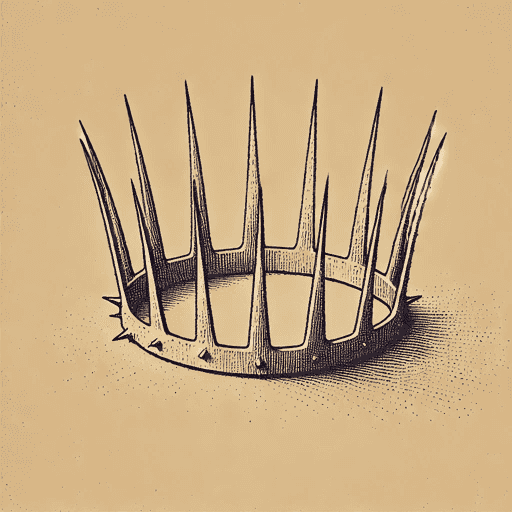
“The Statue of Liberty wears a radiant crown—an ancient halo—that universal icon we have used through history to identify special individuals who we believe possess divine enlightenment…or an advanced state of consciousness.”
(Chapter 1, Page 15)
Halos appear throughout the early chapters of The Secret of Secrets as a recurring motif related to the novel’s thematic interest in The Nature of Human Consciousness. Here, Robert Langdon suggests that the artistic use of the symbol is related to a universal search for the source of consciousness and the possibility of other states. The use of the image in the Statue of Liberty foreshadows the involvement of the government in the plot to sabotage Katherine Solomon’s work.
“The Golem knew from experience that the universe was far more complex and beautiful than most could comprehend. The Moderns still could not accept the Truth that the Ancients understood intuitively…The human body was nothing but a temporary vessel in which to experience this earthly realm.”
(Chapter 6, Page 40)
The mysterious figure known as the Golem acts as a manifestation of the debate about the source of human consciousness. In this passage, the reference to the Ancients and the Moderns points to a 17th-century philosophical debate about whether ancient or modern writers had more merit, affirming his belief that he is an ageless being. The Golem reframes the debate to align the Moderns with materialists and the Ancients with noetic scientists like himself and Solomon.
“By erasing the letter aleph, א, the Hebrew word for truth—emet—was transformed into something far darker—met—the Hebrew word for dead. […] Truth became…Death.”
(Chapter 9, Page 54)
The Golem takes his name from a real-life Jewish myth about creatures called golems that are controlled through the use of shems, ritual objects inscribed with the name of God which can be removed or inserted into the golem’s mouth. The most famous version of the myth, which originated in Prague, replaces the shem with the carving described above, which can be altered to disable the golem. In the novel’s final chapters, the Golem erases the aleph to reveal his true form.
“The only remaining explanation, as incomprehensible as Langdon found it, was that Katherine had experienced an actual precognitive dream…her own Titanic premonition.”
(Chapter 16, Page 81)
Throughout the novel, Langdon is forced to reconsider his long-held believes about the nature of reality and the existence of supernatural forces. This passage suggests that Langdon believed Solomon’s theories about the source of human consciousness at an early stage in the novel, despite his repeated denials. Ultimately, the novel suggests that Solomon is correct about a universal consciousness.
“After the Czech Republic had joined NATO in 1999, more than eleven hundred surveillance cameras had been positioned in Prague as a part of a U.S.-funded classified surveillance partnership known as Echelon.”
(Chapter 20, Page 96)
Although the villains at the heart of the novel form a multinational coalition, anti-American sentiment is a powerful force throughout the novel. In this passage, the use of italics to emphasize the number of cameras suggests that the figure is excessive, subtly supporting arguments about American interference abroad. This highlights the theme of The Ethics of National Security. Ultimately, the novel suggests that the American government sometimes oversteps boundaries in the name of national security.
“‘Professor, I’ve ordered you the “Luce”—CottoCrudo’s signature concoction of Canadian whiskey, cherry bitters, maple syrup, and bacon.’
Bacon? Langdon would have much preferred his usual Vesper martini with Nolet’s Reserve gin.”
(Chapter 24, Page 113)
In this passage, Langdon’s signature drink order of a Vesper martini is intended to draw a comparison between Langdon and James Bond, the fictional British spy attributed with popularizing the cocktail. The fact that the mysterious organization Q, which seeks to silence Solomon’s research, is named after another character in the James Bond novels further aligns The Secret of Secrets with the world of Bond.
“Many scriptural accounts of mystical experiences—visions, ecstasies, divine encounters, transcendent revelations—all seemed to describe, with uncanny specificity and accuracy, the experience of an epileptic seizure.”
(Chapter 30, Page 142)
Seizures appear as a recurring motif throughout the novel, providing a clue about the connection between Sasha Vesna and the Golem. Seizures add an interesting dynamic to the debate about materialism and noetics since they occur in the brain but appear to transcend human experience. This adds to the novel’s debate about The Nature of Human Consciousness.
“He was pleasantly detached from his broken physical form, untroubled by pain or injury, as if he were rising and leaving the complications of the world behind him. There was no fear…only a swell of serenity. It was unlike anything he had ever experienced in life.”
(Chapter 30, Page 147)
The novel depicts three out-of-body experiences, all of which occur as a major villain is dying. This passage, in which Janáček dies after being pushed off a cliff by the Golem, echoes the novel’s prologue, in which Gessner is tortured and killed by the Golem, and the later death of Finch. The fact that the Golem is responsible for all these deaths, and the subsequent out-of-body experiences, reinforces his status as a manifestation of the debate about consciousness.
“The doctor quickly explained a procedure that involved implanting a small chip in Sasha’s skull. If Sasha felt a seizure coming on, she could activate the chip by rubbing a small magnetic wand on her head, which caused the chip to generate electric pulses that interrupted the onset of the seizure…halting the episode before it even began.”
(Chapter 32, Page 55)
Vesna’s anti-seizure implant acts as a manifestation of the novel’s criticisms of The Dangers and Limits of Technology. Although Vesna believes that she is being helped by Gessner, it is eventually revealed that her implant was a part of a CIA-funded project. Ultimately, the novel suggests that these types of technologies should not exist because they risk exploitation.
“The newlyweds headed back to the elevator, having been up here long enough to photograph themselves before moving on, most likely to the next photo opportunity. Langdon sometimes sensed the only reason to do anything anymore was to post it for the world to see.”
(Chapter 47, Page 226)
This passage reflects the novel’s sustained criticism of technology. Langdon’s criticism of the newlywed’s interest in social media is echoed by the husband, who is described as being embarrassed by his wife’s behavior. Ironically, the fact that the couple has a phone readily available enables Langdon to retrieve Solomon’s message.
“If you view a murmuration of starlings not as many individual birds—but rather as one complete organism—then the synchronization is to be expected. The starlings are moving as one because they are one…an interconnected system. No separation. Much like the individual cells in your body, which form the integrated whole that is you.”
(Chapter 49, Page 236)
In this passage, Solomon compares her arguments about human consciousness to observable phenomena like the synchronized movement of flocks of birds in flight. This comparison challenges the human/animal binary by suggesting that humans may, like animals, be individual parts of a larger whole. The comparison to human body cells suggests that this pattern already exists at the micro level.
“He would first need to replenish his energy by visiting the site where he felt the pulse of Prague’s most mystical power. There, in a hallowed field of the dead, the Golem would kneel on the cold earth and draw strength from his namesake and inspiration…the golem who came before.”
(Chapter 53, Page 252)
This passage is representative of the novel’s interest in the connection between place and history. The fact that the Golem feels most energetically powerful near the site of his historical namesake suggests that historical locations and the events that happened there have the ability to affect the present. Significantly, the Threshold technology the Golem seeks to destroy is also found at a historical site, the Folimanka bunkers.
“Your brain is just a receiver—an unimaginably complex, superbly advanced receiver—that chooses which specific signals it wants to receive from the existing cloud of global consciousness. Just like a Wi-Fi signal, global consciousness is always hovering there, fully intact, whether or not you access it.”
(Chapter 56, Page 265)
Throughout the novel, Solomon uses the metaphor of the brain as a receiver to describe her model of nonlocal consciousness. In this metaphor, the brain can access certain waves of a larger global consciousness while filtering out others. The comparison to a Wi-fi receiver is apt because Solomon’s research is used in modern military technologies. This blends the themes of The Nature of Human Consciousness and The Danger and Limits of Technology.
“I trusted you were alive, Robert—I could feel it, whatever Alex said about you drowning.”
(Chapter 64, Page 299)
In this passage, Solomon claims that, despite all evidence pointing to his death, she could sense Langdon was alive and would come for her. The fact that the proof of Langdon’s death came from phone tracking suggests that this type of technology is less reliable than instinct. Ultimately, Solomon’s reliance on her instinct supports her argument that unexplainable feelings are sometimes more reliable than data.
“He felt gratified by the chance to provide accurate data like we’ve never been able to measure previously. With his family and hospice staff gathered around on a lovely afternoon, he passed away while being scanned inside the massive machine.”
(Chapter 74, Page 346)
This passage reflects the inherent difficulty of scientifically rigorous studies involving the human brain. The emotional references here to the test subject’s gratification and the idealized description of his death could be intended to disguise Solomon’s discomfort at experimenting on a human in the moment of their death. On the other hand, it could also convey her sincere gratitude and wonder at the subject’s willingness to use his death in the interest of science. In both interpretations, the scene suggests a comparison between Solomon and Gessner’s work and raises the question of what constitutes crossing ethical lines in the name of scientific advancement.
“Faukman had taken a defiant stand—urging his fellow editors to boycott all AI products in the face of the coming literary apocalypse.”
(Chapter 83, Page 398)
This passage reflects the novel’s sustained criticism of The Dangers and Limits of Technology. When young tech Alex Conan encourages Faukman to use AI, he resists on principle. He eventually relents, but the AI leads him astray, suggesting that it is not to be trusted in all situations.
“Langdon arched an eyebrow, looking extremely skeptical.
Thanks, Robert, she thought, considering remote viewing essentially defined her theory of nonlocal consciousness. A mind unrestrained by locality.”
(Chapter 85, Page 407)
In the second half of the novel, tensions emerge between Langdon and Solomon as Langdon struggles to hide his skepticism about the viability of Solomon’s theories. This passage suggests that Solomon is personally hurt by Langdon’s refusal to open his mind to her ideas. Ultimately, Solomon is proven right, challenging Langdon’s conception of the world.
“The Oracle of Delphi had regularly seen visions of the future while breathing gases escaping through a fissure in Mount Parnassus; the Aztecs spoke to future spirits while tripping on peyote; and the Egyptians saw tomorrow’s events while consuming mandrake and blue lotus.”
(Chapter 87, Page 417)
Passages like this, in which Langdon recalls a series of historical parallels to a given situation, appear throughout the novel. The passages contain three global examples of precognition while subjects are intoxicated, which supports Solomon’s theories about global consciousness. These passages highlight Langdon’s wide range of knowledge while also showing that Solomon’s seemingly extreme theories have historical counterparts.
“I’ve been collateral damage long enough! I’ve been nothing but a loyal colleague, and I deserve some fucking loyalty coming my way for a change. So get off your ass and do the right thing, goddammit!”
(Chapter 95, Page 451)
Although Ambassador Nagel is implied to be a villain in the first half of the novel, she becomes an important ally for Langdon and Solomon in the second half. In this passage, Nagel’s use of profanity while addressing the Director of the CIA reflects her strong sense that the agency’s treatment of her has been unjust. Significantly, Nagel’s actions are inspired by the death of Michael Harris, who is the only other American government official in the novel who is presented as ethical.
“In that moment, Katherine was imbued with a blissful sensation that her consciousness was free and did not require a physical form to exist. Even after she relocated her true self, the afterglow of the ‘untethering’ remained for many days.”
(Chapter 98, Page 469)
Solomon’s belief in a universal, nonlocal consciousness was inspired by her experience with VR while in graduate school. The fact that Solomon had to experience nonlocal consciousness in order to understand it helps to explain why Langdon struggles to accept the theory. Ultimately, Langdon is only convinced by concrete proof in the Threshold lab.
“And yet, to Katherine’s enormous frustration, rather than delving into the mysteries of consciousness and death, the CIA had harnessed nonlocal consciousness to create a surveillance coup of unimaginable proportions. Katherine was still struggling to accept that a technology like this could truly exist and that it could be weaponized so effortlessly.”
(Chapter 114, Page 448)
This passage reflects the novel’s thematic interest in The Dangers and Limits of Technology and The Ethics of National Security. Although Solomon is shocked that the technology she discovers has been exploited by the military, the novel suggests that military applications are often built on theoretical research that was not intended to be weaponized.
“Most frequently, the second identity manifested for the purpose of absorbing the host’s pain by enduring the trauma in her place—a kind of proxy victim—sustaining the anguish, blocking all memory of it, and enabling the host to ‘disassociate’ from her own suffering.”
(Chapter 123, Page 591)
In the novel’s final chapters, it is revealed that the Golem is Sasha Vesna’s alternate identity. This passage describes the psychological mechanism accepted as the explanation for dissociative identity disorder. However, Solomon argues that this alternate identity is provided by the global consciousness, returning to her argument about The Nature of Human Consciousness.
“As she made the vow, Nagel felt a sudden upwelling of emotion, and she realized that caring for Sasha Vesna might actually be the exact redemption her own battered soul required…a gradual atonement for her complacency and fear for her part in all that had transpired in Prague.”
(Chapter 133, Page 638)
In the final chapters of the novel, Ambassador Nagel disobeys instructions from her superiors in order to help protect Vesna. This passage suggests that she did so specifically to help assuage her guilt over her involvement in Threshold. The novel ultimately absolves Nagel of her abuse of her position and American authority, echoing the theme of The Ethics of National Security.
“In the world of national security, the bond of trust—even the deepest of loyalty—was routinely betrayed when the needs of the country outweighed the needs of a few of her citizens.”
(Chapter 136, Page 648)
In this passage, Nagel attempts to explain the betrayal of CIA Director Judd by suggesting that the interests of national security justify nearly any behavior. However, the novel provides many examples of individuals refusing to follow orders protecting national security because they believe the orders are wrong. Ultimately, the novel suggests that while morally gray areas in surveillance activities exist, national security cannot be a limitless endeavor.
“It’s the precise opposite, Katherine believed, seeing them as rays of enlightenment that flowed inward…representing the stream of cultures, languages, and ideas from the seven continents, all coursing into the melting pot that was the mind of America.”
(Epilogue, Page 671)
The motif of the halo returns in the epilogue, as Solomon and Langdon visit the Statue of Liberty to observe her spiked halo. In this passage, Solomon describes the halo as a symbol of the people and knowledge that make up the collective consciousness of America. The fact that Solomon sees the halo as a symbol of her own work suggests that she is beginning to think like Langdon.

Unlock every key quote and its meaning
Get 25 quotes with page numbers and clear analysis to help you reference, write, and discuss with confidence.
- Cite quotes accurately with exact page numbers
- Understand what each quote really means
- Strengthen your analysis in essays or discussions