The Secret of Secrets
59 pages • 1-hour read
Dan BrownThe Secret of Secrets
A modern alternative to SparkNotes and CliffsNotes, SuperSummary offers high-quality Study Guides with detailed chapter summaries and analysis of major themes, characters, and more.
Prologue-Chapter 27Chapter Summaries & Analyses
Content Warning: This section of the guide features depictions of death, graphic violence, emotional abuse, and physical abuse.
Prologue Summary
Neuroscientist Brigita Gessner finds herself floating over Prague in a pre-death out-of-body experience. She realizes she is in her underground laboratory, being tortured by a mysterious figure with a mud-caked face: the Golem. The figure accuses her of harming an unnamed woman, and forces her to admit to her crimes before killing her using a machine Gessner invented.
Chapter 1 Summary
Robert Langdon wakes in a hotel in Prague next to Katherine Solomon, his longtime friend and new lover, the morning after Solomon’s sold-out lecture on consciousness. Langdon introduced the talk by identifying the world’s most common religious symbol: the halo. During her talk, Solomon argued that artistic depictions of halos are proof of humanity’s long-held interest in consciousness.
Chapter 2 Summary
After killing Gessner, the Golem wanders through the streets of Prague, hoping to get home before “the Ether” (18) overtakes him. He rubs a metal wand on his forehead to push off the attack. Meanwhile, in London, an American named Finch grows anxious when he cannot reach Gessner.
Chapter 3 Summary
As Langon runs through Prague, he attributes his romance with Solomon to the magic of the city. Meanwhile, the Golem gags himself and enters a secret sanctuary within his home to begin a ceremony.
Chapter 4 Summary
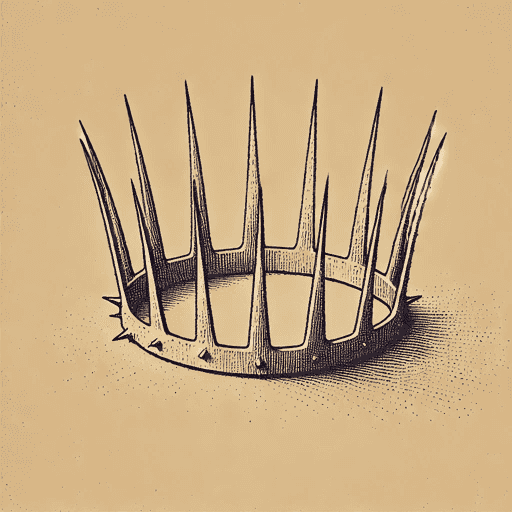
On the Charles Bridge, Langdon sees a woman wearing a spiked halo and holding a silver spear. He panics and runs back to his hotel, the Four Seasons, where he pulls a fire alarm. When he cannot find Solomon, he jumps from their suite into the Vltava River.
Chapter 5 Summary
Langdon successfully swims back to shore, troubled by the vision of the woman, which he cannot explain. Hotel security escort Langdon to his suite, where he finds a note from Solomon explaining that she has walked to a pre-scheduled meeting with Brigita Gessner.
Chapter 6 Summary
The Golem experiences the Ether, which allows him to see the truth of reality and to escape the temporary prison of his body. With his apartment lit by black lights, the Golem lights a candle at an altar dedicated to the unnamed charge he has sworn to protect, who has recently taken a new lover.
Chapter 7 Summary
In New York City, Random House editor Jonas Faukman prepares to read the completed manuscript of a new book by Katherine Solomon, which promises to revolutionize noetic science. He is interrupted by a staffer who announces that the secure server on which Solomon stored the manuscript has been hacked.
Chapter 8 Summary
Langdon is convinced that the woman he saw outside the Four Seasons was the same woman who appeared in Solomon’s dream the night before, warning the hotel would explode. Ironically, Solomon’s lecture that night featured evidence of pre-cognition. Police reveal that a bomb had been found and diffused in the hotel that morning.
Chapter 9 Summary
Although golems appear across Jewish mythology, the most popular version of the story takes place in Prague. The golem was a human figure created from mud to protect Prague’s Jewish population, but was destroyed when its creator erased a character from the word carved into its forehead, transforming the Hebrew word for truth into the Hebrew word for death.
Chapter 10 Summary
Captain Oldřich Janáček of the Czech Office for Foreign Relations and Information (known in Czech as UZSI) questions Langdon about his actions under the watchful eye of American diplomat Michael Harris. Harris warns Langdon that Harris likely knows the truth already, given Prague’s extensive surveillance system.
Chapter 11 Summary
In New York, Faukman panics when he realizes Solomon’s manuscript has been deleted from both of the publisher’s secure servers. Meanwhile, in London, Mr. Finch is so disturbed by Gessner’s silence and an unnamed action by Solomon that he orders field agents in New York and Prague to execute a predetermined mission.
Chapter 12 Summary
Janáček accuses Langdon and Solomon of planting the bomb in order to create publicity for her book’s arguments about precognition. Langdon hesitates to tell Janáček where Solomon is and is shocked when Harris reveals the location of Gessner’s lab.
Chapter 13 Summary
Privately, Harris explains to Langdon that he revealed the location of the lab to avoid an obstruction of justice charge. Harris leaves for the embassy to secure more help. In recent months, he has been working an under-the-table job for the ambassador, and he worries that the decision will haunt him.
Chapter 14 Summary
The Golem struggles to process the information he tortured out of Gessner the previous night: an atrocity built underground that would enable him to take down Gessner and her partners. He enters the Hotel U Prince to search for more information at the Black Angel’s Bar.
Chapter 15 Summary
It is revealed that Faukman printed a copy of Solomon’s manuscript as soon as he received it. He takes the manuscript to a nearby copy shop to secure a digital copy away from the Random House servers. Meanwhile, security technician Alex Conan tries to find the source of the hack.
Chapter 16 Summary
Janáček drives Langdon to the Crucifix Bastion, the site of the Gessner Institute. Janáček warns Langdon that he plans to interrogate Solomon alone. Privately, Langdon recalls how Gessner had bragged after Solomon’s lecture about having the financial autonomy to pursue any research she wants.
Chapter 17 Summary
Faukman is kidnapped on his way to the copy shop. Meanwhile, Alex Conan tries desperately to contact Faukman with news about the hack. When he can’t, Conan decides to break protocol and contact Solomon directly. As a last resort, Conan calls Langdon, who also doesn’t answer.
Chapter 18 Summary
In London, Everett Finch receives confirmation that his missions are ongoing. Finch is the director of a project called Threshold, run by an organization called Q. Finch worked at Q’s mysterious parent organization for decades before being tapped to lead Threshold with complete immunity. Meanwhile, the Golem uses a computer at the Black Angel bar to research a weapon to help him steal another weapon from Gessner’s lab.
Chapter 19 Summary
At the Gessner lab, Janáček rings for entry and flashes his badge at a security camera several times, but no one answers. He calls Solomon, who does not answer. Finally, Janáček orders his lieutenant, Pavel, to shoot at the glass door and forcibly enter the building.
Chapter 20 Summary
At the American Embassy, Czech staffer Dana Daněk is confused when her office fling, Harris, asks her to search a database of 1,100 cameras, part of the American-backed security project Echelon, for a woman wearing a spiked crown on the Charles Bridge.
Chapter 21 Summary
Janáček searches the lab for Solomon and Gessner, leaving Langdon in front of a sculpture by Paul Evans. While studying the piece, Langdon has a realization but decides not to act on it in front of Janáček. Elsewhere, the Golem travels to Gessner’s lab to find a key to enter the site of Threshold’s secret weapon.
Chapter 22 Summary
It is revealed that Lieutenant Pavel is Captain Janáček’s nephew. Pavel leaves Langdon alone briefly to use the toilet and find Janáček. While he is gone, Langdon pushes aside the statue, which he correctly assumed was a hidden doorway. Langdon hides in the hidden alcove, which he realizes is an elevator bank.
Chapter 23 Summary
Faukman’s kidnappers interrogate him brutally and demand to know if any other printed copies of Solomon’s manuscript exist. Faukman attempts to lie, but the kidnappers use an AI tool to determine he is lying. Meanwhile, Alex Conan begins to believe a Random House author may already be dead.
Chapter 24 Summary
Langdon recalls how Gessner bragged about the complex encrypted password to her laboratory elevator. Langdon began decoding it that night, and finishes the process quickly in the elevator, realizing that it is simply the first six digits of pi with the letter S in the middle.
Chapter 25 Summary
The object of the Golem’s obsession is revealed to be Katherine Solomon. The Golem believes that his very existence proves Solomon’s arguments about consciousness to be true. He is shocked to find UZSI officers at the Gessner Institute and decides to get rid of them quickly.
Chapter 26 Summary
Unaware that Langdon has escaped, Janáček celebrates his arrest. He hopes the arrest of two prominent Americans will boost his reputation and push back at American dominance in the city. However, Janáček soon receives a phone call from the American ambassador that shakes him to his core.
Chapter 27 Summary
Langdon searches for Solomon the facility basement. He finds neuroimaging and virtual reality machines but little evidence of what the lab researches. The last room is loud and noisy, with blueprints and whirring machines everywhere. He finds Katherine’s body in a mechanical pod in the center of the room.
Prologue-Chapter 27 Analysis
In the opening chapters of Secret of Secrets, Dan Brown builds tension through the use of structural techniques, such as cliffhangers. Cliffhangers allow Brown to slowly release important details and add depth to the central mystery. Chapter 7 takes place in New York, and ends with Faukman’s realization that Solomon’s manuscript has been stolen, leading readers to suspect for the first time that she might be in danger. Rather than pursue that thread, Chapter 8 returns to Langdon in Prague and ends with another realization: that Solomon’s dream predicted an actual bomb threat at the hotel. Brown’s use of back-to-back cliffhangers builds suspense by demonstrating that Langdon and Solomon are being pulled into a dangerous global conspiracy. The fact that Chapter 9 includes lengthy sections on the history of the golem myth also adds tension by delaying the resolution of important issues while providing important cultural and narrative context.
These chapters introduce the novel’s thematic interest in The Nature of Human Consciousness by defining two important terms: materialism and noetics. In flashbacks of her lecture scattered throughout the opening chapters, Solomon introduces a debate within the study of human consciousness between materialists like Dr. Brigita Gessner and noeticists like herself. Materialists believe that human consciousness is “a by-product of physical processes—the activity of neural networks along with other chemical processes within the brain” (101). On the other hand, noeticists argue that human consciousness “was not created by brain processes, but rather was a fundamental aspect of the universe—akin to space, time, or energy—and was not even located inside the body” (101). These definitions differ in their understanding of the relationship between the human body and human consciousness: materialists believe that consciousness exists within and because of the body while noeticists believe consciousness is fully separate from it. In this way, the debate between materialism and noetics is also a debate about the body-consciousness binary.
This debate about the body-consciousness binary appears throughout the novel. In the prologue, Dr. Gessner is shocked to find that although she is “without mass and without form […], the real her—her essence, her consciousness—seemed to be quite intact and alert” (5). Despite the fact that Gessner is an avowed materialist, this passage suggests a clear separation between Gessner’s consciousness and her body. The fact that the novel opens with this image reflects Brown’s ongoing interest in human interactions with the divine, which appears across the Robert Langdon series.
The mysterious figure known as the Golem also reflects the debate about materialism and noetics. The Golem describes himself as “living proof” (122) that Solomon’s arguments about the source of consciousness are correct. He repeatedly suggests a separation between his “mortal shell” (19) and his true self, calling his body a “temporary vessel in which to experience this earthly realm” (40). The Golem feels that his body is not his and that his consciousness simply manifested within it. He feels this separations so strongly that he is forced to wear heavy robes to anchor him to the earth. The Golem’s strong belief in the separation between his body and his true self suggests that he is a manifestation of the body-mind debate, providing evidence for the noeticists.

Unlock all 59 pages of this Study Guide
Get in-depth, chapter-by-chapter summaries and analysis from our literary experts.
- Grasp challenging concepts with clear, comprehensive explanations
- Revisit key plot points and ideas without rereading the book
- Share impressive insights in classes and book clubs