The Secret Place
60 pages • 2-hour read
Tana FrenchThe Secret Place
A modern alternative to SparkNotes and CliffsNotes, SuperSummary offers high-quality Study Guides with detailed chapter summaries and analysis of major themes, characters, and more.
Symbols & Motifs
The “Secret Place” Bulletin Board
Content Warning: This section of the guide includes discussion of bullying and gender discrimination.
The Secret Place bulletin board is a complex, shifting symbol that helps the author to explore The Tension Between Secrecy and Transparency. The school’s administration creates the board in part to keep the girls from engaging in online gossip and bullying. They acknowledge that adolescents need an anonymous outlet for their feelings, but they also use the board as a surveillance mechanism to keep control of the student body and monitor the girls for problematic or harmful behaviors. The girls cannot curse, threaten violence, or mock one another via the board without suffering immediate repercussions. Likewise, when something on the board does alarm the staff, they can increase their surveillance and attempt to intervene in the situation. In this way, the board helps both the girls and the school, and it also encourages the girls to tell their secrets, reinforcing the idea that secrets ultimately become burdens if they are not shared. In a religious school with doctrines that tout the value of confession and honesty, the board acclimates the girls to the idea that revealing secrets is healthier than keeping them.
The Cell Phones
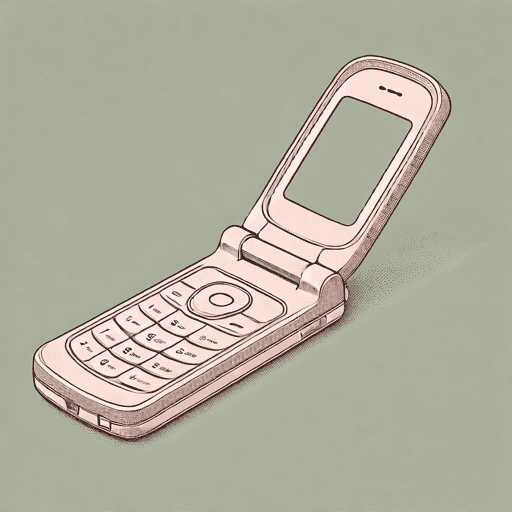
The cell phones that Chris purchases and uses to secretly communicate with his many girlfriends appear frequently in the text, functioning as complex motifs that advance the novel’s major themes. The cell phones help to illustrate the impact of Societal Pressures on Adolescent Girls in Ireland, as many of the girls at St. Kilda’s see dating as a distinct form of societal pressure. Girls who do not have boyfriends are mocked for either being unattractive and undesirable. Those whom Chris notices gain social capital, especially if they receive a secret cell phone as a tangible signal of their supposed romantic connection. The cell phones also illustrate The Dangers of Conforming to Group Dynamics, as Joanne’s group in particular values romantic relationships as evidence of increased social popularity. They do not want to be perceived as “losers,” so they prioritize dating, even when boys like Chris merely use them or show them disrespect.
When the girls in Holly’s group discover that Selena has one of Chris’s phones, the phone itself, with its many suggestive texts, becomes a symbol of The Tension Between Secrecy and Transparency. As the girls try to protect Selena from heartbreak, even going so far as to impersonate her in a text conversation with Chris, it is clear that this particular friend group values its own cohesion over the integrity and honesty of individual members. Yet none of the conversations on the phones remain secret; when the detectives discover the existence of the phones, the information stored on the device becomes a key piece of evidence in the mystery surrounding Chris’s death. Thus, the novel shows that secrets never remain hidden for long, and when they do come to light, they can have disastrous consequences.
The Students’ Physical Appearance
The students’ obsessive focus on their hair, makeup, and clothing becomes a supporting detail of the Societal Pressures on Adolescent Girls in Ireland. The girls in Joanne’s group focus intensely on their appearance, ensuring that their style matches prevailing trends, and their primary motivation for this level of conformity comes from their collective fear of ostracization in a traditional society that expects women and girls to project conventional images of femininity. However, they are also caught between clashing social norms; Catholicism demands modesty, but the adolescent society of St. Kilda’s and Colm’s compels them to project an air of sexual desirability. This dynamic becomes clear when Stephen and Antoinette notice the uniformity of Joanne’s group: their heavy-handed makeup; their long, straightened blonde hair; and the school-issued skirts with rolled-up waistbands in order to show more leg. The girls are trying to conform to two arbitrary sets of standards: their own, societally constructed idea of what it means to be a teenage girl and their male peers’ idea of what a “desirable” girl should look like. Joanne viciously mocks girls who do not sport the group’s accepted styles, and she also polices their expressions of sexual desirability, poking fun at girls whose image projects an inaccessible demeanor. One of the primary causes of antipathy between Joanne’s group and Holly’s is that Holly’s group rejects the societal expectations and dominant styles of the day. Joanne and her friends resent Holly’s clique for their relative social freedom, given that the same rules that Joanne enforces also become a social straitjacket preventing her and her friends from engaging in authentic forms of self-expression.

Unlock the meaning behind every key symbol & motif
See how recurring imagery, objects, and ideas shape the narrative.
- Explore how the author builds meaning through symbolism
- Understand what symbols & motifs represent in the text
- Connect recurring ideas to themes, characters, and events