The Seven Dials Mystery
57 pages • 1-hour read
Agatha ChristieThe Seven Dials Mystery
A modern alternative to SparkNotes and CliffsNotes, SuperSummary offers high-quality Study Guides with detailed chapter summaries and analysis of major themes, characters, and more.
Symbols & Motifs
Content Warning: This section of the guide includes discussion of death by suicide and death.
Clocks
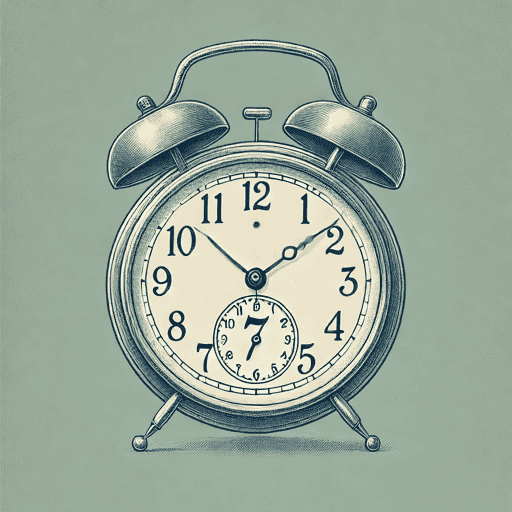
Clocks are a recurring motif that underscore the psychological tension and danger of the investigation. Their first appearance comes after Gerry’s murder, as seven clocks are lined up by his bedside, with the eighth thrown out the window. This moment introduces The Weaponization of Performance, as the person believed to be the killer has seemingly turned the guests’ prank into a more ominous message. This event provides a clue that something more dangerous is at play, subverting the official ruling that Gerry died by suicide. When the novel’s denouement reveals that the clocks were a message to help find the murderer—not a message from the murderer—this fact adds yet another layer to the idea of performance and hidden perception.
When the attempted theft occurs at Wyvern Abbey, Christie once again invokes a clock to heighten the tension and create a mood of foreboding. As Jimmy waits in the library and hears a noise, he thinks, “Was there, or was there not, a soft patter of feet along the terrace? No—his imagination. […] In the distance a stable clock chimed two” (121). In this moment, the chiming clocks breaks the tense silence, allowing the narration to shift to Bundle and then Loraine. With each narrative shift, the same two o’clock chime interrupts their investigations and synchronizes the different accounts, creating a sense of foreboding.
Additionally, the clock masks of the Seven Dials members create a similar sense of danger, stressing that these are dangerous people who are performing anonymity, even to each other. In this way, clocks serve as a recurring visual and a psychological motif, reinforcing the tension between what is seen and what is understood and suggesting that the control of time itself is both a strategy and a deception.
The Invention Formula
The invention formula symbolizes the novel’s literal and metaphorical stakes, tying directly into the weaponization of performance and The Contrast Between Amateur Sleuthing and Official Detective Work. On a literal level, the formula is the object of desire that fuels the unknown antagonists’ actions. As a scientific blueprint of immense value, it is sought by multiple parties, including the Seven Dials members and various government representatives. On a practical level, its movement throughout the narrative functions as a plot device, but it also highlights the lengths to which the characters will go in order to shape others’ perception and exert their influence over key events. The formula thus becomes a test of character and intelligence; morally upright characters like Bundle and Superintendent Battle seek to protect it, while Jimmy and Loraine try desperately to exploit it. In this way, the formula represents the concept of knowledge as power and highlights the ethical responsibility that comes with such a temptation. Jimmy’s theft and his manipulation of others demonstrate the danger inherent in misused knowledge, while the amateurs’ maneuvers to protect and recover the invention underscore their ethical stance and their resourcefulness.
Masks and Hidden Identities
The motif of masks and hidden identities illustrates the characters’ determination to manipulate others’ perceptions of reality. This motif appears most explicitly in the secret meetings of the Seven Dials club, where the members conceal their identities behind numbered masks and code names. By ensuring that the members do not recognize one another, the organization creates an atmosphere in which trust becomes impossible. This secrecy parallels the broader mystery, in which the characters continually misjudge one another. The idea that respectable, wealthy young men and women might secretly belong to a clandestine society highlights the novel’s focus on the weaponization of performance, and Christie implicitly argues that identity is never fixed or transparent. In a world where even friends conceal important truths from each other, the physical masks of the Seven Dials reflect the metaphorical masks that these characters persist in wearing.
The idea of hidden identity also appears in subtler ways, particularly in the contrast between the characters’ outward personalities and their concealed knowledge or motives. Gerry, for example, is portrayed as nothing more than a cheerful, foolish young man, but the letter that Bundle discovers suggests that he had become involved in a serious matter before his death. Similarly, Bundle herself often disguises the seriousness of her investigation beneath a façade of carefree curiosity. Because others underestimate her, she can gather key information without attracting suspicion. In this sense, the characters’ social roles themselves become masks, as the apparently idle aristocrats prove to be capable investigators.

Unlock the meaning behind every key symbol & motif
See how recurring imagery, objects, and ideas shape the narrative.
- Explore how the author builds meaning through symbolism
- Understand what symbols & motifs represent in the text
- Connect recurring ideas to themes, characters, and events