The Sirens
60 pages • 2-hour read
Emilia HartThe Sirens
A modern alternative to SparkNotes and CliffsNotes, SuperSummary offers high-quality Study Guides with detailed chapter summaries and analysis of major themes, characters, and more.
Important Quotes
Content Warning: This section of the guide includes discussion of gender discrimination, physical abuse, sexual assault, and death.
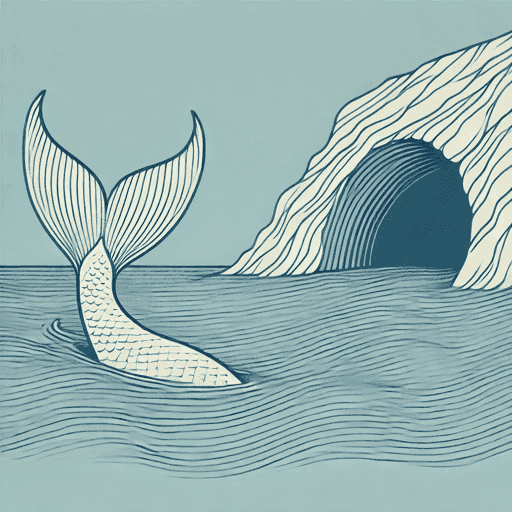
“She knows she is safe in her dark cave, with its slick rocks and its steady drip of salt. But the sea is hungry and it must be fed.”
(Part 1, Prologue, Page 3)
The Prologue establishes two prevalent ideas: the importance of safe spaces to harbor women, especially during vulnerable moments like childbirth, and the combined allure and danger of the sea, described with the imagery of a hungry animal. The opening scene of childbirth foreshadows the story of Baby Hope and establishes a mystery surrounding the mother’s identity and the child’s fate that will not be completely answered until the Epilogue.
“There’d been a dream, she remembers now: cold water licking her skin, stones digging into her feet. The scrape of rock against her skull. A man’s hot breath in her face, his fingers digging into her flesh—fear warring with the desperate need to fight, to survive—”
(Part 1, Chapter 1, Page 6)
The dream Lucy has the night she tries to strangle Ben is full of ominous imagery that suggests Lucy, not Ben, is the survivor of something. The image also foreshadows Mary’s assault by Byrne and, later, Jess’s by Cameron. The shared dreams, which Jess also experiences, establish the first link in the connection between all three of the female protagonists and contribute one of the fabulous aspects of the novel.
“She’d known then that she wanted to be a journalist. She wanted to be the one speaking into the microphone, unraveling a story like a spool of knotted thread. She wanted to be the one to fight injustice with the only weapon that matters: the truth.”
(Part 1, Chapter 2, Page 16)
Lucy’s interest in journalism is a defining aspect of her character while also contributing to the plot, as her curiosity allows Hart to introduce backstory about the disappearances of the Eight in Comber Bay. This interest will lead Lucy not only to investigate the deaths of the missing men but also her own history by locating Jess’s diary while also emphasizing the importance of Discovering and Expressing Oneself.
“Had Jess really balanced her on her knee and sang her lullabies? Had they spread butcher paper and crayons all over the kitchen table, drawing otherworldly forests and undersea caves?”
(Part 1, Chapter 4, Page 29)
Lucy’s bond with her sister, the reason she seeks refuge with Jess when she’s in trouble at school, speaks to the power of Female Connections as Protective Influence, one of the book’s central themes. This bond gains further resonance when Lucy discovers the true biological connection between them. The imagery of their pictures evokes the underwater world to which Eliza refers, linking the two timelines, and foreshadows the discovery Jess and Lucy will later make about their own abilities, while the singing alludes to the myth of the sirens.
“The water seemed to dance on her skin, fizzing and bubbling with joy, just as she remembered from before. But later, when her flesh cracked and peeled, she’d cried with fear at what she had done.”
(Part 1, Chapter 6, Page 45)
The skin condition that the three main characters share is described first through Mary’s experience. The image of joyful bubbles contradicts the warning the girls are given to avoid water as a potential danger. For much of the book, this condition is treated as something to be dreaded; ironically, this condition instead emerges as a sign of the power and ability the women share.
“Even in the cheery sunset colors of the postcard Jess had sent her, there had been something disturbing about those hollows etched into the sandstone. To look at them is to know immediately their darkness, to know the rust smell of water bleeding into rock, to hear the sea sluicing its way inside.”
(Part 1, Chapter 8, Page 61)
This passage captures the rhythms and robust imagery of Hart’s prose. For much of Part 1, the sea is represented as an inimical presence, a place of violence and danger. The caves are not only a physical setting, once Lucy arrives in Comber Bay, but also a metaphor for all the buried secrets that will surface throughout the book. In a further twist, the caves prove a site of danger only for men; for women, the sea and the caves are a protective, nurturing refuge.
“I want to do more. I want to draw people, to capture them completely with my paint and canvas. To tell their stories.”
(Part 1, Chapter 11, Page 86)
This early passage from Jess’s journal captures her 16-year-old self—the age of Mary and Eliza when they are transported. While this character trait establishes Jess’s sense of being an outsider and her love of painting as a way to tell stories, the need to find the truth offers a parallel to Lucy’s inquisitive nature. The word “capture” resonates with the physical imprisonment that Mary and Eliza experience, which telling a story carries a sense of liberation.
“When she’d taken that picture, she’d felt in control, like she was stepping into herself: confident and sexual. Not a girl any longer but a woman, at last. He’d woken that feeling in her […] And then he’d taken it away.”
(Part 1, Chapter 13, Page 98)
Lucy initially sees the nude photograph she took of herself as a form of self-expression, much like Jess and her paintings. This was a moment of hope and transformation for her, given her uneasy relationship with her body. The sexual experience also seemed to her a rite of passage, a transformation from girl to woman, as it is described by Jess. The betrayal and violence some men perpetrated on women is an ongoing subtext for the novel, as well as providing the inciting incident that sets the plot in motion.
“I’m worried that one day, my improvised restraint won’t be able to hold me. That caught in the dream, I’ll sleepwalk into the dam. And I’ll drown with them.”
(Part 1, Chapter 16, Page 122)
Jess’s dream of the shipwrecked women is so powerful it compels her to sleepwalk, which is revealed later to be an aspect of The Pull of Familial Relationships she feels toward Mary. The sleepwalking is also the expression of an unconscious understanding—her need to be around or in water—which, in the early parts of the novel, the women ironically regard as a danger and a threat.
“A search is underway for survivors, after several women were sighted in the vicinity the vessel was last seen.”
(Part 1, Chapter 17, Page 136)
Lucy’s research on the Naiad brings up a new twist with the suggestion there might have been survivors; all the references up to this point have been of drowning. Even the monument assumes all the passengers were lost, along with the crew. This passage follows mentions of the singing, which hints at a more supernatural persistence of these women’s spirits in the area. This device of the newspaper clipping allows Hart to add information and backstory that will help the reader understand the broader context of what happened on the ship and after.
“The water pulled at her with hands that were icy but gentle, and something sparked inside her, something still and buried curled suddenly into life.”
(Part 1, Chapter 18, Page 141)
Mary’s experience when she enters the stream following Eliza is the first suggestion that water is not as harmful to her as she’s been told it is. The sense of an awakening realization speaks to the transformation and new understandings that Mary, along with Jess and Lucy, will achieve and undergo throughout the novel.
“Lucy remembers seeing the Odyssey among the books heaped on Jess’s dining room table, and thinks of Charybdis and Scylla, female nymphs who became monsters of the sea. The sirens, luring sailors to their deaths.”
(Part 1, Chapter 21, Page 165)
The title of the novel is an allusion to the mythical creatures described in the epic poem The Odyssey, attributed to Homer. This is a recurring motif that adds to the mythical context of the novel. The archetype of the sirens as alluring but dangerous women reflects long-held human beliefs about the sea—imagery that Hart initially replicates—by personifying its dangerous allure in the form of monstrous women. The twist Hart gives the myths is that her sirens are destructive only to men who have otherwise escaped justice.
“Did it hurt, to drown? Or had it been like the strange memory Mary had, of silver bubbles and darkly drifting hair?”
(Part 2, Chapter 22, Page 176)
Part 2 complicates the novel’s imagery of the sea by describing it not simply as a threat of danger but as a place of welcome, nurturance, and even joy, a distinct shift from its earlier representation. Mary’s memories of her mother foreshadow the powerful scenes at the end when she and Eliza take on what feels like their true form, but her lack of full knowledge here creates suspense: Mary doesn’t yet know she cannot drown.
“It’s not just the physical resemblance—their shared skin condition, or the matching whelks of their ears, bestowed by their father. It’s the dreams, their shared world, the link between them that defies rational explanation. Jess has left her very fingertips inside Lucy’s brain. How can they not belong to each other?”
(Part 2, Chapter 23, Page 180)
Lucy’s stubborn insistence, when she first learns Jess is Baby Hope, that she and Jess must have a genetic link at first is no more than the wish to retain her familiar family structure. The link to their father in the shape of the ears signals a connection Lucy clings to, a poignant counterpoint to Mary’s sadness at being separated from her father. This passage foreshadows the discovery Lucy will make later about her biological link to Jess, and the reader’s discovery in the conclusion about Jess’s parentage.
“She imagines her sister, a pale spread of limbs at the bottom of a cliff. Washed up green and gleaming on some distant beach. She imagines that the sea has taken her again and spat her out, an animal rejecting its young.”
(Part 2, Chapter 26, Page 191)
Lucy’s image of Jess being hurt returns to the sense of the sea as a dangerous and threatening place. The analogy of rejection amplifies how Jess, in discovering she was Baby Hope, felt unwanted and abandoned, a feeling Lucy experienced due to her rejection by Ben. This misunderstanding of the sea as harmful, rather than nurturing, signifies that the female protagonists do not yet understand their true form, having been deprived and misled about their natural element.
“It was so like Eliza to take pleasure in the learning of something new, even amid all this terror. Her hunger for the world and all its workings was never sated.”
(Part 2, Chapter 27, Page 198)
Seeking knowledge, especially the truth, is a strong thread of the novel, a character trait that Eliza and Lucy share. This passage implies what is revealed later, that Eliza has understood all along she is a merrow like her mother. The legends of mermaids suggest they change shape and come onto land because they seek human relationships and are curious about the world, another way Hart draws on legends of water women to create her protagonists.
“Then, his shadow on her, a bat blotting out the moon. Around her, the night sounds swelled, as if this—a man pushing a girl against the jagged face of a rock—was but some ordinary occurrence of nature.”
(Part 2, Chapter 27, Page 201)
While the comparison to a bat makes Byrne a forbidding presence when he attacks Mary, the ordinariness of her natural setting provides a surreal contrast to the violence being done to her. The persistence of male violence perpetrated on women is a dark undercurrent of the book, but the very myth that provides the title and background of the novel suggests that women have recourse or remedy when systems of justice fail them.
“Voices. Women’s voices, like in the old ghost stories. But they weren’t screaming, crying as they drowned—they were singing. This beautiful, lilting music—I couldn’t make out the words but I remember it sounded almost like a folk song. It comforted me, made me feel safe, somehow.”
(Part 2, Chapter 28, Page 209)
Melody’s story to Lucy of how she was assaulted in the cave by Daniel Smith but rescued by the sound of women singing is a direct evocation of the myth of the original sirens. In Hart’s reinterpretation, the women live in the sea and only harm men who wish to harm women. Melody’s emphasis on safety highlights the many ways women are vulnerable in this book both to human violence and to the natural elements.
“And yet it feels exactly that—a scene. For almost forty years, her parents have played at being other people. And for her whole life, Lucy has been the only one who didn’t know. The only one in the dark.”
(Part 2, Chapter 30, Page 221)
Lucy’s sense of isolation and alienation briefly increases when she is alone at Comber Bay and discovers, through Jess’s diary, that her family is not what she always thought. This sense that her parents are strangers is one stage of her unfolding understanding, which will provide an eventual resolution and reconciliation for the family. Lucy’s initial lack of knowledge about her family is an extension of a lack of knowledge about herself, but her character journey is to learn and know who she really is.
“[Jess] liked the photograph, the way the baby seemed so content there, in the ocean of her womb. The perfect fit of her, a mollusk in its shell.”
(Part 3, Chapter 33, Page 235)
Part 2 ends with the cliffhanger that young Jess is pregnant, and Part 3 opens with Jess as a point-of-view character, her story no longer filtered through the diary. This helps the action around Lucy’s birth feel immediate and dramatic. The ocean imagery supports and foreshadows what the sea means to both women, while the image of her womb nurturing Lucy, and the fetus as resembling a sea creature, hints at the ways Jess and Lucy will bond later.
“A man might be kind, like Da. But he might be like the sailors, or like Byrne. That was the problem. There seemed to be no way of telling the difference.”
(Part 3, Chapter 34, Page 247)
Action in all three of the timelines addresses the vulnerability of women to predatory men. Not all men commit violence; Mary’s Da, Robert Wilson, and Max are all examples of kind men who are tender toward their partners and care for their children. But it can be difficult, as Mary notes, to know who to trust, and this difficulty emphasizes the precariousness of being a woman.
“The rum took her mind to a place she had not been before, but somehow recognized. It might have been the future, or a past so old it was not her own. There was a cave, the walls dark red and curved in the shape of a woman’s body. She was wet and in pain, frightened. But there was magic, too: the sound of a child crying, a warm bundle pressed to her chest.”
(Part 3, Chapter 36, Page 262)
Appearing after the chapter where Jess gives birth to Lucy in the cave, Mary’s vision provides a sense of continuity between that scene and the Prologue. The comparison of the cave to a woman’s body emphasizes that it is a protective and nurturing space. Here, the image serves as foreshadowing to the final suggestion that it is Mary in the Prologue, giving birth to Jess.
“When he’d spoken of good and evil, of righteousness and sin, he’d made it sound easy to tell the difference between the two. As clear as sorting flax stalks from their seeds. But where did that leave Aoife, who had killed her husband to save her own life?”
(Part 3, Chapter 40, Page 283)
In addressing the vulnerability of women to violence from men and their responses to that violence, the novel questions what action is considered right or just. Aoife’s murder of her abusive husband feels justified, at least to Mary, but is considered a crime in the eyes of the law. This opens the novel’s larger questions of how women can protect themselves, and what recourse they have against their abusers.
“She was no longer freakish, no longer stunted. Blooming into herself, at last. She felt her spine burst through her dress in spiked fins. Her hands, when she held them to her face, were strangers: her pulse beat in the webbing between her fingers. She remembered now.”
(Part 3, Chapter 44, Page 297)
Mary’s transformation into her sea-going form, which takes place at the time of the shipwreck, is also a moment of reclamation when she remembers her mother’s teachings and acknowledges her true nature. This description mirrors the realizations that Jess and Lucy will reach a bit later and the narrative presents her returning memory in parallel with her returning form, emphasizing both its strangeness and its familiarity.
“Her scales glittered beneath his fingers, cold to the touch. When they kissed and his hands cupped her jaw, he felt the beat of her gills against his skin.”
(Part 3, Epilogue, Page 328)
Robert’s encounter with Mary, described in the Epilogue, answers the final mysteries of the book and provides a narrative bookend to the Prologue, supplying the identity of the birthing woman in the Prologue as well as the identity of Jess’s parents. Robert thinks of Mary as both beautiful and monstrous—like the sirens—but knowledge of his paternity results in a wholehearted devotion to Jess that speaks to the novel’s themes about the power of family bonds.

Unlock every key quote and its meaning
Get 25 quotes with page numbers and clear analysis to help you reference, write, and discuss with confidence.
- Cite quotes accurately with exact page numbers
- Understand what each quote really means
- Strengthen your analysis in essays or discussions