The Sirens
60 pages • 2-hour read
Emilia HartThe Sirens
A modern alternative to SparkNotes and CliffsNotes, SuperSummary offers high-quality Study Guides with detailed chapter summaries and analysis of major themes, characters, and more.
Part 1, Prologue-Chapter 10Chapter Summaries & Analyses
Content Warning: This section of the guide contains discussion of graphic violence and sexual assault.
Part 1, Prologue Summary
Inside a cave, an unnamed woman gives birth. She admires the baby’s “tiny starfish hands; the half-closed eyes; the shell-pink lips” (3).
Part 1, Chapter 1 Summary: “Lucy”
Monday, 11 February 2019
Hamilton Hume University, Broken Hill, NSW, Australia
900 kilometers inland.
Lucy Martin awakes from sleepwalking to find she is strangling a fellow college student, Ben. Frightened, she runs back to her room. She recalls a dream of a man attacking her near water, but she’s never walked in her sleep before. Lucy knows she could be suspended or charged with assault, but she feels she can’t go home to her parents and tell them what Ben has done. She packs a backpack, finds her sister Jess’s address in Comber Bay, and begins driving. She tries calling Jess, but there is no answer.
Part 1, Chapter 2 Summary: “Lucy”
Monday, 11 February 2019
Lucy’s friend Em texts to ask what is happening. Lucy slept with Ben before the beginning of the summer holiday in December. They’d stayed in contact, and Lucy, wanting to keep his interest, asked if he wanted a picture. When she returned to school, Em revealed that the picture of Lucy was on TikTok, showing the “crusted white flesh on her torso, the silver streaks across her breasts” (11). When Lucy talked with the student welfare officer, the woman cautioned her that a complaint could derail Ben’s life. Lucy feels that her life is derailed instead. She chose Hamilton Hume because it was the best journalism course in the country, and now she feels too humiliated to face her classmates.
Lucy hasn’t been to Jess’s new home in Comber Bay, though Jess invited her to visit. There has been a distance between them since Christmas 2017. They were close when Lucy was young, and Lucy visited Jess when she lived in Sydney. They enjoyed their time together until Jess suddenly turned distant. Lucy recalls a time she caught Jess sleepwalking in the kitchen; she’d turned on the faucet in the kitchen sink. Their father had seemed upset when Lucy told him. Lucy hopes Jess might be able to explain her own sleepwalking.
Lucy stops at a hotel for the night. She remembers her dream and fears falling asleep. Instead, she downloads a podcast that describes Comber Bay as Australia’s Bermuda Triangle because of the men, referred to as the Eight, who have disappeared near a place called Devil’s Lookout. In addition, several years ago, an infant named Baby Hope was discovered in a nearby cave.
Part 1, Chapter 3 Summary: “Mary”
October 1800
Cove of Cork, Ireland
Mary waits on the dock in shackles, and her sister Eliza asks her to describe what she sees. Their area of Ireland was the site of a rebellion against English rule two years earlier. Mary recalls the stream near their home and the sight of Byrne’s face after Eliza struck him with a rock. After being convicted of the assault, she and Eliza are being sent to New South Wales.
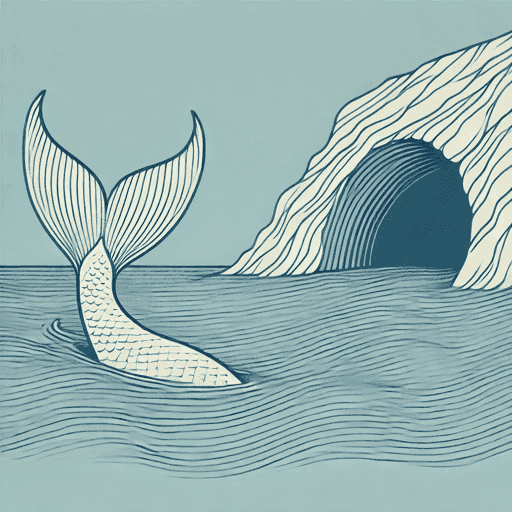
Mary tries to describe the figurehead of the ship she and the other imprisoned women will board. It is a mermaid with a fish’s tail. Eliza says it is a merrow from the tír fo thuinn, “the land beneath the waves” (23). Mary thinks of their mother and what happened to her.
Part 1, Chapter 4 Summary: “Lucy”
Tuesday, 12 February 2019
Lucy, driving, recalls her dream of the ship with the mermaid prow. As a child, she often dreamed of water, but she could not touch it. Lucy has a rare skin condition called aquagenic urticaria, an allergy to water. She remembers words in Irish and wonders why she is dreaming in a language she’s never heard. The podcast she is listening to describes how Danny Smith disappeared in 1980 in Comber Bay. The narrator speculates whether there is a whirlpool at Devil’s Lookout, and Lucy thinks of The Odyssey.
Lucy reflects on the apology she got from Ben and realizes he isn’t sorry he hurt her. Her friend Em thinks Ben and Lucy could still be together. Lucy recalls how proud she was to get accepted into the journalism program, though her parents think the media ruins people’s lives. Lucy recalls again how distant Jess was that last Christmas, after the childhood bond they’d shared.
Arriving at Comber Bay, Lucy sees the caves in the cliff they call Devil’s Lookout. She thinks it is strange that such a notorious place can appear normal. She finds Jess’s house, Cliff House, which seems dilapidated and is perched right beside the sea. Outside the house, she calls Jess again and hears a phone ringing inside. The door is open.
Part 1, Chapter 5 Summary: “Lucy”
Tuesday, 12 February 2019
Jess’s phone, keys, and car are all at the house, but there is no sign of Jess. Lucy walks through the house, finding clutter and art supplies everywhere. There is a hole in the living room floor covered by a tarp. On the easel is a painting of two women walking into the sea toward a ship with a mermaid prow that Lucy recognizes from her dream. Other paintings are of the inside of a ship, featuring the same two women. Lucy wonders if Jess has had the same dream as her.
Upstairs, she finds urine in the bathroom toilet and thinks a man was the last to use it. Lucy has often felt there is a distance between Jess and the rest of the family. On the wall, she sees their father’s drawing of a lionfish, crumpled and then smoothed out. Feeling alone, Lucy sits on Jess’s bed and sobs.
Part 1, Chapter 6 Summary: “Mary”
It is dark in the hold of the ship where Mary and Eliza are being held. Mary thinks of her father’s reaction to their sentence and how they were not supposed to be at the stream that night, as it was Samhain. Both girls are supposed to stay away from water because of their skin allergy, but Eliza started going to the stream, and Mary followed to protect her.
Now, Eliza asks Mary to tell the story of how their Da met their Mam. Mary begins the story of how their father, a fisherman, met a beautiful woman singing by the sea.
Part 1, Chapter 7 Summary: “Lucy”
Wednesday, 13 February 2019
Lucy wakes with the memory of a dream in which she was aboard a ship. She wishes she could wash in water, but her skin condition doesn’t allow it. She hears someone enter the house and runs downstairs to find a woman in the kitchen.
Part 1, Chapter 8 Summary: “Lucy”
Wednesday, 13 February 2019
The woman, Melody, is Jess’s neighbor and has come to feed the cat. Melody doesn’t know when Jess will be back. She says Jess has been stressed about her exhibition next Friday. Lucy recalls a time she and her parents went to a gallery to see Jess’s art, but her paintings made their parents uncomfortable.
Lucy cleans the house and listens to more of the podcast. The narrator describes how a fisherman, Robert Wilson, found a baby abandoned in a cave below Devil’s Lookout in 1982. The infant’s origins were never discovered, so he and his wife Judith adopted the child, called Baby Hope. A tabloid magazine suggested that Judith Wilson had given birth and abandoned the child, and the story made the Wilsons leave the area. Lucy wonders how Jess can stand to live here.
Lucy explores the house and thinks about her time with Ben. When she sent him that picture, she felt “like she was fully inhabiting her body for the first time” (63).
Part 1, Chapter 9 Summary: “Mary”
Mary learns the names and stories of the other women on the ship. Bridie is beautiful, with red hair. Sarah, who has a daughter named Annie, was accused of stealing by a man she refused to sleep with. Aoife is older than the others. Mary recalls the story Da told of her and Eliza’s birth, 16 years earlier. When they were small, their mother had tried to take them into the sea, and when the girls were five, she drowned. Their father moved them inland and became a weaver.
Part 1, Chapter 10 Summary: “Lucy”
Wednesday, 13 February 2019
Lucy wakes and wonders if she opened the window in her sleep. She finds Jess’s phone and unlocks it; the passcode is Lucy’s birthday. Lucy remembers how, when she was visiting, she’d asked Jess about her first sexual experience, and Jess had withdrawn. Lucy wonders if someone in Jess’s past has hurt her.
Lucy checks Jess’s messages and sees emails about her exhibition, called The Sirens. She looks through Jess’s camera roll and sees a photo of a monument that was erected in 1981 in memory of a convict ship, the Naiad, that wrecked in Comber Bay. When Lucy searches for news on the shipwreck, she sees an image of a ship with a mermaid on the prow. She wonders how she and Jess are both dreaming of this boat. She knows Jess kept a journal and searches the house. Along with a stack of Birdwatch magazines, to which her mother subscribes, Lucy finds a bag holding Jess’s high school journal. She opens it to read.
Part 1, Prologue-Chapter 10 Analysis
Though brief, the Prologue to the novel serves important functions in both its plot and thematic meaning. It begins with a dramatic scene that introduces several mysteries: the identity of the birthing woman, the reason she is alone in the cave, and the fate of the infant. The Prologue also establishes a mythical style and tone for the novel, setting the stage for the fabulous elements that will appear later. Unlike the chapters that follow, no time or place is identified, and the character has no name, making the scene dreamlike and surreal. The images of the sea hint at captivity and threat, a tone that prevails in Mary’s reflections aboard the ship. The Prologue also connects with Mary’s chapters, which feature a similar blurred sense of time and setting during her voyage, giving those chapters a surreal aspect. That the chapters from Mary’s point of view are presented as Lucy’s dreams establishes a further mystery around how these women are related and introduces the first fabulous element, hinting at some strong connection that defies logic and introducing the theme of The Pull of Familial Relationships. That Jess seems to be sharing the same dream heightens this fantastic element and compounds the mystery.
While the action is otherwise realistic, as are the characters, the sea is rendered as a mythic element, powerful, mysterious, and dangerous. The sea is a constant backdrop for Mary and Lucy, providing a setting as well as a metaphor for the unknown fate that awaits them. The skin condition that Lucy and Mary share is another inexplicable connection, though this one has a basis in reality; aquatic urticaria is a type of allergy that causes the skin to react to water. It is extremely rare and can result in hives along with other allergic reactions like a burning sensation or shortness of breath. This condition gives Lucy and Mary the sense that water will harm them, heightening the threatening atmosphere of the narrative, as both are so exposed to the ocean. The representation of water as danger is intensified by the stories of the men who have disappeared in Comber Bay, the group known as the Eight. The unexplained causes of their deaths give the setting of Comber Bay an inimical atmosphere, one countered by the recovery of an infant child named Hope to symbolize the wonder that her discovery instills.
The motif of Jess’s paintings is introduced in this section as the title of Jess’s forthcoming art exhibition, The Sirens, which creates dissonance, at first glance, with the paintings that she has produced. In her work, the darkness surrounding the convict women conveys a sense of dread at the thought of their fates as well as representing the lingering shadow of their crimes, but their situation is one of imprisonment, not allure. At odds with the paintings rendering their experience as dark, suffocating, and fearful, the image on Jess’s easel of the two women clasping hands as they enter the water evokes a sense of solidarity and survival. The painting highlights touch as connection, which is important between Mary and Eliza because Eliza is blind, and casts Female Connections as Protective Influence. However, the art exhibition also references The Odyssey, reminding the reader that, in the poem attributed to Homer, the sirens are described as dangerous creatures, half bird and half woman, whose voices lure sailors to shipwreck on the rocks surrounding their island. In this context, sirens are monstrous women who entice men to their doom, but the novel subverts this idea with Mary’s complex story.
The novel also pushes back against this characterization of men as victims and women as predators in Lucy’s chapters. In her case, it is she who has been seduced and then wrecked. Ben’s actions in sharing the nude picture of her have caused Lucy shame and harm, and the response of the school officer who urges Lucy to consider the consequences resonates all too closely with what many women experience when trying to report assault or exploitation. The mentions of Byrne hint that Mary, too, experienced an assault, another way the two women’s stories thematically intertwine. Lucy’s additional fears that someone in Jess’s past hurt her emphasize this sense that womanhood is a vulnerable state. The 80 women on the convict ship are under the complete control of one man—the captain. In contrast with the mythical sirens, they have no power; they have only their voices, their names, and the stories they tell one another. The power of these stories, and communities of women, will develop thematic weight in later sections.
Developing alongside the convict women and the sirens is a third figure, that of the mythical mermaid or, in Irish legend, the merrow. The carving of a mermaid on the prow of their transport ship first horrifies Mary, representing the strangeness of the land she is sentenced to inhabit. However, she is well acquainted with the idea of a merrow, as it turns out: The myth of the merrow lies behind stories of Mam, Mary and Eliza’s mother, who presumably drowned when the girls were young. All Mary knows is that their father met her singing by the sea: She was very beautiful and enchanting, obsessed with the sea—to the point that he feared she was endangering their children—and eventually, she disappeared into the sea, leaving only her cloak behind. All this fits with conventional tales of mermaids, who sometimes come ashore and participate in human families but eventually return to their native element. Their mother’s death offers yet another reason for Mary to fear and dread the sea, just as Lucy comes to Comber Bay with stories of the Eight’s disappearances on her mind. This perception of the sea and the women’s fear of it will change over the course of the book as the central characters come to understand more about themselves, illustrating the theme of Discovering and Expressing Oneself.

Unlock all 60 pages of this Study Guide
Get in-depth, chapter-by-chapter summaries and analysis from our literary experts.
- Grasp challenging concepts with clear, comprehensive explanations
- Revisit key plot points and ideas without rereading the book
- Share impressive insights in classes and book clubs