The Song of the Blue Bottle Tree
53 pages • 1-hour read
India HayfordThe Song of the Blue Bottle Tree
A modern alternative to SparkNotes and CliffsNotes, SuperSummary offers high-quality Study Guides with detailed chapter summaries and analysis of major themes, characters, and more.
Chapters 1-8Chapter Summaries & Analyses
Content Warning: This section of the guide includes discussion of illness, death, child death, rape, child sexual abuse, child abuse, physical abuse, emotional abuse, bullying, gender discrimination, pregnancy loss, mental illness, and substance use.
Chapter 1 Summary: “Oleana”
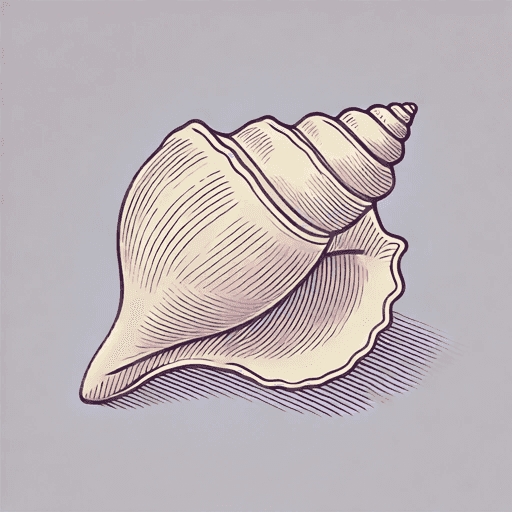
Oleana Charbonneau grows up in a small town in Alabama; her mother is from Arkansas, and her father (whom she calls “Papa”) is from Alabama. In the early days of living with both of her parents, she begins to hear voices through what she refers to as “static.” Papa, who fought in in World War II, can hear these voices too, and Oleana often catches onto hints of this. Papa often sits in his chair on the porch and stares into nothing as he listens, and Oleana often joins him there. Sometimes, Oleana’s parents take her on long road trips, passing through small towns in the night. When Oleana’s mother dies of breast cancer, Papa takes her to live with her grandmother Meema in Arkansas and leaves. Meema gives her a conch shell to distract her from her feelings of abandonment, and Oleana can hear voices ringing through it. Sometimes, she thinks she hears her mother’s voice.
Oleana is 12 when she begins hearing the voices calling her by name and comes to understand them as ghosts. Around this time, a tornado destroys Meema’s house, and months later, Meema dies of a stroke. Oleana is left with no one, and while she spends a short time with an aunt, she is soon sent to live with Papa’s cousin Burgess in the Appalachian Mountains. She brings her conch shell with her.
Chapter 2 Summary: “Oleana”
Oleana clutches her bag as the truck drives into the Appalachian Mountains. When it arrives at a dilapidated old house, Burgess grabs Oleana, pulls her out of the truck, and pushes her into the house. Inside, his mother, Aunt Nette, is waiting to meet Oleana. She thinks that Oleana’s prettiness will lead Oleana to sin, but Burgess assures her that he will make Oleana docile and obedient. On her first night, Oleana is molested by Burgess (who is called “The Right Reverend Burgess Love Darnell” in town) and cries herself to sleep.
Outside school, Oleana is confronted by an older girl, who claims that the reverend used to “love” her but now ignores her since Oleana came to town. She grabs Oleana by the arm, but Oleana pulls free and runs as fast as she can. Later, at the Kingdom Come Church of the Holy Ghost with Signs Following, Reverend Burgess pulls out baskets of snakes as one of the women chants in tongues and dances around them.
The reverend yells, confronting Satan through the snakes, and then picks up a pile of them from the basket. He hands them out to various people, who each interact with the snakes in their own way. The same girl whom Oleana met at school, Mara, suddenly appears and grabs a snake from the reverend. She begins kissing and licking it, and it bites her several times until she dies from its poison.
Later that night, the reverend rapes Oleana. She hears a protective voice telling her to take a snake from the basket in a room nearby and lead it back to her bedroom. She helps it onto the bed, where it wraps itself around the sleeping reverend.
Chapter 3 Summary: “Mercer”
A man named Mercer Ives returns to Columbus, Arkansas, from the Vietnam War with PTSD. His mother, Wreath Ives, is relieved to see him home and alive but can tell that he is changed. Mercer’s father, John Luther Ives, is a strict religious man who runs a church and controls his family. He does not let his wife or children show emotion, and he ignores his wife while having affairs. Mercer now lives in two separate realities: the reality of war and post-war civilian life. The two constantly intertwine, as he sees trees on fire, checks the horizon for enemies, and darts into a bush upon hearing the tractor.
Over dinner, the chaos of the chatter irritates Mercer, and when his younger sister doesn’t hear him asking to pass the chicken, he swears at her. Mercer’s father attempts to lecture him, but Mercer leaves, enraged, and rides his motorcycle to a nearby bar. Afterward, he heads to an abandoned church. All the while, voices and visions of ghosts taunt him, including one called “Bigger Than You.” The ghosts are all injured soldiers from the war, and Mercer continues to drink, hoping to drown them out.
Chapter 4 Summary: “Genevieve”
After leaving Burgess’s house, Oleana lives in the halfway house of a psychiatric hospital. She escapes and wanders the countryside. She changes her name to Genevieve after seeing it on an infant’s tombstone and eventually finds work with a circus as a snake tamer. When the circus is sold, she wanders on, sleeping in cemeteries on tombstones and mausoleums. She particularly likes graves where people leave or plant flowers. Eventually, she finds a cemetery where she meets Mercer. He comes out of the church, hung over after a night of drinking, and gorges on water from the well. Seeing it makes Genevieve unbelievably thirsty, and she approaches Mercer, which startles him at first. He quickly calms down and draws some water for Genevieve. Afterward, she offers him some aspirin, and he falls asleep in the sun.
Chapter 5 Summary: “Mercer”
Mercer wakes up and sees Genevieve sitting by him, soaking a cloth with water and using it to cool him. She offers him some rolled cannabis and explains that she doesn’t use it herself but uses it as a form of currency when she hitchhikes. Mercer feels at ease around Genevieve and begins telling her about coming back from the war and leaving his family in a rage. Genevieve finds it abhorrent that Mercer would let his mother worry for an entire day and insists that he call her. She drives his bike (which impresses Mercer) to the nearest payphone and dials for him, and Mercer reluctantly apologizes to Wreath. He then tells her that he plans to bring Genevieve home with him. Genevieve agrees, though she is unsure whether she will be welcomed or not; however, when she gets there, Wreath greets her warmly and is clearly relieved to see her son. Wreath puts flowers in the room that Genevieve will be using to welcome her.
Chapter 6 Summary: “Genevieve”
Genevieve instantly connects with Wreath but finds her eldest daughter, Delilah, judgmental and dismissive. Wreath introduces Genevieve to her husband, John Luther, and announces that she will be staying until she heads off to school. John Luther acts polite but eyes Genevieve’s body in a sexually suggestive way. When he asks Genevieve about her parents, she explains that they’re dead.
Later that night, Genevieve overhears a strange sound coming from a room nearby and crawls onto the roof to listen. She discovers John Luther whipping Wreath, yelling that she embarrassed him by acting like the head of the household. Genevieve retrieves a large rock from her bag and throws it through the window, hitting John Luther in the side of the head. She runs back to her room and darts into bed just as the family wakes up.
Chapter 7 Summary: “Wreath”
Wreath was popular in high school, but she lived by the church’s rules. She disliked high school boys’ immaturity and fell for John Luther when she attended one of his services. After a romantic courtship, John Luther began manipulating Wreath into increasingly violent sexual acts; despite her resistance, he would then blame her for “tempting” him. This confused Wreath, as she craved his physical attention but hated his manipulation.
One day on a picnic, he drugged and raped her, calling it a “communion.” When she awoke, Wreath was extremely ill and believed that she had dreamed it all. John Luther said that she had food poisoning and brought her home. Wreath blamed herself, believing that she enticed John Luther into the act. She soon realized that she was pregnant, and when she told John Luther, he agreed to marry her. Afterward, he whipped her several times, claiming that she tempted him into sin. The two soon eloped, and three weeks later, Wreath had a miscarriage.
Chapter 8 Summary: “Wreath”
After throwing the rock, Genevieve finds Wreath panicked and offers to go help her bandage the wound on John Luther’s head. Later, Mercer and Genevieve sit outside and talk, and Genevieve does her best not to hint toward her involvement in the incident. That night, she sees Wreath setting up a bed for herself on the couch and offers for Wreath to sleep in her room instead.
Chapters 1-8 Analysis
The opening chapters establish the setting, imagery, and tone, all based in the Southern countryside. These elements capture the feelings of isolation and disconnect that Genevieve, then Oleana, feels in her early life. She often sits silently with her father on the porch, listening to the ghosts’ “static”: “Back then we lived in this little nothing town in central Alabama. He used to sit in his chair on the front porch rocking and looking at cars go by without really seeing them” (2). The narrative signals that it will deal with life under the surface of the small-town community by using figurative language. For example, the town is “vulnerable in the night like a painted lady who’d washed her face, so her real skin show[s] through” (4). The image invokes the sexist image of a “painted lady,” i.e., a heavily made-up woman or sex worker, focusing on the tawdriness of the figure beneath her outward glamour. This extended image sets the town up as a place of vice, where appearances mask the dark realities underneath. Genevieve’s first-person narrative is written in Southern dialect (“I cried some” [5]), further establishing a sense of place.
In establishing the main characters, the text relies on symbolism. Flowers and plants serve as recurring motifs in the opening chapters, symbolizing both memory and comfort. When she sleeps in the cemeteries, Genevieve is drawn to gravestones where people have left or planted flowers. They soften the harsh realities of life and death. The symbolism applies to Mercer, too: “Mercer pressed his face against the damp, fragrant earth. The pungent smell of crushed narcissus replaced the memory of less pleasant odors” (21). For him, they distance the violent memories of the war. Even his mother’s name, Wreath, implies a connection to plants and flowers. She is a warm, nurturing character and welcomes Genevieve by putting flowers in the guest room. The special attention to plants and flowers and their connection with life and death demonstrate the complex relationship that characters have to place in the novel, highlighting the theme of The Persistence of Connection Across Life, Death, and Land.
Southern Gothic tropes of the supernatural and religious life are introduced early. Genevieve is attuned to voices in the “static,” and the conch shell that she receives from her mother becomes a vessel for communicating with ghosts, including her deceased mother. Religious extremism and the theme of Patriarchal Abuses of Power are depicted through Reverend Burgess, whose extreme beliefs reflect the social pressures of the American South in shaping the obedience and moral conduct of women. They also shape Genevieve’s understanding of abuse and power, which informs her later actions when she interrupts John Luther’s punishment of Wreath. Genevieve’s intuition and sensitivity to voices allow her to survive and make decisions in a restrictive and often perilous environment, setting up the theme of Knowledge as a Source of Agency and Resistance.
The cultural and historical context of the 1960s American South emerges through depictions of fractured masculinity in the wake of the Vietnam War and unraveling patriarchal control. Genevieve’s father, a World War II veteran, is emotionally distant and abandons his daughter after his wife dies, unable to face life as a single father. Burgess’s abusive religious household emphasizes discipline, hierarchy, and control. John Luther, another warped patriarchal figure, enforces strict gender roles while maintaining public authority and reputation. Any threat to total patriarchal authority draws immediate backlash, as John Luther can’t stand the idea of the women in his household being independent. This is a major source of tension that will build throughout the novel.

Unlock all 53 pages of this Study Guide
Get in-depth, chapter-by-chapter summaries and analysis from our literary experts.
- Grasp challenging concepts with clear, comprehensive explanations
- Revisit key plot points and ideas without rereading the book
- Share impressive insights in classes and book clubs