53 pages • 1-hour read
The Song of the Blue Bottle Tree
A modern alternative to SparkNotes and CliffsNotes, SuperSummary offers high-quality Study Guides with detailed chapter summaries and analysis of major themes, characters, and more.
Symbols & Motifs
Content Warning: This section of the guide includes discussion of death and mental illness.
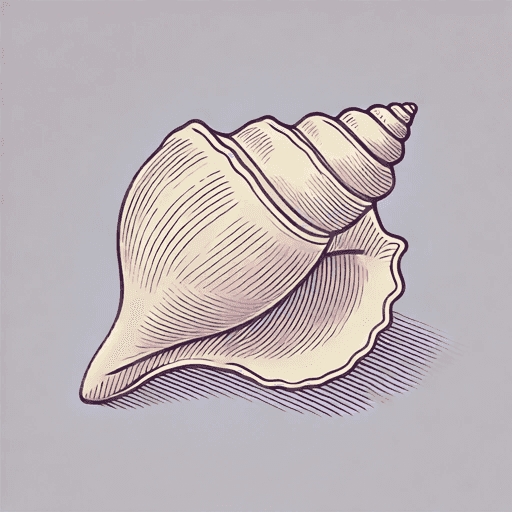
The Conch Shell
The conch shell, through which Genevieve hears voices, symbolizes The Persistence of Connection Across Life, Death, and Land. It also connects to the overarching nature motif, which shows nature to be a source of comfort and protection. The same is true for the conch shell, which seems to warn Geneieve about troubles ahead:
At first, I only heard the gentle sounds of ocean waves when I pressed the pink cleft of the shell to my ear, but I waited patiently for the voices to come. They swam to me through the surf, ebbing and flowing beneath the sounds of the sea until the chorus sang loud enough to be understood, sang a single word over and over: Run (9).
The conch shell also embodies Genevieve’s inherited sensitivity, as her father was similarly attuned to the “static.” Its survival through trauma, such as the tornado, further emphasizes its symbolic durability as an extension of Genevieve’s character and the persistent guidance it offers as the externalized voice of her conscience or intuition. By mediating communication with unseen forces, the shell represents a source of wisdom, direction, and connection across time, space, and familial legacy.
Voices and Ghosts
Voices and ghosts are used as a motif to represent memory, trauma, and the theme of The Persistence of Connection Across Life, Death, and Land. Genevieve hears voices through the conch shell, which she interprets as guidance from the dead, sometimes from her mother and sometimes from other unseen entities. As a teenager, Genevieve is hospitalized and accused of having psychosis, but she has always been certain that this is not the case. These voices link past and present, offering warnings and insights into unfolding events. Similarly, Mercer experiences voices and visions shaped by his Vietnam War trauma, blending the memories of combat with the perceptions of those around him. One prominent figure, Bigger Than You, haunts Mercer, embodying both the psychological and supernatural impact of violence. Voices in the narrative function as a bridge between human consciousness and the unseen, guiding ethical and practical decisions while challenging characters to act with awareness and responsibility. They also symbolize the persistence of memory and the moral weight of past actions, as both trauma and legacy echo in daily life. Bigger, in particular, serves as a guiding force and protector, while Genevieve and Mercer in turn help Bigger come to terms with his own death by returning him to those places he needed to revisit one more time.
Flowers and Trees
Flowers and trees recur throughout the novel as symbols of life, memory, and connection to the past. Genevieve reflects,
My favorite graves are the ones where someone planted a rose or a camellia and left it to take root in the heart of whoever lies beneath it. That’s what I want someone to do for me when I die, plant something on top of me to fill my heart and keep me quiet (28).
Her reflection shows the role of flowers in connecting life and death. The magnolia tree on Meema’s property, planted in 1839, symbolizes continuity and generational roots. Conversely, Delilah’s rejection of flowers reveals her moral corruption and rebellion against her mother: “Lips tight and white with disapproval, Delilah attacked the windows with her rags and vinegar water, thinking about poisonous flowers and people who kissed them” (188). The image of poisonous flowers inverts the lifegiving symbol into something aligned with the dark, violent aspects of the novel and Patriarchal Abuses of Power.
Flowers are also a symbol of solidarity between women. When Genevieve plants the roses on Meema’s grave, it connects her, Wreath, and Meema to one another. They are a sign of hope and a promise that their experiences have not been in vain. Flowers thus operate on multiple levels: as memorials, as sources of beauty and renewal, and as symbols of moral and emotional alignment.
Snakes
Snakes are a motif in the novel representing moral reckoning, danger, faith, and Knowledge as a Source of Agency and Resistance. John Luther’s obsession with snakes as tests of faith demonstrates the height of religious extremism, which is equally reflected in Genevieve’s earlier experiences at the snake-handling church: “[B]y picking those snakes up, they were proving their faith and defeating Satan” (130). This aligns snakes with the traditionally Christian images of Satan, evil, and sin.
Genevieve interprets snakes as representing human, not spiritual, morality: “If Satan exists on earth, he takes a human form” (131). Providing humans with knowledge is a gift, not a curse. For her, snakes are a moral agent, delivering consequences when human systems fail. This is particularly true in the case of Burgess’s death when a “voice” tells her to place one with him in bed. Neither the church nor the law will punish Burgess for his actions, and as a woman, she has no power to stop him. Snakes operate outside societal structures, thereby maintaining an ethical balance in the face of the chaotic natural and supernatural world.

Unlock the meaning behind every key symbol & motif
See how recurring imagery, objects, and ideas shape the narrative.
- Explore how the author builds meaning through symbolism
- Understand what symbols & motifs represent in the text
- Connect recurring ideas to themes, characters, and events