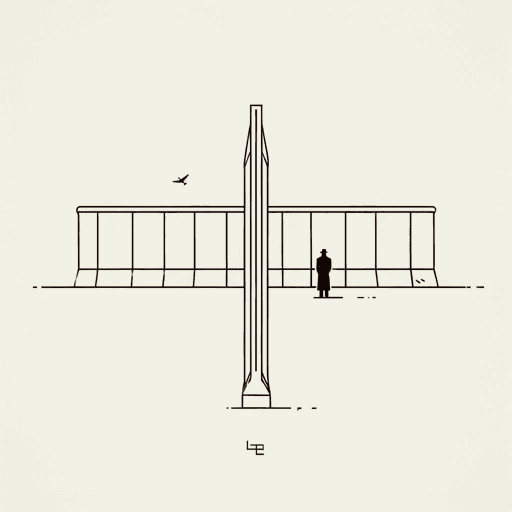
The Spy Who Came in from the Cold
43 pages • 1-hour read
John le CarréThe Spy Who Came in from the Cold
A modern alternative to SparkNotes and CliffsNotes, SuperSummary offers high-quality Study Guides with detailed chapter summaries and analysis of major themes, characters, and more.
Chapters 1-7Chapter Summaries & Analyses
Chapter 1 Summary: “Checkpoint”
At the Berlin Wall, Alec Leamas, station head of British Intelligence’s West Berlin office, is anxiously waiting for one of his local sources, Karl Riemeck, to pass from the Eastern to the Western section. Suddenly a car approaches the checkpoint. It passes through, and Leamas gets in the car to meet a woman, Riemeck’s lover. The woman reveals that the entire network of British spies in East Berlin has been rolled up by the secret police. Riemeck barely managed to escape and plans to arrive at the checkpoint via bicycle. Leamas is frustrated because the woman is not a member of the network, but Riemeck confided all his secrets to her anyway. He thinks about how he teaches his sources to be deceitful, and so they deceive him as well. He had upbraided Riemeck for involving a lover in his espionage activities, but Riemeck brushed him off. Back at the checkpoint, Leamas sees Riemeck approaching on his bicycle. He appears to be making it through, but suddenly the spotlights come on and the East German guards open fire. Riemeck hits the ground, and Leamas hopes that he is dead, rather than wounded and thus liable to capture and interrogation.
Chapter 2 Summary: “The Circus”
Leamas departs Berlin for London, thinking about his past as an intelligence officer who always preferred operational work to the bureaucracy of the “Circus,” the headquarters of British Intelligence. He had been successful until the rise of Hans-Dieter Mundt, a fearsome East German spymaster who rose quickly through the ranks of the Abteilung (“the department”) and promptly began an aggressive and deadly pursuit of Western spies until Leamas was left without a single valuable agent in Germany. Leamas is returning to the Circus, where he believes he will be fired for losing his network, and when he meets “Control,” the head of foreign intelligence, his boss asks him about the breakdown of the network and whether he is tired of running spies. But rather than fire him, Control asks Leamas to go on one more mission, to take down Mundt, before he “come[s] in from the cold” (19). As a first step, Control suggests that Leamas meet with George Smiley, a retired spy and subject of an assassination attempt by Mundt. After asking again whether Leamas is mentally exhausted from his experiences, Control advises him to act as though the Circus has punished him harshly for what happened in Berlin.
Chapter 3 Summary: “Decline”
Leamas begins to assemble his cover for the mission. He assumes responsibility for the failure in Berlin, and as a result is taken out of operational service, loses most of his pension, and accepts a humiliating demotion to the banking section. Within a short time, Leamas becomes irritable, isolated, and frequently drunk at work. He then quits the service abruptly and draws out his remaining pay in cash, leading to rumors that he was embezzling and took all he could before getting caught. Leamas then seeks employment elsewhere, including at a factory and as a door-to-door salesperson, but with no success, and soon his neighbors and the tradespeople working the area are aware of his shabby reputation.
Chapter 4 Summary: “Liz”
Leamas finally secures a job at a library, vaguely recognizing the Labour Exchange employee who helped him find it. He meets the librarian, Miss Crail, an ill-tempered woman who frequently calls her mother to argue or complain about what is transpiring in the library. In the archives, he meets another employee, a woman in her early twenties named Liz Gold, tall and neither attractive nor unattractive. After drawing Miss Crail’s ire for taking a long lunch and bringing shopping bags into the library, he finishes the day and returns to his apartment, where the electricity has been shut off. In the following days, Leamas deliberately provokes Miss Crail to the point of quiet fury and becomes friendly with Liz. They begin sharing many meals together. She expects that one day Leamas will leave suddenly, and during dinner one night she asks what he believes in. He refuses to provide a straight answer, and she muses that he seems like he’s out for revenge. Leamas turns the question back on Liz, and she confesses to being a Communist, after which they laugh and go to bed together. Leaving her apartment the next morning, Leamas notices a man down the road, but as he approaches, the man vanishes.
Chapter 5 Summary: “Credit”
One week later, Leamas has not come to work at the library, delighting Miss Crail and worrying Liz. When he does not come again the following day, Liz takes a taxi to his apartment, where she finds Leamas in a miserable condition. Liz buys medicine, prepares tea, and tends to him. Liz returns every day to oversee his recovery, but he never speaks to her, except to deny being in love with her. Another night after dinner, he speaks tenderly to her, only to get up and tell her to stop following him. The next day, Leamas gets into an argument with the local grocer, who refuses him a purchase on credit. Leamas attacks him and is arrested.
Chapter 6 Summary: “Contact”
Leamas is in prison. He feels the humiliation of incarceration, but he is also able to make himself inscrutable to the other incarcerated men. Early on, a group of men surrounded and attacked him, but a few days afterward he shoved the handle of a hoe into the stomach of one of his attackers, and they left him alone after that. Leamas is released after serving three months. Walking to a park, Leamas leaves behind a parcel that was given to him upon being discharged, and a man chases after him to return it. The man, known as Ashe, claims to know Leamas, but Leamas denies knowing him. Ashe’s story of knowing Leamas becomes more intricate and implausible, and Leamas decides to play along and pretend to know him. They drink together through the afternoon, and Ashe insists on meeting again the next day so he can pay for Leamas’s bill. When Ashe departs, Leamas travels by subway and then climbs into a van, acting as if he believes he is being followed. The drive takes him to George Smiley’s house, but Control is waiting inside. Control apologizes for not attending to Leamas during his illness or imprisonment, and denies knowing the man whom Leamas thought he recognized who set him up with the library job. As he prepares for his mission, Leamas insists that Liz be left out of things entirely, despite her Communist affiliations.
Chapter 7 Summary: “Kiever”
The following day, Leamas has lunch with Ashe, drinking heavily. Ashe talks extensively about writing on England for foreign presses. He hints that Leamas might know his boss, Sam Kiever, based on their both having spent time in Germany. Ashe insists that he has the connections to help Leamas get back on his feet, and Leamas agrees to go to Ashe’s apartment. While Ashe is gone, Leamas furtively makes a call to the Circus, informing them of his location and his plans to meet Sam Kiever. Kiever returns with Ashe, and the three men have dinner and wine. Talk drifts to the political situation in France and Germany. Ashe suggests relocating to a private club where he has a membership. There Leamas confronts him over his suspicious behavior and obviously false cover story. Kiever tells Ashe to leave, and then provides a vague offer of a well-paying job providing information to an international clientele. Leamas is surprised at how quickly Kiever, who is presumably an agent of a Communist government, decided to make him an offer, but he accepts, and they plan to make their first stop in Holland the following day. Leamas stays over at Kiever’s apartment, and he gets ready to leave with a fresh passport, in his own name, that Kiever has prepared for him.
Chapters 1-7 Analysis
The early 1960s represented a high-water mark for the archetype of the dashing, resourceful British spy. Ian Fleming had begun publishing his James Bond novels a decade prior to the publication of The Spy Who Came in from the Cold, and only the year before, Sean Connery’s portrayal of the character on screen made the series an international sensation. World events also helped to solidify interest in the Cold War. The construction of the Berlin Wall in August 1961 epitomized for many the moral divide between the “free world” of the West and the dreary dictatorships behind the Iron Curtain. The public both expected and craved stories of dashing heroes, fiendish villains, and femmes fatales.
John le Carré reinvented the spy novel, and he did so in part by subverting the expectations of the genre. The Spy Who Came in from the Cold begins with the perfect conceit for a conventional spy story: The hero witnesses the death of his agent on the orders of a ruthless Soviet agent, against whom the hero plots revenge. Yet from the start, there are distinct departures from the standard narrative. Leamas is no James Bond; he has no control of the situation and he responds to the guards around him with anxiety and rudeness. His agent is having an affair with a married woman, and the main emotion Leamas feels toward him is irritation for confiding in someone potentially untrustworthy, clearly taking advantage of his good standing after an operational success. Riemeck is no dashing hero either: He arrives at the gate in a “Wehrmacht mackintosh,” suggesting that he served in the Nazi military.
These early chapters introduce a key theme, Moral Equivalence in the Cold War. The Circus is not above collaborating with a former Nazi if he can be of use to them; they are perfectly willing to use morally suspect tactics to stay one step ahead of their opponent. Control acknowledges this moral equivalence when he admits to Leamas, “We do disagreeable things […] we occasionally do very wicked things” (23). For Control, the ends justify the means, and he justifies such wickedness on the grounds that it is “defensive” and “fair.” Their side’s righteousness is taken for granted, though Control speaks of it in such dispassionate, cliched terms that one could be forgiven for wondering if he really believes in it. Leamas certainly doesn’t, musing to himself, “It’s like working for a bloody clergyman” (24). When he agrees to take down Mundt, it isn’t because he believes it will advance the cause of freedom and justice; it’s because he wants revenge on the man who has killed his agents and ended his career. His motivations are purely selfish, and he has no illusions to the contrary.
These chapters also introduce The Tension Between Belief and Fact. Characters are so reliant on deception that belief and fact become difficult for them to disentangle. For example, to succeed in his mission, Leamas must pretend to decline into poverty and addiction, but in the process he actually does decline, because, crucially, Leamas’s cover story does not require him to pretend to be a different person. If he were a different person, his decline would not be plausible. Rather, Control urges him to play up certain facts about himself to create a convincing illusion of decline—his pride, his cynicism, his drinking. For this reason, no one who knows him is particularly surprised when they learn what has happened to him. However, playing fast and loose with the truth inevitably hinders Leamas’s ability to separate fact from fiction, and over time he comes to identity more and more with his persona.

Unlock all 43 pages of this Study Guide
Get in-depth, chapter-by-chapter summaries and analysis from our literary experts.
- Grasp challenging concepts with clear, comprehensive explanations
- Revisit key plot points and ideas without rereading the book
- Share impressive insights in classes and book clubs