The Stillwater Girls
58 pages • 1-hour read
Minka KentThe Stillwater Girls
A modern alternative to SparkNotes and CliffsNotes, SuperSummary offers high-quality Study Guides with detailed chapter summaries and analysis of major themes, characters, and more.
Important Quotes
Content Warning: This section of the guide includes discussion of mental illness, child death, and child abuse.
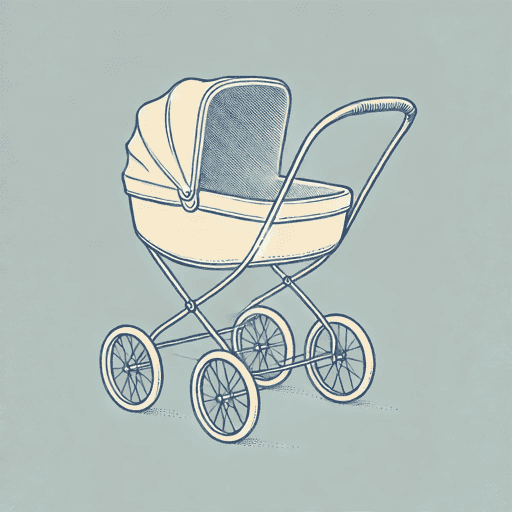
“And it’s always then that I wake up in a cold sweat, a gaping hollowness in my chest until I realize it wasn’t real.
There’s no baby. There never was.”
(Chapter 2, Page 5)
The diction in Nic’s vivid image of the “gaping hollowness” she feels after the dream and the short, anaphoric sentences that follow emphasize the desperate emotion she feels after the dream about the empty stroller. Although Nic does not yet realize it, this recurring dream depicts a repressed image from her past, which makes her comment “There’s no baby. There never was” unintentionally ironic.
“‘The world’s an evil place, my darlings,’ she would say as she brushed the hair off our foreheads and kissed our chubby, soap-scented cheeks at night. ‘You’re safe here. With me.’”
(Chapter 3, Page 10)
Wren’s memories of Maggie foreshadow her eventual discovery of Maggie’s manipulation. The juxtaposition of Maggie’s words about evil and promises of protection with the sweet images of chubby-cheeked, freshly washed children and the diction “darlings” frames Maggie warm and nurturing nature as manipulative, underscoring the novel’s thematic interest in The Distinction Between Manipulation and Protection.
“I don’t know who he is or what he wants, but I won’t hide like a coward.”
(Chapter 5, Page 27)
Despite the terror of outsiders that Mama has instilled in Wren, she displays real courage in this moment, underscoring her Resilience in the Face of Shifting Personal Identity. When Wren first realizes that a man has come near the cabin, she decides to track him, evidencing her bravery, determination, and the sense of responsibility she feels for both her own and Sage’s safety, even though Sage is only a year younger than Wren.
“They say the apple never falls far from the tree.”
(Chapter 8, Page 39)
Kent positions Nic’s initial suspicions of Brant’s infidelity as a red herring—applying the saying to the wrong brother. The novel’s climax reveals that it’s not her husband Brant that replicates their parents’ bad characters—it is his brother, Davis, who will turn out to be one of the story’s main villains.
“I have to protect Sage. Our home. Our belongings. Our life—or what’s left of it.”
(Chapter 9, Page 42)
Here, the cadence of Wren’s speech—short sentences and sentence fragments—give a rushed effect, conveying her panic. The anaphoric repetition of “Our” stresses the unity she feels with Sage and helps to explain her strong desire to protect her sister. The final clause, “or what’s left of it,” coming after a dash, creates the sense of a bitter afterthought as Wren has to admit how little she and Sage have left to protect from the intruder.
“He loved me through it all. Through the crying fits and the empty stroller dreams, through the mood swings and lethargy.”
(Chapter 12, Page 56)
Nic grapples with the disconnect between how deeply Brant loved her and the energy he put into helping her recover and the secrets he’s keeping that make her believe he no longer loves her this way. Nic’s instinctual understanding that something is wrong and the fallout of her failed attempts to uncover the truth underscore Kent’s thematic exploration of the distinction between manipulation and protection and suggest that even well-intentioned secrets can be destructive.
“The news always depressed her because it was nothing but people talking about all the bad things going on in the world.”
(Chapter 15, Page 70)
Wren’s memory of Mama’s explanation of what television is highlights Maggie’s tendency to feel overwhelmed by the pain and danger in the world, hinting that the roots of her mental illness reach back beyond the car accident that took her husband and daughter. Kent suggests her natural predispositions helped determine the course her grief took in the wake of their deaths.
“I wonder what that means…that he’s never mentioned these messages to me before. Was he trying to protect me from them?”
(Chapter 16, Page 75)
After Nic finds the Facebook messages from Brant’s female friends, she is relieved to see that he has not responded to any of them—but also puzzled that he has never mentioned them to her. At this moment, she is actually much closer to understanding her husband’s motives than she knows. Because she is repressing her memories of Hannah and underestimates how ill she has been, she does not understand that others are constantly working to protect her from emotional upset—and so she cannot conceive that Brant’s motivation is to shield her from additional pain.
“Davis almost choked…before asking me what made me think I was qualified for something like that.”
(Chapter 18, Page 83)
Nic interprets Davis’s reaction to her plan to become a foster parent as just another example of his generally disruptive and rude behavior. In truth, this memory foreshadows later revelations about her own behavior in the wake of Hannah’s birth. Kent positions Brant’s protective reaction—kicking Davis out after this comment and attempting to cut him off—as evidence of his deep love for Nic, even though Nic does not yet understand the real dynamics of the situation.
“Mama lied…
Mama lied.”
(Chapter 19, Page 89)
Wren’s discovery that there are no bones buried where Mama claims her father and Imogen buried represents a turning point in her arc. For the first time, she knows for certain that Mama has lied to her, and she is stunned at the feeling of betrayal. The repetition of the phrase “Mama lied” and the italics in the second iteration convey the depth of Wren’s hurt.
“The image of two young girls with hollowed eyes and gaunt faces, long, unkempt hair dripping down their shoulders, one blond, one brunette, is as haunting as it is real.”
(Chapter 22, Page 109)
Nic’s vivid description of Wren and Sage at the moment the two protagonists see one another for the first time echoes her description of herself as she stared into the mirror just moments before. This parallel emphasizes the similarities in their situations: both Wren and Nic are suffering as a result of someone else’s secrets, and—until now—both have been essentially alone with their burden.
“I don’t know if we’ll ever see those clothes again, but I think I’m okay with that because I’ve yet to see a single person dressed like we were.”
(Chapter 23, Page 127)
Wren is quick to let go of the clothing from her old life, demonstrating that she is more resilient than she believes herself to be. Kent also emphasizes Wren’s perceptiveness: even in the midst of the chaotic night of her escape, rescue, and hospitalization, she constantly absorbs information and draws logical conclusions about the brand new world in which she herself.
“It’s thirty degrees out—I can’t let her go outside like this.”
(Chapter 26, Page 140)
When Nic sees Sage’s wet hair, her first instinct is a maternal one. Despite the fact that Sage is a legal adult, Nic feels protective toward the young woman and decides that she cannot “let” Sage go out into the cold with wet hair. This exemplifies the way that Wren’s and Sage’s relative helplessness brings out Nic’s generosity, warmth and maternal nature—qualities she has not shown to this point in the narrative.
“There’s freedom in the way she lives…If she wants to do something, she does it, and that’s all there is to it.”
(Chapter 27, Page 148)
From observing Nic, Wren learns that not only is Mama a liar, but she is also controlling. By contrast, Wren admires Nic and the way Nic approaches life. Her decision to cut her hair represents her desire to shed the lies and manipulation of her former life and embrace a new sense of independence and freedom.
“A moment later…he pulls me against him, burying his head in my neck, breathing me in the way he did when he once loved me and only me.”
(Chapter 30, Page 161)
Nic’s detailed description of this moment conveys the pain she feels as Brant shows her physical affection that she believes is insincere. Her hurt and confusion demonstrate how much she still loves Brant—and ironically, shows how much he still loves her, despite her beliefs to the contrary.
“I slip my hand over hers.
Whatever happens, we’ll always have each other.”
(Chapter 31, Page 167)
Kent highlights the ways in which Wren’s quick, perceptive mind has already come to an accurate conclusion about the unexpected police visit—immediately understanding that it is likely to be news about Mama and Evie. Her instinct to take Sage’s hand shows both how important Sage is to her and her continuing maternal protectiveness toward Sage. Ironically, the thought she comforts herself with—that no matter what, the two young women will “always have each other” is actually in more doubt than she realizes, as she will soon discover that she and Sage are not biological sisters.
“It’s incredible, isn’t it? How resilient the younger ones are.”
(Chapter 32, Page 170)
Kent imbues Deputy May’s words with subtext. Because May is aware of a part of Nic’s history that Nic herself still does not consciously understand—her words imply a parallel between Sage and Wren in the present and Nic in the past, when she suffered from postpartum psychosis and then repressed all memory of the child she handed over to a stranger.
“I give myself a once-over in the dresser mirror, smooth my hair into place, and head downstairs to finally face the truth.”
(Chapter 36, Page 183)
In detailing Nic’s preparation for what she imagines will be one of the most difficult conversations of her life—calming herself and making sure that she looks put-together despite her inner turmoil—Kent builds tension toward the climactic reveal that Brant is lying to protect Nic from the past rather than to cover up infidelity. As Nic gets ready to confront Brant with something she believes will end their marriage and cause her great misery, her wording becomes unintentionally ironic as this conversation will actually lead her to finally face a truth of her past trauma.
“It’s the strangest thing, but…I feel nothing.
No sadness. No relief. No sorrow or regret.”
(Chapter 39, Page 192)
Wren is surprised, after learning of Mama’s death, to find that she simply feels numb. The anaphora and parallel structure in the sentence fragments “No sadness. No relief. No sorrow or regret” convey the blankness inside her, implying that, given everything she has recently learned, the woman she has always considered her mother has ceased to fill that role in her heart.
“My heart aches for one more day together: the four of us. The way it was before. Picking lilacs. Singing songs.”
(Chapter 41, Page 207)
Through Wren’s emotional landscape, Kent provides a complex portrait of grief and betrayal. Even though Wren still feels too angry and confused to mourn Maggie’s death, she does mourn the loss of the past she, Sage, Evie, and Maggie shared. She recalls the simple pleasures of their life together and the feeling of family that is now lost to her forever.
“Whoever it is…they know everything.”
(Chapter 42, Page 211)
As the novel builds toward its climactic reveal, Kent leaves clues hinting at the unknown antagonist’s true identity. After reading the extortionist’s letters, Nic stresses again how much the unknown person seems to know about their family’s history, foreshadowing Davis’s role as Hannah’s kidnapper and Maggie’s murderer.
“Deputy May shakes her head…stopping us from coming any closer, and it’s then that I remember that this isn’t a joyous reunion…not for the little girl at the center of it all.”
(Chapter 46, Page 227)
Kent positions both Sage’s and Evie’s reunions with their birth families as bittersweet. Maggie’s actions have created a challenging gulf between each of the girls and their families. Nic is quick to understand that bridging this gulf will require time and sensitivity if it is to happen at all, underscoring Nic’s latent maternal nature and sensitivity.
“It strikes me now that our entire existence was spent living in a prison of sorts. Keeping her in a locked room probably wasn’t all that traumatic for her.”
(Chapter 47, Page 233)
Wren’s thoughts about Evie’s description of her time at Davis’s house reflect the novel’s thematic interest in The Psychological Impact of Extreme Isolation. Wren has had time in the outside world to realize how confined and oppressive their lives at the homestead were, but Evie simply went from one “prison” to another when Davis took her from Maggie and kept her captive in his home. Unaware that life has anything to offer besides isolation and restriction, Evie does not yet feel traumatized by Davis’s actions.
“I never should have doubted him. I never should have assumed the worst from the person who loves me most in this world.”
(Chapter 48, Page 235)
Nic’s thoughts about Brant after learning the complete truth and being reunited with her daughter demonstrate that even well-intentioned family secrets carry a heavy cost. She now understands how Brant’s secret poisoned her beliefs about him and regrets her lack of faith. Even though Brant’s motives were selfless, his actions created an additional burden of guilt Nic will have to carry into the future.
“It’s a strange little family we make, but for the first time in my life, I’m home.”
(Chapter 51, Page 246)
Wren’s thoughts as the novel ends acknowledge the irony of her situation. After being part of three different families, it is not her birth family but the found family she’s building with Brant and Nic that gives her the most secure sense of being “home.” Her joy in their upcoming plans and recognition of the security and love Nic and Brant offer her reiterates her resilience in the face of shifting personal identity.

Unlock every key quote and its meaning
Get 25 quotes with page numbers and clear analysis to help you reference, write, and discuss with confidence.
- Cite quotes accurately with exact page numbers
- Understand what each quote really means
- Strengthen your analysis in essays or discussions