The Story of Hong Gildong
The Story of Hong Gildong
A modern alternative to SparkNotes and CliffsNotes, SuperSummary offers high-quality Study Guides with detailed chapter summaries and analysis of major themes, characters, and more.
Symbols & Motifs
Dreams
Dreams occur at key moments in the text as symbolic omens that foretell important events. The story begins with Minister Hong’s dream. At first, the minister’s dream is beautiful: He is on a sunny mountainside in the springtime. Birds sing, and streams ripple. He walks to the edge of a rocky cliff to look down into a waterfall; suddenly, a storm erupts and a fierce dragon rushes toward him. This dream symbolizes the roller coaster of events and emotions that Minister Hong will experience after Gildong is born. In the beginning of the dream, the minister is elated, just as he is after Chunseom gives birth to Gildong. The dragon symbolizes the danger that Gildong poses. In the dream, Minister Hong does not escape the dragon: “[H]e tried to flee from the creature but it quickly enveloped him” (2). Minister Hong passes away without resolving his conflict with Gildong, even after Gildong has become King of Annam.
In Joseon, dragons symbolized the king’s power. This foreshadows Gildong’s future status, while the dragon’s behavior within the dream represents Gildong’s unfilial path to royalty. Dragons in a dream could also symbolize good fortune—Minister Hong interprets his dream this way, which prompts him to make sexual advances toward his wife. The potentially conflicting interpretations of the dream represent the complexity of Minister Hong’s relationship with Gildong.
The other important dream happens at the end of the novel. After the minister’s wife finishes performing the mourning rituals at her husband’s tomb, he visits her in a dream. The dream is so real that she “[forgets] that he [is] deceased and [basks] in the vision” (73). Immediately following the dream, her health declines, and she soon passes away. In this case, the dream connects the living to the spirit world.
The False Gildongs
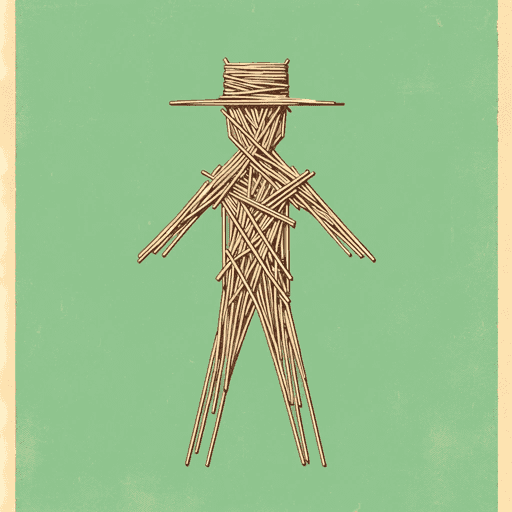
The false Gildongs symbolize the difference between truth and lies. Gildong creates these enchanted strawmen to carry out his work of executing corrupt officials and to increase his mythic status. Once in Gyeongsang Province, Inhyeon posts notices in each town calling for Gildong to surrender himself to the authorities. Gildong orders “the false Gildongs to send their soldiers back to Hwalbindang and surrender themselves at the administrative center of each province” (43-44). The false Gildongs are brought to the king, who asks Minister Hong to identify his true son. Because all the Gildongs look exactly alike, it is an impossible task, and the minister falls ill from the strain. The Gildongs revive him, then tell the king to call off Gildong’s arrest so he can leave Joseon. With their mission complete, the Gildongs collapse as piles of straw, revealing the truth: the real Gildong was never there to begin with.
Later, Gildong appears before the king in person; he has no more use for the false Gildongs. Once Gildong leaves Joseon, he no longer needs to create false versions of himself because he is free to be himself.
Greed
Greed is a pervasive motif throughout The Story of Hong Gildong. Chorang is the first to show greed. She is jealous of Chunseom and Gildong and uses her wealth to entice the shaman, physiognomist, and the assassin to murder Gildong while he is still a child. The shaman, physiognomist, and the assassin are all motivated by money, and the author uses them to show how greed leads people morally astray. When the physiognomist sees how much money Chorang gives her up front, she signs on “without once considering the consequences of getting involved in such a matter” (9). None of them think twice about murdering a child because they could become rich in the process. These characters serve as a cautionary tale. After Gildong decapitates them, the narrator interjects: “Losing one’s life as a result of committing an immoral act of greed, one incurs the shame of a thousand years. How pitiful that is” (20). This is one of the rare moments in the text where the narrator offers a direct judgment on the novel’s events.
Greed is the main force against which Gildong fights: Public officials become corrupt because of their greed, and the nobles hoard wealth and positions away from the common people to keep themselves in power. Gildong’s desire for power could be interpreted as a kind of greed, but after achieving his goals, he gives up his position as king freely. This is a remarkable action because kings generally only abdicate when they die or are killed. Gildong is a monarchist with no desire to destroy the entire system, but he understands that human ambition, and human life in general, is insignificant in the scope of the universe.

Unlock the meaning behind every key symbol & motif
See how recurring imagery, objects, and ideas shape the narrative.
- Explore how the author builds meaning through symbolism
- Understand what symbols & motifs represent in the text
- Connect recurring ideas to themes, characters, and events