The Strength of the Few
75 pages • 2-hour read
James IslingtonThe Strength of the Few
A modern alternative to SparkNotes and CliffsNotes, SuperSummary offers high-quality Study Guides with detailed chapter summaries and analysis of major themes, characters, and more.
Part 3, Chapters 69-80Chapter Summaries & Analyses
Content Warning: This section of the guide includes discussion of death, graphic violence, child abuse, child death, and enslavement.
Part 3: “Tuae Electiones Fis”
Part 3, Chapter 69 Summary
Siamun emerges from the tunnels inside Qabr. He finds a cavern like the one in Duat, where iunctii lie on slabs with pipes going through their stomachs. However, the filtering system here has stopped working. Unsettled, Siamun leaves the caverns to head deeper into Qabr.
Part 3, Chapter 70 Summary
Siamun approaches the gold mutalis door. As before, the thrumming sound makes him nauseous and afraid. He touches the door and it opens. The massive room beyond is filled with gold light and glyphs. In the center is a shallow pool with a golden altar in the middle. The water shudders and vibrates, and the area shimmers with mutalis energy. Siamun realizes that the altar is a sarcophagus with a man carved onto its surface.
He finds a golden crook and flail hanging on the wall and believes they are the weapons Caeror said were hidden here. He touches them and suddenly sees himself carried on a horse, with a missing arm, then a black-eyed man holding Aequa’s head with one hand.
The images stop. He takes the crook and flail, leaving the sarcophagus untouched. In the corridor, he tests the weapons. Recognizing the glyph for blood, he smears a drop of blood on the crook and touches it to a wall. The wall explodes. He leaves Qabr and heads toward Duat.
Part 3, Chapter 71 Summary
Catenicus and Aequa meet outside the prison. He leaves to check the street while Aequa watches the entrance. He hears Aequa talking to someone and recognizes Decimus’s voice. Aequa cries out in pain, and Catenicus returns. Decimus says that Iro has died from his injuries. He wants Catenicus to experience the same loss he did. He grabs Aequa’s head and crushes her skull.
Then he attacks Catenicus, breaking his legs. He intends to leave Catenicus there, feet away from the prison where he knows Catenicus planned to save Lanistia. Decimus taunts him, saying, “The needs of the many will always be loud. […] But in the end, it is only the strength of the few that matters” (610), and leaves.
Catenicus uses his metal triangles to form braces for his broken legs and walks to the prison. With his forged papers, the guards let him in. He searches in the logs for Lanistia’s cell and is shocked to see that Ulciscor is there as well.
Part 3, Chapter 72 Summary
Catenicus finds and releases Lanistia. He gives her some Will so she can see. He tells her what is happening, including the civil war and what he now knows about the Labyrinth and Caeror. Suddenly, Lanistia gives the Will back to Catenicus. The voice in her head returned when she had his Will. She decides to wait there while he gets Ulciscor.
On the way to Ulciscor, Catenicus finds Relucia in a Sapper. He wakes her and demands everything she knows about the Anguis’ plans. She tells him everything she knows. She adds that Ostius helped Estevan build the weapon used during the naumachia. She insists that she does not like the violence but says it is necessary. He puts her back in the Sapper.
He finds Ulciscor. They meet up with Lanistia and leave without incident. He takes them to the Telimus estate. Kadmos gives Catenicus a tea to numb the pain. Lanistia and Ulciscor make plans to escape the city. Catenicus heads to the harbor with Diago following. He breaks the medallion that Ostius gave him for protection on the way.
Part 3, Chapter 73 Summary
Siamun reaches Duat and uses the crook to blast a hole in the wall. Overseers charge him, and he fights them off, running into Duat. He reaches the giant obsidian bridge and blasts chunks out of the rock while Overseers run toward him and Gleaners fly in from the desert. The bridge breaks and falls into the river below, taking him with it. In the water, he fights against Overseers and escapes into the water tunnels.
Part 3, Chapter 74 Summary
Tara sneaks into Deaglan’s hut and cuts his bonds. She pulls the stone broach out of his neck, and his strength returns. They try to escape, but Gallchobhar catches them. Tara challenges Gallchobhar to a duel. If he wins, she dies. If she wins, she and Deaglan go free. He accepts.
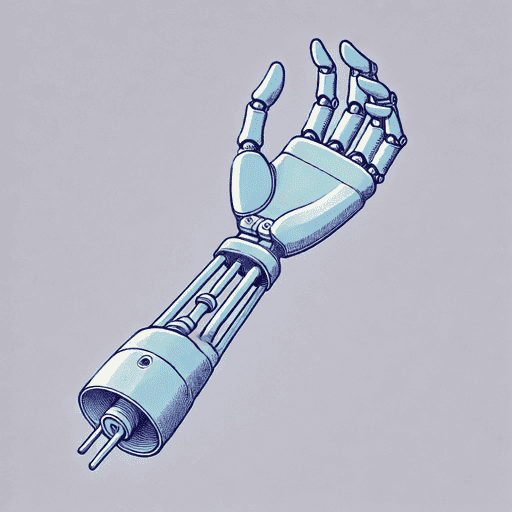
They fight, but Tara loses. She is severely wounded. Gallchobhar calls for Ronan, offering Tara’s life for Ronan’s. Ronan accepts. Gallchobhar’s men send Tara to the gate, and Ronan walks out, where he is tied and left with Deaglan. Gallchobhar takes Ronan and Deaglan to the lake to sacrifice them to the gods. As mockery, he ties the silver arm to Deaglan’s severed stump, then stabs him through the stomach.
Part 3, Chapter 75 Summary
Next, Gallchobhar cuts off Ronan’s head. Warriors pour out of the Caer Aras gates. Gallchobhar kicks Deaglan into the lake. Deaglan struggles, sinking. Then Cristoval appears. He unties Deaglan and removes his Vitaeria, putting it around Deaglan’s neck. Deaglan’s injury begins to heal. Cristoval stops moving, truly dead.
Suddenly, Deaglan can feel his missing arm. He has imbued the silver arm on instinct and can now move it. He climbs out of the lake and screams for Gallchobhar. Warriors freeze at the sight of him, believing he has been sent by their gods.
He sees Lir’s druid staff on the ground and picks it up, needing a weapon. When he touches it, he is suddenly standing in a rotunda of white columns with Lir. Lir instructs Deaglan on what to say to Gallchobhar: the gods have made Deaglan draoi nasceann, and have rejected Gallchobhar’s sacrifice. Fiachra’s men must surrender or be punished by the gods for dishonoring the Old Ways.
Then Deaglan is on the riverbank again. He repeats what Lir told him and challenges Gallchobhar. They fight, and he kills Gallchobhar. Ronan’s men carry Deaglan into Caer Aras, where he collapses.
Part 3, Chapter 76 Summary
Siamun wakes in the overflow cavern. Netiqret is there with Kiya. She gives him clothes and leads him out of the tunnels, asking what he needs. He needs a priest who can get him into the inner temple. Netiqret explains that she worked for the Nomarch. When Kiya was chosen to join, it was supposed to be a great honor, but she regrets not resisting. A year later, someone contacted her through a iunctus, offering to give Kiya back if she killed a priest. The iunctii brought Kiya to her but said that only the Nomarch could restore her mind. After that, she became an assassin to gain favors in hopes of accessing the Nomarch.
They reach the temple but find that the priests have been evacuated and the temple sealed. Netiqret accepts that there is nothing more she can do for her daughter. She asks Kiya to connect to the Nomarch and distract it long enough for Siamun to enter Ka’s Pyramid, knowing that this will destroy any remnant of her daughter that remains.
Part 3, Chapter 77 Summary
Catenicus staggers through the battle on the docks. He finds Eidhin and begs him to leave with him. When Eidhin refuses, Catenicus tells him the truth about who he is. He let the Anguis manipulate him, and he is therefore partially responsible for the current carnage. He says that the Republic will either break Eidhin or kill him, and warns that even if he succeeds in “mitigat[ing] one tiny part of their evil” (674), he will be unintentionally helping his enemies in other ways.
A Military soldier attacks, stabbing Diago with a spear. Eidhin and Catenicus argue about what to do. Catenicus has a plan. For reasons he does not understand, it seems that Ka does not want this level of chaos. He intends to negotiate with Ka. Catenicus will campaign to be the next Military Princeps. With that role, he can end the civil war. Then, after things have calmed down, he and Eidhin can stop Ka. If they do nothing, everyone will die anyway and it will not matter if Ka starts another Cataclysm or not. Eidhin agrees.
Part 3, Chapter 78 Summary
Siamun enters Ka’s Pyramid. He climbs a stairway that curves out and around the outside of the pyramid. Gleaners head toward him. He reaches an enormous gold door that opens at his touch. With the Gleaners close behind, he runs and reaches another door. The massive chamber beyond is filled with bookshelves, desks, and comfortable chairs. He pushes a desk to block the door.
He finds a large triangular stone table with a man lying on top of it. The man’s arms are crossed, and he looks Catenan. Siamun touches the crook to the man’s chest, and nothing happens. His resistance to the mutalis seems proof that he is Ka. Siamun stabs his heart.
Part 3, Chapter 79 Summary
Deaglan wakes, and Tara says the siege ended four days ago. Fiachra’s men fled. Ruarc surrendered. He has asked to speak with Deaglan. Grainne and her entire family are alive and well among the crowd, having escaped before the warriors burned down the farm.
They hold a funeral for Cristoval, burying him in a cairn marked with the whorled lines he saw on the Fornax archway. Tara calls it the triskeles, which symbolizes honor and respect.
Then Deaglan sees Ruarc. The man wears a silver torc around his neck, imbued with Will. He speaks in Vetusian and claims to be Caeror. He has surrendered because one of Deaglan’s counterparts has made a “terrible mistake” (694). He hands Deaglan the silver torc from his neck, saying it contains answers. Deaglan thinks about the violence and death that Ruarc has caused. He crushes the torc in his silver hand.
Part 3, Chapter 80 Summary
They leave Diago in Kadmos’ care and head into the city, hiding in a burned building to rest. A iunctus appears, speaking Vetusian and claiming to be the man they are looking for. Catenicus offers a deal: He will become the new Military Princeps and stop the civil war, but he needs something that will force his enemies to submit. The iunctus agrees, saying that the Cataclysm is a necessary sacrifice to “prevent the obliteration of two worlds, and the enslavement of whichever remains” (699), and now Catenicus is the only one who can fulfill this duty.
The iunctus takes them to the Necropolis, explaining that he is not the Concurrence, but its enemy. The Concurrence is a “self-contained latticework of iunctii. The remnants of a rogue system that once controlled the lives of hundreds of millions of people across the world” (702).
They enter a cavern filled with corpses on stone slabs. The iunctus says that this is the real Necropolis, “one of our earliest attempts to build something to rival the Concurrence” (703). The Military learned how to use it to preserve the knowledge of the dead. There are nearly 80 thousand in the chamber, and he wants Deaglan to wake them all. By using Will to imbue the first three, he can start a chain reaction. Each person will retain their personality and will have Will equal to a Princeps.
Eidhin begs Catenicus not to do it. The iunctus says that this is the sacrifice Catenicus must make for the greater good. Catenicus touches the first corpse. He tells Eidhin that “fear is a lack of control” (706), and he is tired of being afraid. Eidhin says he is still with him. The corpses wake. Among them is Catenicus’s mother and sister. A familiar voice calls for him. He and Eidhin turn and smile.
Part 3, Chapters 69-80 Analysis
The last 12 chapters rush to the conclusion in a rapid, action-packed sequence that starkly contrasts with the methodical build-up of Part 1. As with the second half of Part 2, this last section occurs simultaneously across all three worlds. Several clues indicate this. First, when Siamun first touches the crook and flail in Qabr, he has a vision of himself with a missing arm, being carried on horseback—matched by the scene in which Gallchobhar carries Deaglan to Caer Aras—and he sees the moment before Decimus murdered Aequa in Chapter 71. This indicates that these three events happen concurrently.
Additionally, the Ka-controlled iunctii that Catenicus negotiates with says that “as of a few hours ago” Catenicus is the only one who can fulfill the purpose of the Cataclysm, implying that this scene occurs within a few hours of Siamun stabbing Ka in Duat at the end of Chapter 79. Likewise, in Luceum, Ruarc tells Deaglan that one of his counterparts has made a terrible mistake, suggesting that these three incidents are related. These overlapping events heighten the tension and emotional impact, with every version of Vis experiencing immense loss as their plans and goals fall apart.
This loss becomes the driving force of every Vis’s choices in these last chapters. These choices, motivated in part by grief, highlight The Tension Between Choice and Circumstance. With Ahmose gone and Caeror presumed dead, Siamun charges recklessly into Duat, wreaking havoc as he goes. Deaglan, already shaken by first Lir’s and then Ronan’s deaths, must then face the final death of his father. These compounded horrors motivate his decision to break Ruarc’s silver torc, rejecting his offer of answers. Meanwhile, Catenicus has the most left to lose, and every choice he makes is motivated by the need to stop the violence at any cost and save his remaining friends, underscoring again The Necessity of Trust and Friendship. His friendships impact his decisions, inspire his need for survival and give him the strength to continue or the resolve to stop.
Several parallels emerge in these chapters. Some of these parallels appear in the symbols that have been prevalent throughout, such as the doorways. More important doorways appear in this last act, including the gold mutalis door in Qabr, the doorway into Ka’s Pyramid, and the entrance beneath the Necropolis that leads Catenicus to his final decision. The number three also continues to be prevalent, such as the recurring triskeles image that Deaglan sees on the Fornax archway, his father’s cairn, and Ruarc’s torc.
Other parallels even appear within the motif of threes. For instance, Gallchobhar fights in three different duels—first with Deaglan, then with Tara, and finally with Deaglan again, when he finally loses. There are also three examples of fathers motivated by the loss or threat of loss of their children: Vis’s father, Eidhin’s father Baine, and Iro’s father, Decimus. These examples represent different choices and moral compromises. Vis’s father chooses to sacrifice his own life to save his son, while also doing his best not to cross his own moral line. Baine chooses to compromise his own moral code in order to save his son, choosing subjugation over death. Finally, Decimus, broken by the loss of both his children, abandons morality altogether and becomes a vengeful murderer.
Similarly, each version of Vis is forced into choices that compromise or cross his personal moral line in different ways and to varying degrees. Catenicus, by the end of the novel, has murdered dozens, though he justifies his actions as self-defense or defense of others. It is difficult to determine which version of Vis has made the most significant moral compromises, particularly between Siamun and Catenicus. If Ruarc is to be believed, one of them has made the wrong choice, but it is unclear which one he is referring to. Siamun chooses to bring violence and destruction across Duat to kill Ka, creating many smaller evils to eliminate a single greater evil. In contrast, Catenicus chooses to negotiate with Ka to stop the civil war, arguably appeasing the single greater evil to stop many smaller ones. The novel suggests that the question of who made the better choice will be resolved in the next installment of the series. Just as the title of Part 3 warns, these choices make each character who they are, further demonstrating the significance of the theme of The Tension Between Choice and Circumstance.
All these choices represent a clash between three major themes of the novel, arising from tensions between competing responsibilities and desires. For instance, Siamun’s choice represents the belief that self-sacrifice is the best way to achieve revolution while maintaining one’s morality. His choice is supported by the examples of Caeror and Vis’s father in Luceum. Conversely, Relucia argues that revolution cannot win without the awful but necessary sacrifice of innocent lives. Ka, through the iunctii in Chapter 80, articulates The Moral Ambiguity of Sacrifice: “Instead of the easy gift of our lives, we must suffer the hundred little deaths of self in order to protect this world. Not because what we do is good, but because good will no longer exist if we do not” (705). He does not argue that Catenicus’s choice is good, but rather that he must sacrifice his own morality to secure the existence of good for everyone else. Thus, the conclusion asks painful questions about the choices between self-sacrifice and sacrifice of others, and the choice to compromise with necessary evils for the sake of a greater good. The conclusion does not, however, arrive at any answers, but instead leaves them open to be addressed in the sequel.
These difficult moral questions also depend on the revelations in the last three chapters. These revelations—that Ruarc is Caeror, that Ka is not the Concurrence, and that the Concurrence is a system of iunctii—invite yet more questions rather than provide answers. Even Catenicus’s decision to wake the 80 thousand iunctii beneath the Necropolis, horrific as Eidhin finds it, is complicated by the additional last-second twist: the return of Vis’s mother and sister, and (presumably) Callidus. However, determining which version of Vis has made the right decision will likely hinge on learning whether these various revelations are true or not, and what other unknowns have yet to be revealed. The conclusion in Chapter 80 therefore ends on a tense, unresolved note that points toward the awaited sequel.

Unlock all 75 pages of this Study Guide
Get in-depth, chapter-by-chapter summaries and analysis from our literary experts.
- Grasp challenging concepts with clear, comprehensive explanations
- Revisit key plot points and ideas without rereading the book
- Share impressive insights in classes and book clubs