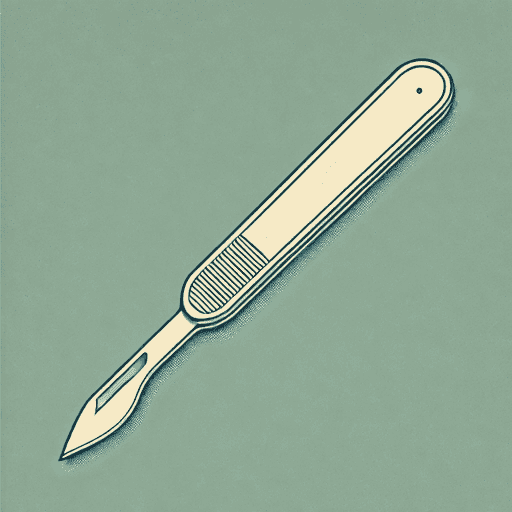
The Surgeon
51 pages • 1-hour read
Tess GerritsenThe Surgeon
A modern alternative to SparkNotes and CliffsNotes, SuperSummary offers high-quality Study Guides with detailed chapter summaries and analysis of major themes, characters, and more.
Symbols & Motifs
Content Warning: This section of the guide includes discussion of sexual violence, rape, graphic violence, and graphic medical procedures.
Ancient Myths and Rituals
Throughout The Surgeon, the killer Warren Hoyt describes his fascination with a variety of different rituals of human sacrifice from across cultures. These descriptions are a motif that contribute to the theme of Misogyny and the Prevalence of Gender-Based Violence. They depict how women have been the target of violence by societies across the world for thousands of years and how this deep-seated misogyny reverberates into the present day.
Hoyt begins with a vivid, graphic description of the sacrifice of Iphigenia by her father King Agamemnon during the Trojan War to expiate her father’s sins against the goddess Artemis. As he states, when he thinks of the Trojan War, he sees “the image of a girl’s body, drained white, and the father standing beside her, clutching the bloody knife” (115). Later, Hoyt conflates the mythic Iphigenia with the real Dr. Cordell, noting that “her throat is as pale as Iphigenia’s must have been” (369). This illustrates how this mythic violence inspires present-day violence against women.
Hoyt also uses historic ritual practices as a framework for the erotic aspects that shape his blood lust and fantasies. He describes, for instance, the ritual sacrifice of a Viking “harlot” in 922 who was repeatedly raped and then stabbed to death. (Modern scholars like historian Dr. Christina Wade cast doubt on the veracity of Ibn Fadlan’s account of the ritual as described in The Surgeon.) He connects the spilling of her blood with the sperm the men “spilled” inside of her while they raped her, giving the entire ritual a sadistically erotic character in his mind (157). This example shows how gender-based violence, both in the present day and historically, is based in a desire to control and subjugate women through sexual humiliation.
The Sparrow by Mary Doria Russell
The book The Sparrow by Mary Doria Russell (1996) is used as a symbol in The Surgeon to represent how horrific events like the rape and murder of multiple women calls into question God’s will versus human volition. At the time of her abduction, Nina Peyton had checked out The Sparrow from the public library. An image of the book is discovered in the background of the picture of Peyton that Hoyt sends to Cordell and it is used to identify and locate Peyton. On their way to the crime scene, Detective Frost describes The Sparrow as a book about “Jesuits in space” and “the nature of God” (135), to which Rizzoli retorts, “I don’t need to read it […] I know all the answers. I’m Catholic” (135).
Were Rizzoli to read the book, she would discover that the main character in The Sparrow, Emilio, struggles with his faith while undergoing torture and abuse. He begins to wonder why God would permit suffering to happen. Emilio is raped, resulting in his withdrawal from the world and ultimately spiritual death. These themes and plot lines are resonant with the experiences of Hoyt’s victims in The Surgeon, particularly Dr. Cordell. After she is sexually assaulted, she withdraws from the world and from intimate relationships. However, Dr. Cordell’s trajectory is ultimately more optimistic than that of Emilio, as she is able to find love, life, and self-affirmation through an intimate relationship with Detective Moore.
Medical Techniques and Blood
The motif of medical techniques, particularly those involving blood, are used to illustrate The Psychology of Serial Killers in the contrast between how Dr. Cordell and “The Surgeon” Warren Hoyt use these techniques. Dr. Cordell is a conscientious and caring physician. She uses her medical knowledge to save patients from bleeding out. For instance, she treats a man with “a foot-long iron rod” coming out of his chest by giving him a blood transfusion and sewing up the laceration caused by the rod (116). The feeling of saving his life gives her a “glow of success” (120).
Instead of using these techniques to heal, like Dr. Cordell, Hoyt and Capra use them to hurt women. They apply their medical training to cause women to bleed out through torture and the excision of their uteruses. They even use their medical knowledge to suture the blood vessels at the excision points using catgut. This horrific inversion of the Hippocratic Oath is representative of the psychology of serial killers who seek to assert their dominance over women in general through violence and over Dr. Cordell in particular by perverting what she values most in the world, the techniques she uses to heal people.

Unlock the meaning behind every key symbol & motif
See how recurring imagery, objects, and ideas shape the narrative.
- Explore how the author builds meaning through symbolism
- Understand what symbols & motifs represent in the text
- Connect recurring ideas to themes, characters, and events