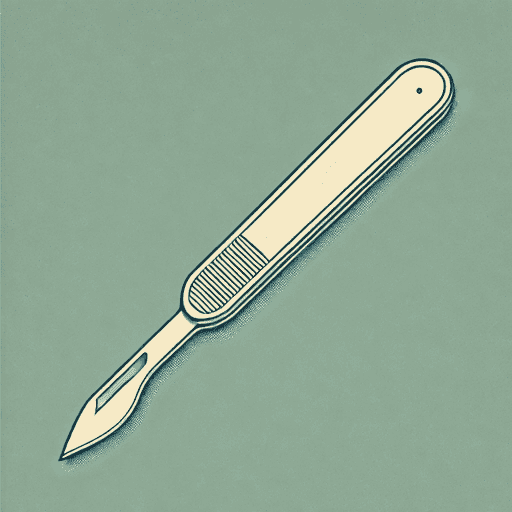
The Surgeon
51 pages • 1-hour read
Tess GerritsenThe Surgeon
A modern alternative to SparkNotes and CliffsNotes, SuperSummary offers high-quality Study Guides with detailed chapter summaries and analysis of major themes, characters, and more.
Themes
Content Warning: This section of the guide includes discussion of bullying, racism, gender discrimination, sexual violence, rape, graphic violence, graphic medical procedures, and sexual content.
The Psychology of Serial Killers
The Surgeon focuses on the actions of two serial killers, Andrew Capra and Warren Hoyt, who brutally rape, torture, and murder women by surgically removing their uteruses and then slitting their throats. Through the first-person perspective of Warren Hoyt, the insights of criminal psychologist Dr. Zucker, and the analysis of Detectives Rizzoli and Moore, the psychology of these serial killers is explored.
Capra and Hoyt are motivated primarily by their hatred of women. As Dr. Zucker states, “By taking the womb, he defeminizes his victim. He steals her power” (76). They are particularly focused on humiliating women they perceive as having too much power. This is best exemplified in their attempts on Dr. Cordell’s life. Capra was Cordell’s inferior at the hospital, and Cordell was on the verge of firing him for mistakes he had made at work. He felt that “it wasn’t right that Catherine should have the power to make or break a career” (247). When he realized she was going to fire him, he attacks her to assert his dominance.
Similarly, when Hoyt sees the coverage of Cordell as a strong, confident doctor in the Globe, he feels “sheer, uncontrollable rage” (291) that she is not as damaged as he hoped she would be from her sexual assault. As Hoyt himself was forced to abandon his medical career when he was caught masturbating over a mutilated cadaver, he resents that she has achieved what he never can. Hoyt has a grandiose, over-inflated sense of self-importance he seeks to bolster through his horrific acts. He targets her to avenge his partner, but also to damage her further to assert his power and control.
There is also an erotic dimension to Capra and Hoyt’s violent actions. As Dr. Zucker explains, Hoyt “is a classic picquerist […] who uses a knife to achieve secondary or indirect sexual release. […] The knife is a phallic symbol” (72). The penetration of the knife is a form of rape that asserts power and control over the victim. Hoyt is also sexually aroused by the sight of blood, to which he ascribes a quasi-mystical quality. These pathological erotic desires were encouraged and enabled by Capra, whose own motivations remain somewhat obscure as he was killed before the opening of the novel. It is also suggested in the novel that Hoyt’s erotic fantasies are tied up in his admiration verging on passion for his partner in crime, Andrew Capra. His reverence for Capra is made clear through his inner monologues, all of which are addressed to “you,” referring to Capra.
Despite the insight the work provides into the psychology of serial killers, the origins of their pathologies remain obscure. Indeed, they both appeared to be normal, well-functioning members of society. This lacuna is representative of the real-world limitations of understanding serial killers: Often their motivations remain obscure.
Misogyny and the Prevalence of Gender-Based Violence
The Surgeon depicts a range of forms of misogyny, from sexist workplace discrimination to the forms of gender-based violence targeted at women. In showing these varieties of misogyny, it illustrates how violence against women like rape and murder is connected to the misogyny women like Detective Rizzoli who work in male-dominated environments experience on a daily basis.
Detective Rizzoli is the only female homicide detective in Boston. Because of her gender, she is the target of misogynistic treatment by her male colleagues. This is most blatantly illustrated in a scene early in the novel when someone leaves a water bottle with a tampon on her desk. Rizzoli does not feel she can complain about this treatment as it would make others see her as a “whiner.” As a result of this treatment, Rizzoli is not treated as a fellow member of the team. When Rizzoli shoots and kills an unarmed suspect, she is described as “no longer an asset to the unit” (375) even though men who similarly have a “bad shooting” are not given such harsh punishment.
The novel also depicts how societal misogyny contributes to what feminists refer to as “rape culture,” or the prevalence and acceptance of the sexual assault of women. “The Surgeon,” Warren Hoyt, targets women who have previously experienced sexual assault. These women are particularly isolated and vulnerable, as they feel ashamed and traumatized about what they have experienced. That there are so many women, and their rape kits not processed in a timely manner, is indicative of how widespread this issue is because it is not taken seriously. When Rizzoli confronts the bartender at the Gramercy Pub about the drugging of Nina Peyton in his bar, his indifference is illustrative of a wider apathy in society about this issue.
As Dr. Zucker explains, rape is not about sexual desire as much as it is about asserting power over the victim. The rapist seeks to transform the women into “an object.” This misogynistic desire to assert power over women through violence reaches its most extreme representation in the murders committed by the serial killers Warren Hoyt and Andrew Capra. They were motivated by their hatred for women and their desire to dominate them. They performed hysterectomies to “cut[] out the one thing that makes them women” (76). They particularly targeted Dr. Cordell because she had the professional accolades that they would never achieve, and they wanted to humiliate and damage her to show they were more powerful than her.
It is Rizzoli who draws the connection between the workplace discrimination she experiences and the tragic murders of all these women. As she reflects to herself during a team meeting, “She thought about the kind of man who is drawn to police work. The kind of man who loves the power and authority […] The chance to control others. Precisely what our unsub craves” (83). This reflects the understanding represented throughout the work that misogyny is a spectrum of behaviors that harm women, some of which tip over into violence.
The Tension Between Professional Identity and Personal Vulnerability
The character development of the three point-of-view characters in The Surgeon is driven largely by the inner conflict they face between how they present themselves professionally and their personal struggles. These characters, Detective Rizzoli, Detective Moore, and Dr. Cordell, deal with this challenge differently, and ultimately they are all changed by the experience.
Detective Jane Rizzoli seeks to assert her confidence in her abilities as a homicide detective. She never wants her male colleagues to ever see her as weak or less capable than they are. In her desire to ensure her contributions are not minimized or overlooked, she sometimes acts rash, impulsive, or aggressive. As Detective Moore reflects, “he understood why she’d adopted that up-yours attitude; she probably needed it to survive as a female cop” (50). Despite her tough exterior, Rizzoli does struggle in private moments with feelings of anger and self-doubt at being discriminated because of her gender. As she explains to Moore, “I waste a lot of energy just trying to make myself heard” (110). When Rizzoli is sidelined after killing an unarmed suspect, she overcomes this personal vulnerability by pushing herself to continue investigating to find Hoyt’s location. She is rewarded for this tenacity by finally receiving the admiration of her colleagues.
Detective Thomas Moore’s professional identity is closely tied to his view of himself, one shared by others, as a “good cop,” earning him the slightly derisive nickname “Saint Thomas.” He is recognized by his colleagues like Rizzoli as a man with a “calm voice” and level-headed demeanor. However, privately, he is struggling to cope with the loss of his wife to a cerebral hemorrhage 18 months prior. As he thinks to himself, his colleagues “do not know the other Thomas Moore, the man who stood before his wife’s closet at night, inhaling the fading scent of her clothes” (164). This feeling of loneliness and grief is at odds with the version of himself he presents at work. His desire to reconnect with a woman leads him to make the somewhat unethical decision to pursue a relationship with victim and possible suspect, Dr. Cordell. Rizzoli criticizes him for this, accusing him of “losing his objectivity” (131) because of his affections for her. Ultimately, this inner conflict is resolved when the police arrest Warren Hoyt. With the end of the case, Moore pursues a relationship with Cordell, ultimately marrying her.
Dr. Catherine Cordell is a highly qualified and competent ER surgeon whose calm and authoritative demeanor when treating her critical patients masks the trauma and PTSD she still carries from the sexual assault she experienced at the hands of Andrew Capra. While at work, Cordell is completely in control of her environment. Multiple passages depict her performing surgery in intense circumstances, as when she saves the life of a man with an iron rod through his chest. However, at home, Cordell is still haunted by what she experienced. She is obsessed with personal security, afraid of the outside world, and has transformed her home into a “sterile prison” in an attempt to exercise her control over all aspects of her life. She is reluctant to share her personal vulnerabilities with her colleague Dr. Falco for fear she will lose his respect. She is gratified when, after she finally opens up to him about what she has gone through, he says her fortitude reflects “how strong you are, how brave you are” (352). Instead of rejecting her, he sees her expression of her personal vulnerability as a form of strength.

Unlock every key theme and why it matters
Get in-depth breakdowns of the book’s main ideas and how they connect and evolve.
- Explore how themes develop throughout the text
- Connect themes to characters, events, and symbols
- Support essays and discussions with thematic evidence