The Tell: A Memoir
51 pages • 1-hour read
Amy GriffinThe Tell: A Memoir
A modern alternative to SparkNotes and CliffsNotes, SuperSummary offers high-quality Study Guides with detailed chapter summaries and analysis of major themes, characters, and more.
Part 2, Chapters 4-6Chapter Summaries & Analyses
Part 2: “Remembering”
Part 2, Chapter 4 Summary: “Bathroom”
Content Warning: This section of the guide contains graphic descriptions of rape, sexual assault, physical abuse, and child sexual abuse, and emotional abuse.
Under the influence of the MDMA session, the adult Amy felt as if she were watching a film of her younger self in the middle school bathroom, alone with Mr. Mason. During this past moment, she was on the floor of the bathroom, topless, and Mr. Mason stepped on her lower back with his cowboy boot, just where she had felt pain her whole life. At first, her younger self was sure that this couldn’t be real; Mr. Mason “was one of the good guys” (89), and she remembered him telling her that she was the school’s true leader after she lost the student council president position.
The adult Amy then recalled Mr. Mason raping her in his classroom during a school dance, and again in the girl’s locker room. Her mind went to the day that she had been given the award for leadership and kindness. She remembered the fear she had felt and understood that she felt that way because she was “so afraid people would discover her secret” (92). Gently, the adult Amy told herself that she had done nothing wrong and let go of her shame and denial.
When the effects of the drug wore off, Amy felt as if her mind had been cleared of “a low, polluting hum” (93). The silence was peaceful but also “disorientating.” She asked Olivia to bring John in, and she told her husband the truth that she had uncovered. The confession held both pain and liberation. He helped her into bed, where she lay, “reeling,” for the rest of the night. At dawn, John offered to draw her a bath. Lying in the tub, Amy thought of her crystal-clear memories of bathrooms throughout her life and wondered how she could have possibly forgotten the abuse that took place in the middle school bathroom. Suddenly, she began to understand how her experiences as a child had come to affect her as an adult. She understood her reluctance to approach the school on her runs, and she gained new insight into her extreme reactions to certain triggers as an adult. Suddenly furious, she flung the bar of soap across the bathroom and told John that Mr. Mason had preyed on her desire to be special. John helped her out of the bath, but Amy soon began to shake and crumbled to the floor, sobbing with her husband beside her.
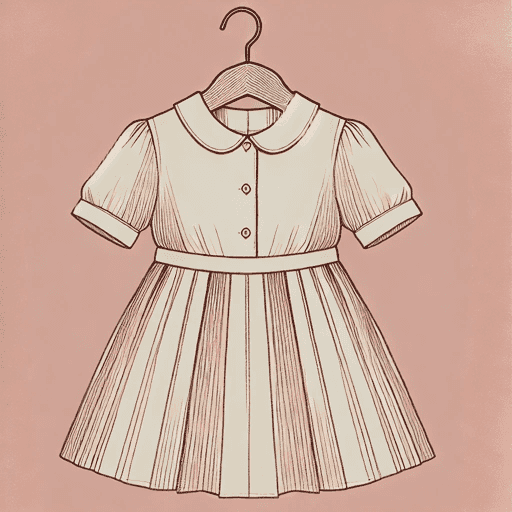
The next day, John gave Amy a journal, suggesting that she write about her memories and feelings. In the first entry, Amy wrote about lending the dress to Claudia, suggesting that “[b]eing kind […] created a distraction” (99) for her. However, Amy soon realized that she remembered seeing Claudia and Mr. Mason together, and she began to wonder if Claudia had also been abused.
After three days, Amy finally dragged herself out of her house to go swimming. As she swam, she had a memory of a blue bandana. She recalled that Mr. Mason used to tie her hands behind her back and connected this memory to her sudden panic when Jack tried to enact a bondage fantasy. She also remembered Mr. Mason threatening to “rip [her] teeth out” (102) if she told anyone what had happened; this explained her emotional reaction at the dentist’s office.
In search of “a lifeline,” Amy secured an emergency appointment with a therapist named Lauren. As she told Lauren her story, she paused to ask “how memory actually works” (104). Lauren explained that memories are first encoded, then stored, and finally recalled. However, because storage and recall are different processes, “[r]ecall only happens when the conditions are right” (105). Lauren helped to reassure Amy that she wasn’t making the memories up and suggested that her memories may have been triggered because her daughters were now the same age that she was when the abuse occurred. She reminded Amy that her body and personality never forgot the abuse and suggested that her inability to “recall [her] trauma on a conscious level doesn’t mean it hasn’t always been there, affecting [her] life” (108). She also helped Amy understand that “the ambition of high-achieving people can be a trauma response” (109). However, Amy’s “biggest question” was how she was “supposed to go back to [her] normal life” (109). Lauren encouraged her to take things slowly and be gentle with herself. Amy left the session feeling almost hopeful.
Part 2, Chapter 5 Summary: “Boundaries”
In the days following her revelation, Amy took solace in her family. However, she worried about how to protect her children from the kind of abuse she had experienced. She also felt the need for someone to validate her experience. She wanted to share her story, but she worried about how to tell those closest to her. She also didn’t want her friends and family to wonder why she had retreated into her “own world.” Amy confided in a close friend who put her in touch with William, a man who had a similar experience with a teacher and brought charges against his abuser. William’s accusations had convinced several other survivors to come forward, and the man was incarcerated. Inspired by William’s story, Amy decided to seek justice and validation. However, William warned her “that healing is a long road” and urged her to “address [her] own needs” (115) first. Amy brushed off this caution, confident that she could heal herself and seek justice at the same time. She was also surprised when William confessed that he hadn’t shared his story with many others because he was “still processing” his experiences. William’s story made her hopeful, and she told John that she was ready to find Mr. Mason. He agreed to help her organize a background check.
Amy “was in survival mode” (117) in the weeks following the revelation, “disoriented” by her recovered memories. She felt in desperate need of more support, so she confided in Rachel and Courtney, two childhood friends, hoping that they might remember details that would confirm her memories. Rachel first, had no useful memories of Mr. Mason. Courtney didn’t, either, but she began helping Amy to look for information about Mr. Mason. Amy wasn’t ready to hear about Courtney’s findings, but she appreciated her friend’s support.
Amy spent most of her time at home, trying to focus on her children as she anxiously waited for Mr. Mason’s background check to come back. One morning, as she and John were getting ready for a bike ride, John casually mentioned that he had received the background check, but there wasn’t “a lot to show” (121). To Amy, however, this was “earth-shattering news” (121), and she was furious with John’s lack of urgency. They left on their bikes, but partway through the ride, Amy began to shout at John and pedaled away from him as fast as she could. He let her have her space, and she eventually apologized. Back home, John told her that he couldn’t “be the middleman” (122) in her investigation. At first, Amy was hurt, but her therapist helped her to see that John’s boundary was really an “act of love.” He knew Amy “needed a different kind of help from what he could provide” (123).
Back home, Amy was disappointed to see that John was right: there was nothing incriminating in Mr. Mason’s background check. However, when Courtney texted to tell Amy that there was no statute of limitations on rape in Texas, she and John decided to hire a lawyer, and Amy scheduled another session with Olivia.
Amy had “always had trouble with boundaries” (125), especially with her work and with motherhood, pushing herself “past what was healthy” (126). This issue was on Amy’s mind when she got an email from James. Their relationship had remained “friendly” in the years after their contact, but now she suddenly wondered why she allowed a man who had raped her to continue being a part of her life. She deleted the message without responding. That night, she thought of all the times she had excused men’s “bad behavior” when they had hurt her, made her uncomfortable, or made inappropriate remarks about her body. With John, she felt safe enough to get angry, but when other men treated her badly, she tried to placate them.
Amy walked into her second MDMA session eager to discover new information. However, when the drug took effect, she was back in the middle school bathroom as Mr. Mason forced her to give him a blow job. This time, she wasn’t watching from the sidelines but through her own young eyes, and she could remember the sensations and emotions. When he looked down at her, she smiled at her abuser, hoping that he would “set [her] free” if it looked like she was “having a good time” (128). Next, Amy saw a new memory. She was a teenager, driving herself to a tennis game, when she saw Mr. Mason in the parking lot. He asked her to go with him “for old times’ sake” (129), and she followed him without resisting.
Instead of wondering why she hadn’t resisted, the adult Amy was overcome by compassion for her younger self. She knew that Mr. Mason had a sense of absolute power over her, and she was doing the only thing she knew to keep herself safe.
Part 2, Chapter 6 Summary: “Signs”
Amy’s new lawyer, Cate, met with her at home on a weekend. Amy trusted her immediately and told her story. Cate warned that Mr. Mason could countersue for defamation, but Amy was sure that pursuing justice was the only way to move forward. The only thing that could deter her was possible harm to her children. Cate told her they would start an investigation to look for other possible survivors, and Amy suggested they look for her classmate Claudia and her coach, Bess Taylor. However, she begged Cate to be discreet; she still didn’t know how to tell her family, and she didn’t want them to learn of the investigation.
John planned a weekend getaway to the country, but Amy spent much of the time overcome with anger at herself and others. She was angry that she had hidden the abuse for so long and that no one had seen her distress and come to her rescue. She thought of her volleyball coach, Bess Taylor. She remembered her coach’s praise and the way she had made Amy feel “seen,” but examining her memories more closely, she realized that her coach was chronically overwhelmed and wondered if she had worked so hard to “spare her the discomfort of having to be a disciplinarian” (137). She remembered Coach Taylor talking to Mr. Mason and felt angry that the coach hadn’t been able to protect her. She felt “betrayed” by everyone she had trusted.
As the investigation in Amarillo got underway, several women who spoke with Cate’s investigators remembered Mr. Mason “as being ambiently creepy” (139), but no more specific instances of abuse were uncovered. Claudia, whom Amy had hoped would remember something, claimed to have almost no memories of middle school.
As summer ended and Amy’s children headed back to school, Amy was consumed by fear for their safety. She knew they “were in the best hands” (141), but they were still “so vulnerable,” and she worried that what happened to her could befall her daughters. After the recall of her memories, Amy began taking notes compulsively, needing to find concrete proof so that others would believe her. She worried that she would overlook some key details, so she wrote everything down and began recording her therapy sessions with Lauren.
Amy tracked down Bess Taylor’s phone number, and they set up a time to talk. The conversation started with light reminiscing, but Amy began to sweat when Bess announced that she had warned Mr. Mason when some investigators began calling around and asking questions about him. She scoffed that the allegations must have been “bogus” because Mr. Mason was “amazing.” Amy went silent, and Bess correctly interpreted this as an admission of the abuse that Amy had survived. Distraught, Bess apologized for not helping Amy during that time. She admitted that she was also abused as a girl and “just hit the ground running” (146) after she graduated. While coaching Amy and her classmates, Bess was just 21 years old and struggling with the demands of her new job. Amy didn’t get the corroboration she hoped for, but she did come to a new understanding of abuse as “a tangled mess of shame and silence” (147). She understood how easy it was to look away from things people didn’t want to see.
Part 2, Chapters 4-6 Analysis
The first three chapters of Part 2 detail the immediate aftermath of Amy’s first MDMA session and her rollercoaster of emotions, illustrating The Therapeutic Power of Vulnerability to contribute to new levels of emotional healing, even if the path is an arduous one. As Amy grapples with the resultant shock, pain, sadness, and relief of facing her past, she must also come to terms with The Impact of Repressed Memories on Personal Identity. For this reason, trust becomes an important theme of these chapters as Amy tries to reconcile her current version of herself with her newly recovered memories. Initially, she struggles to trust herself as she reels from her discovery, wondering how she could have possibly forgotten these memories for so long if they were real. She also struggles with the fact that they were recovered under the influence of a mind-altering substance, doubting the validity of her memories even further. However, as she gradually begins to adjust and doubt herself less, her sense of distrust shifts to others, and she begins to feel a deep sense of anger at all the adults who missed the signs of her abuse and failed to protect her.
Crucially, these issues extend into her current life as well. Because authority figures no longer carry the same weight, she now begins to worry about the safety of her own children, terrified by the idea that she can never really know what her children experience at the hands of others in her absence. These passages emphasize that the recovery of her memories also affects her trust in the solidity of reality and her ability to discern and recall important information. Because she has “hidden something so huge from [her] conscious mind for decades,” she now holds new levels of doubt in her own “discernment” and “understanding of other people” (144). To combat this issue, she begins compulsively making notes and recording her therapy sessions so she doesn’t forget or misinterpret anything else. These details suggest that Amy is in the messy interim stages on the road to healing, when progressive realizations lead to new emotional struggles that must be overcome one by one.
As Amy comes to terms with her trauma, she begins revisiting many of her memories from her middle school years, finding new meaning in overlooked details and second-guessing some long-held beliefs. A number of memories play back “like a broken record” (97) and are “charged” in a way she cannot previously identify. Now, for example, she can reflect on the fear that she felt upon receiving her school award and identify it as the terror that “people would discover her secret” (92). She also starts to understand that the inexplicable vividness of certain memories can be traced to their proximity to her trauma. However, she tends to overanalyze some of these memories, becoming mistakenly convinced, for example, that her classmate Claudia was also being abused.
Her ongoing struggles highlight The Impact of Repressed Memories on Personal Identity, and one of the key factors in helping Amy to regain trust in herself is to connect with her body’s visceral memories of the abuse, even though her conscious mind had blocked it out. The clarity of certain childhood memories is one example, but she starts to identify other ways that her life has been shaped physically, mentally, and emotionally by her trauma. She can link inexplicable panic attacks to situations that were triggers related to the abuse she experienced, and certain physical malaises directly correspond to traumatic memories, such as lower back pain where her abuser had once stepped on her with his cowboy boot. Many of her personality traits, such as her “perfectionism and people-pleasing, [her] inability to slow down” (108) and her tendency to smile and placate domineering and abusive men can all be traced back to her trauma. She realizes that the abuse had really happened because “[i]t was all right there,” she “had just never been able to see it” (98). By relating these experiences in visceral terms and reiterating the veracity of the details she recalls, she delivers the implicit message that other survivors of abuse can find a similar level of validation.

Unlock all 51 pages of this Study Guide
Get in-depth, chapter-by-chapter summaries and analysis from our literary experts.
- Grasp challenging concepts with clear, comprehensive explanations
- Revisit key plot points and ideas without rereading the book
- Share impressive insights in classes and book clubs