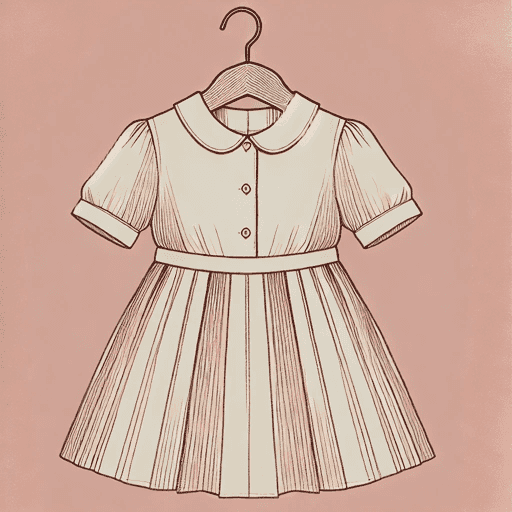
The Tell: A Memoir
51 pages • 1-hour read
Amy GriffinThe Tell: A Memoir
A modern alternative to SparkNotes and CliffsNotes, SuperSummary offers high-quality Study Guides with detailed chapter summaries and analysis of major themes, characters, and more.
Part 3Chapter Summaries & Analyses
Part 3: “Rebecoming”
Part 3, Chapter 10 Summary: “Foundation”
Two years after the family trip for her father’s birthday, Amy’s mother called to tell her that her old middle school needed to be completely demolished and rebuilt. This felt “felt like a cosmic punch line” (212) to Amy. She wasn’t sure she was ready to make the trip home yet, but she wanted to see the school one last time before it was gone. On Amy’s recommendation, her mother had also read Bessel van der Kolk’s book on trauma, The Body Keeps the Score. It had helped Amy to understand that her body was storing her trauma, and the knowledge that her mother had read the book made Amy feel seen and supported. She had realized that nurturing her relationships with her family was a key part of her healing, and she had invested time and energy into her relationships with her siblings and parents. She still experienced “complicated feelings” toward them, but they were close again. Even though she “still struggled to set boundaries, she became “more forgiving” of herself and taught her children “different messages” than the ones she’d learned in rural Texas.
Amy was conflicted about making the trip home to see the school. On the one hand, she worried it might be “destabilizing” if her memories didn’t align with the physical school, but she also knew that the visit could confirm her memories once and for all. In the midst of this conflict, she met with a young woman who was looking for career advice. The young woman’s Southern accent and youthful ambition instantly reminded Amy of herself. When she slipped in a “yes, ma’am,” Amy gave her the same advice that her first boss had given her, telling the young woman that the phrase seemed too “deferential.”
Back home, Amy knew that Jack had his girlfriend in his room, but she no longer demanded that the door remain open. Her children had noticed several positive changes in her, and there was greater trust in the family dynamics. Amy found the journal she had begun after her first MDMA session. The first entry was about lending Claudia the dress, and Amy was again consumed by curiosity, wondering why Claudia played such a large role in her memory. She found the files from the abandoned investigation, which she hadn’t had the courage to read. Among them was a photograph of Mr. Mason and the transcript of the investigator’s interview with Claudia. Claudia claimed to remember very little from middle school, but she did remember that Amy had lent her the dress. Amy became certain there was a reason the women remained linked through this memory. She quickly found Claudia’s phone number online and texted her, telling her she would be in Texas soon and would like to talk to her.
Part 3, Chapter 11 Summary: “Homecoming”
Amy’s parents were both excited to have her home, but she remained focused on her “mission” and headed to the school as soon as possible. Her sister-in-law escorted her. Inside, the school’s hallways were exactly as Amy had remembered. She felt “robotic,” devoid of the “swell of emotion” (228) she had anticipated. She wandered past the classrooms and into the auditorium where Bess Taylor had presented her with the award. The bathroom that was so vivid to her was the most changed. The door had been removed and replaced with a partition entryway. The interior had been remodeled, and the sinks, windows, and floors had been replaced. This change was a relief to Amy, softening the shock of being back in the place that held such terrible memories. She lingered one last time in the hallway before she “walked out of the shadows and into the light” (232).
Next, Amy’s sister-in-law drove her to her childhood home. The new owners let her in, and Amy wandered into her childhood bedroom. Although her childhood had been filled with “pain, secrecy, and shame” (234), the house was also full of “beautiful memories.”
The next morning, Amy ate a cherry-glazed donut she had loved in her childhood and picked up takeout from a local taco place to bring to her meeting with Claudia. On their way, her mother drove her by the family’s newest convenience store. It was “fancier” and “shinier” than Amy had imagined, filled with new brands and products. She had always thought of her hometown as “a place time had forgotten” (235), but she understood that a lot had changed. Her family’s stores had taught her “that things were better when they were convenient” (236) but now she knew that utter perfection was not a necessity.
Part 3, Chapter 12 Summary: “Cards”
Amy arrived early, nervous to meet with Claudia. She reminded herself that she didn’t need any particular result, although she hoped that Claudia might confirm her story in some way. She also knew that her story might be hard for Claudia to hear, especially if she had experienced something similar. When the other woman arrived, they made awkward small talk until Amy finally told Claudia that she was trying to process some memories from middle school and hoped to share them with Claudia. Although Claudia repeated that she remembered very little from that period of her life, Amy launched into the story of her own abuse.
As she shared her story, she noticed that Claudia “leaned back, as if trying to get away from [her]” (241). Amy told her the significance that Claudia held in her memory and promised her that she needed nothing from the other woman. However, she continued to hope that Claudia’s “stoic” façade would crack and that she would confess that they had shared the experience or that she would assure Amy that nothing had happened to her. Finally, Claudia began to cry and said that she remembered Amy as the only person who was kind to her; she wished that she could have helped Amy in return. Amy realized that Claudia’s stoicism stemmed from her guilt that she couldn’t remember more or help Amy. However, Amy continued to wonder why Claudia played such a strong role in her memories. Suddenly, she realized that her decision to loan Claudia the dress was an example of her “essential” self: the part of her “that no abuse could ever harm” (244) or erase.
Seeing the school helped Amy to let go of any lingering doubt. Later, she returned to Texas for a girls’ trip with her closest childhood friends and her sister, Lizzie. She came home feeling as if she “had made [her] peace with Texas” (246). In her next session with Lauren, her therapist again offered the deck of animal cards. This time, Amy drew the whale, “the ultimate wise and knowing feminine card” and “[a] testament to all the work” (246) Amy had done.
Amy was navigating her recovery, but she soon encountered another obstacle when she received a mysterious postcard in the mail with the message “‘I don’t understand why I was given an award for being kind to someone. I mean, isn’t that what you are supposed to do?’ —Amy, circa 7th grade” (247). On the back, in tiny, upside-down letters, the sender had written, “I didn’t have it in me to tell you the truth” (247).
Part 3, Chapter 13 Summary: “Answers”
Amy was sure that the postcard was from Claudia. She felt a combination of “relief, grief, [and] pure adrenaline” (249). Here was the validation she had so desperately wanted, but there was something wrong with this “perfect ending.” She couldn’t be sure the card was from Claudia. It could have been from Bess Taylor or even Lizzie. She wondered if it could all be a “cruel joke.” Finally, she texted Claudia, thanking her for her courage and offering her support. She didn’t receive a reply. A week later, she texted again. This time, Claudia responded, simply thanking Amy and telling her all was well. Confused, Amy asked her directly about the postcard, but Claudia claimed she didn’t send it.
Amy was more confused than ever. Her friend Courtney suggested they send someone to Claudia’s house to steal a handwriting sample, and Amy laughed but was tempted. However, Gracie helped her to see that the postcard was “everything” she had wanted. Even if she didn’t know who sent it, she knew she wasn’t alone. Amy saw that her desperation to find the sender was another example of her tendency to “push;” although she was better in many ways, she still had lessons to learn.
Amy also understood why the sender didn’t want to share their secret directly, and she knew why Claudia might have denied sending the card. There were “many layers to awareness,” and one had to make “remembering […] a practice” (254). This took an incredible amount of courage.
Amy continued sharing her story with others. It made her relationships stronger, but the telling was always a “gift to [her]self” (255). Oftentimes, people commended her bravery, saying they wouldn’t want to remember something that had been buried so deeply. Amy, however, never regretted uncovering her memories. Coming to terms with her past allowed her to “more fully touch the joy” (260) of life. In telling the truth, Amy “had set [her]self free.” After decades of striving for perfection, she was learning “to live with the uncertainty” (262) and to understand that individuals are perfect just as they are.
Part 3 Analysis
These final chapters illustrate that untangling The Impact of Repressed Memories on Personal Identity is a long-term process, for the narrative picks up Amy’s story two years after her decision to take a step back from “the work” of healing. However, when she receives word that her old middle school is slated for demolition, this event compels her to reexamine her memories. Her trip home, combined with meeting Claudia and the mysterious postcard she receives sometime later, causes Amy to “backslide” into new fixations associated with her trauma, as when she becomes unreasonably focused on identifying the postcard’s sender, once again consumed by her need for validation and tidy endings. As she grapples with these unresolved issues, she is forced to acknowledge that healing is not a linear process. Learning to accept her trauma and decades of repression is a lifelong endeavor, as is the process of unlearning her deeply conditioned urge to seek perfection and external validation. However, Amy realizes that she must, at times, “surrender to the not knowing” (253) and accept life’s messiness, and her trip home exemplifies these messy contradictions. Although her childhood hometown is the site of “pain, secrecy, and shame” (234), it also holds many happy memories, and after dealing with her long-repressed trauma, she can finally allow all of these complicated feelings to exist simultaneously.
Even though coming to terms with her trauma is painful and difficult, Amy realizes that recognizing the complex and multifaceted nature of her inner self has ultimately changed her life for the better. She learns that “[y]ou have to feel all of it in order to feel any of it” (259), meaning that the acknowledgment of her pain opens the door for greater fulfillment. Amy’s quest to hide the ugly or “inconvenient” parts of herself to create the illusion of a perfect life had been separating her from her loved ones, making her harder to relate to and creating distance instead of intimacy. Having the courage to be vulnerable and retelling her story makes her relationships stronger and brings her closer to her family and friends. Even her children recognize that Amy is “much more relaxed” and “feel like [they] can tell [her] anything” (216). She is no longer anxious and uptight because she has learned that the validation she always craved can only be found within herself.
Despite the improvement in her relationships, Amy insists that she did the work purely for herself. Telling her story “was a gift to [her]self” (255), a way to let go of her shame and reclaim her freedom. In this respect, the title of the memoir takes on a new significance, as the “tell” no longer refers to Amy’s repressed trauma and shame but to her ability to reclaim her narrative. The repeated act of telling her story allows her to trust and accept herself, affirming that she is “perfect” just by being who she is.

Unlock all 51 pages of this Study Guide
Get in-depth, chapter-by-chapter summaries and analysis from our literary experts.
- Grasp challenging concepts with clear, comprehensive explanations
- Revisit key plot points and ideas without rereading the book
- Share impressive insights in classes and book clubs