The Tombs of Atuan
50 pages • 1-hour read
Ursula K. Le GuinThe Tombs of Atuan
A modern alternative to SparkNotes and CliffsNotes, SuperSummary offers high-quality Study Guides with detailed chapter summaries and analysis of major themes, characters, and more.
Important Quotes
Content Warning: This section of the guide includes discussion of gender-based discrimination, religious discrimination/trauma, racism/xenophobia, and death.
“The throne itself was black, with a dull glimmer of precious stones or gold on the arms and back, and it was huge. A man sitting in it would have been dwarfed; it was not of human dimensions. It was empty. Nothing sat in it but shadows.”
(Chapter 1, Page 4)
The description of the Throne Hall and throne within the Place provides vital setting and world-building detail, as well as establishing the cultlike religion of which Tenar is now a part. This passage highlights the supremacy and power attributed to the Nameless Ones, which contributes to Tenar’s faith and the respect she associates with her role as the One Priestess.
“The child said nothing. Manan slowly turned around and went away. The glimmer died from the high cell walls. The little girl, who had no name any more but Arha, the Eaten One, lay on her back looking steadily at the dark.”
(Chapter 1, Page 7)
Now dedicated to the Nameless Ones, Tenar becomes Arha. This ritual symbolically treats Tenar’s body like a corpse, as she is consecrated with salt and placed on a stone slab like a body in repose and left to lay in the dark. This moment also shows her guardian Manan’s genuine care for her and the seriousness with which she regards her role as the Eaten One.
“She picked up the baby and said, ‘It has no fever.’ And she spat on her finger and rubbed at the red marks, and they came off. They were only berry juice. ‘The poor silly mother had thought to fool us and keep her child!’ Manan laughed heartily at this; his yellow face hardly changed, but his sides heaved. ‘So, her husband beat her, for he was afraid of the wrath of the priestesses.’”
(Chapter 2, Page 12)
Manan tells Tenar the story of how she was found and declared to be the rebirth of the One Priestess. Crucially, her mother wished to keep her, showing that Tenar was once loved though she now faces a childhood of isolation. Moreover, the treatment her mother received for her attempted deception underscores the oppression and powerlessness of women in the patriarchal society of the Kargish Empire.
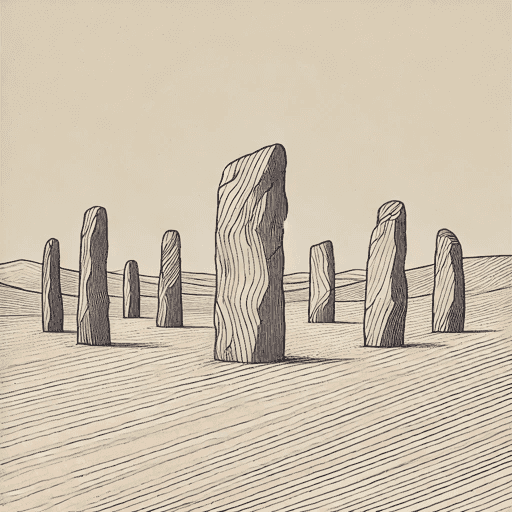
“These nine stones were the Tombs of Atuan. They had stood there, it was said, since the time of the first men, since Earthsea was created. They had been planted in the darkness when the lands were raised up from the ocean’s depths. They were older by far than the Godkings of Kargad, older than the Twin Gods, older than light. They were the tombs of those who ruled before the world of man came to be, the ones not named, and she who served them had no name.”
(Chapter 2, Page 15)
The narrative takes an anthropological approach to the culture and religion of the Kargish Empire, which is described in immense detail. The hierarchy of the Kargish gods, including the Twin Gods, Godking, and Nameless Ones is crucial to understanding the tense relationship between Tenar and the two high priestesses. Additionally, the description of the Place is necessary to understand the character movements later in the novel.
“She spoke as if in a trance, in rapture. Manan watched her. His slabby face never expressed much but stolid, careful sadness; it was sadder than usual now. ‘Well, and you’re mistress of all that,’ he said. ‘The silence, and the dark.’”
(Chapter 3, Page 26)
Tenar talks about the Undertomb and the Labyrinth, which she believes to be a sacred place ruled by silence and darkness. Manan’s response is significant for several reasons. It makes clear Tenar’s role as the One Priestess, who is the mistress of that silence and darkness. This in turn contributes to the motif of dark versus light and underscores Tenar’s growing internal conflict. It also highlights Manan’s love for Tenar; he is sad for the role she has been forced into and the pain and isolation it brings.
“She thought many times about what kind of death she should command for the next set of prisoners, more elaborate, better suited to the rituals of the Empty Throne.
“Each night, in the dark, she woke up screaming, ‘They aren’t dead yet! They are still dying!’”
(Chapter 4, Pages 37-38)
This is Tenar’s first serious moment of doubt and internal conflict over her faith and role as priestess. She is torn between her duty to execute such prisoners and devise suitably inventive punishments, and her guilt and shame over killing them, especially in such a prolonged and painful fashion. This shame instigates her later need to keep Ged alive in defiance of her duties.
“Arha agreed with Penthe, for secretly she had come to consider the self-styled Divine Emperors of Kargad as upstarts, false gods trying to filch the worship due to the true and everlasting Powers. But there was something underneath Penthe’s words with which she didn’t agree, something wholly new to her, frightening to her.”
(Chapter 4, Pages 40-41)
Tenar’s second major moment of crisis comes when Penthe’s honesty forces her to confront the mere idea of unfaith. Having been raised and indoctrinated into the religion and the patriarchal system it supports, Tenar did not realize unfaith even existed until this moment. This passage thus contributes to both themes of faith and patriarchal oppression.
“None but you may enter the Treasury of the Tombs. You may take your servants into the Labyrinth, but not into the Treasury. If even Manan entered there, the anger of the dark would awaken; he would not leave the Labyrinth alive. There you must go alone, forever.”
(Chapter 4, Page 45)
Kossil and Thar explain the purpose of the Labyrinth and the value of the treasures hidden within it. From this, Tenar learns of the Ring of Erreth-Akbe for the first time. This scene foreshadows both the significance of the ring and Tenar’s eventual decision to take Ged to the Treasury and leave him there for his safety.
“Kossil said in her cold voice. ‘They have no gods. They work magic, and think they are gods themselves. But they are not. And when they die, they are not reborn. They become dust and bone, and their ghosts whine on the wind a little while til the wind blows them away. They do not have immortal souls.’”
(Chapter 4, Page 50)
Echoing the xenophobic attitudes of the Kargish people in general, Kossil warns Tenar that the people of the Inner Lands are heathens who deny the existence of the gods and use devious tricks and magic. She also describes the people of the Inner Lands as “black and vile” (51) which reveals that her fear comes not merely from a difference in faith but from ignorance and racism.
“Since Arha had learned (from gentle Penthe) of the existence of unfaith, and had accepted it as a reality even though it frightened her, she had been able to look at Kossil much more steadily, and to understand her. Kossil had no true worship in her heart of the Nameless Ones or of the gods. She held nothing sacred but power. […] She would do away with the worship of the Empty Throne, if she could. She would do away with the First Priestess, if she dared.”
(Chapter 5, Page 54)
Tenar understands Kossil better after she learns about unfaith. She realizes that Kossil does not believe in anything except power. Kossil represents one possible way to respond to and live within an oppressive social structure: Rather than resist the patriarchal system that makes her isolated and powerless, she works within that system to amass what power she can to control those in her immediate environment.
“[T]he great vaulted cavern beneath the Tombstones, not hollowed by man’s hand but by the Powers of the Earth. It was jeweled with crystals and ornamented with pinnacles and filigrees of white limestone where the waters under the earth had worked, eons since: immense, with glittering roof and walls, sparkling, delicate, intricate, a palace of diamonds, a house of amethyst and crystal, from which the ancient darkness had been driven out by glory.”
(Chapter 5, Page 58)
Tenar sees the great cavern for the first time, visible with the light from Ged’s staff, which reveals the true beauty of the place. This is an example of the motif of light versus dark, in which Ged represents the light that pushes back the dark of the Nameless Ones. Significantly, though Tenar knows that light is forbidden in this sacred place, she cannot help but be drawn to the light and beauty, adding to her internal conflict.
“It must not be the same as with those others. She could not bear that again. Since there must be death let it be swift, in daylight. Surely it would be more fitting that this thief, the first man in centuries brave enough to try to rob the Tombs, should die by sword’s edge. He did not even have an immortal soul to be reborn. His ghost would go whining through the corridors. He could not be let die of thirst there alone in the dark.”
(Chapter 6, Page 70)
Previously, Tenar felt shame and horror for her part in the deaths of the three prisoners. Now, that shame incites her to resist her role for the first time. She cannot bear the thought of leaving Ged to starve and die and decides to save him. She gives herself and Manan excuses to explain this decision but, in reality, she is motivated by an internal need to resist evil and cruelty.
“I am the First Priestess, the Reborn. I have served my masters for a thousand years and a thousand years before that. I am their servant and their voice and their hands. And I am their vengeance on those who defile the Tombs and look upon what is not to be seen! Stop your lying and your boasting, can’t you see that if I say one word my guard will come and cut your head off your shoulders? Or if I go away and lock this door, then nobody will come, ever, and you’ll die here in the dark, and those I serve will eat your flesh and eat your soul and leave your bones here in the dust?”
(Chapter 6, Page 81)
Tenar confronts Ged, whom she has imprisoned in the Labyrinth. Her impassioned speech here demonstrates her faith in the Nameless Ones and her role as their servant, while also revealing her defensiveness and uncertainty. Ged’s arrival and his stories have shaken her more than she wishes to admit, increasing her internal struggle between dark and light.
“‘All I know is the dark, the night underground. And that’s all there really is. That’s all there is to know, in the end. The silence, and the dark. You know everything, wizard. But I know one thing—the one true thing!’
“He bowed his head. His long hands, copper-brown, were quiet on his knees. She saw the fourfold scar on his cheek. He had gone farther than she into the dark; he knew death better than she did, even death.”
(Chapter 7, Pages 86-87)
Again, Tenar tries to cling to her faith in the supremacy of the Nameless Ones, yet her vehemence only reveals the depth of her fear and uncertainty. Furthermore, Ged’s calm, quiet reaction shakes her more, both because she can see that he knows even more about the darkness of the world than she does, and because he somehow retains his sense of power despite the vulnerability of his position.
“‘This is the place you sought,’ Arha said, and her voice was steady. ‘This is the Great Treasure of the Tombs. You have come to it. You cannot ever leave it.’
He said nothing, and his face was quiet, but there was in his eyes something that moved her: a desolation, the look of one betrayed.”
(Chapter 7, Page 93)
Tenar takes Ged to the Treasury because she is the only person allowed to enter it, and she knows that Kossil will not find him there. However, this also means that he may never leave again. She tries to frame this as a threat and protracted death sentence, in keeping with her role as the One Priestess. However, at his look of betrayal, she immediately explains that it is the only way she can think of to keep him alive, showing her true feelings.
“He raised his face to her. His expression was strange. ‘Take care, Tenar,’ he said.”
(Chapter 7, Page 94)
Ged speaks Tenar’s name at the end of Chapter 7. The following chapter then reveals Tenar’s reaction. She is confused but joyous, as if hearing her name spoken aloud has returned some aspect of herself she had not realized was missing, including a vague memory of her mother. Amid this, however, she is conflicted between her two identities.
“She could look you into a room in the…down there…As you have done with him. And you would be alive for years and years, maybe. For years…And no new Priestess would be born, for you wouldn’t be dead. Yet there would be no Priestess of the Tombs, and the dances of the dark of the moon would not be danced, and the sacrifices would not be made, and the blood not poured out, and the worship of the Dark Ones would be forgotten, forever. She and her Lord would like it to be so.”
(Chapter 8, Pages 99-100)
Following Tenar’s confrontation with Kossil, Manan warns her that Kossil is dangerous and will likely retaliate. He clearly understands Kossil’s lack of faith and desire for power. His fears show both his love for Tenar and his devotion to the Nameless Ones, who will not be properly worshipped if Tenar is locked away. Though he is bound by his faith, he still cares for Tenar’s safety.
“All at once she sank down to her knees, bowed over, and began to cry, with deep sobs that wrenched her body, but brought no tears.
He got down stiffly from the chest, and bent over her. ‘Tenar—’
‘I am not Tenar. I am not Arha. The gods are dead, the gods are dead.’”
(Chapter 9, Page 104)
Tenar declares the gods are dead after she witnesses Kossil digging in the caverns with a lantern, though light is forbidden, and she is desecrating the sacred place. When the Nameless Ones do not instantly rise and punish her, Tenar interprets this as proof that they are dead and gone. This moment shatters the last vestiges of her faith and brings her internal struggle to its crisis.
“They have nothing to give. They have no power of making. All their power is to darken and destroy. They cannot leave this place; they are this place; and it should be left to them. […] places are made in the world where darkness gathers, places given over wholly to the Ones whom we call Nameless, the ancient and holy Powers of the Earth before the Light, the powers of the dark, of ruin, of madness […] They exist. But they are not your Masters. They never were.”
(Chapter 9, Pages 106-107)
Ged tries to comfort Tenar and bolster her strength of will by explaining the true nature of the Nameless Ones. Here again is the recurring motif of dark and light. Ged argues that the Nameless Ones are forces of darkness and evil, and though they are powerful, they are not gods, nor worthy of worship. Ged offers a middle way between Tenar’s blind devotion and Kossil’s unfaith.
“You must make a choice. Either you must leave me, lock the door, go up to your altars and give me to your Masters […] or, you must unlock the door, and go out of it, with me. Leave the Tombs, leave Atuan, and come with me oversea. And that is the beginning of the story. You must be Arha, or you must be Tenar. You cannot be both.”
(Chapter 9, Page 113)
Ged argues that Tenar’s two conflicting identities, Arha and Tenar, cannot coexist. She must choose one or the other. Contributing to the theme of The True Meaning of Freedom, he says that to be free Arha must die, but it must be her choice. This also corresponds with Tenar’s later realization that freedom is a path of constant and often painful choices.
“She looked up startled, and saw him flushed with life and triumph, smiling. She was dismayed and frightened of him. ‘You have set us both free,’ he said. ‘Alone, no one wins freedom.’”
(Chapter 10, Page 115)
Ged’s statement here is a vital element of the theme of true power and freedom. He argues that true power comes from internal strength rather than power over others, while freedom requires both individual skill and collaboration. Though Ged has impressive magical power and Tenar has the skill and knowledge to escape the tunnels, neither could succeed without the other. True freedom, then, requires supporting each other.
“She knew he was trying to hearten her, but she had left joy up in the mountains, in the twilit valley of the stream. There was a dread in her now that grew and grew. All that lay ahead of her was unknown. She knew nothing but the desert and the Tombs. What good was that? She knew the turnings of a ruined maze, she knew the dances danced before a fallen altar. She knew nothing of forests, or cities, or the hearts of men.”
(Chapter 11, Page 135)
Though Tenar decides to leave with Ged, her internal conflict does not end the moment they escape the Undertomb. She continues to struggle with fear and uncertainty as they travel through the mountains toward the sea. This highlights the difficulty and recursive nature of escaping from oppression, no matter how painful. It also demonstrates how the fear of the unknown can hold one back from making the choices and changes needed to be free.
“He had made her follow him. He had called her by her name, and she had come crouching to his hand, as the little wild desert rabbit had come to him out of the dark. And now that he had the ring, now that the Tombs were in ruin and their priestess forsworn forever, now he didn’t need her, and went away where she could not follow. He would not stay with her. He had fooled her, and would leave her desolate.”
(Chapter 12, Page 139)
Recalling the power of true names, Tenar fears that Ged has merely controlled her and coerced her into following him. And now that she has come to rely on him, he will abandon her again. However, the moment Ged opens his eyes again, her anger leaves her. Though she is still afraid, she realizes that he is doing what he can to help her, and she must be responsible for her own choices.
“What she had begun to learn was the weight of liberty. Freedom is a heavy load, a great and strange burden for the spirit to undertake. It is not easy. It is not a gift given, but a choice made, and the choice may be a hard one. The road goes upward towards the light; but the laden traveler may never reach the end of it.”
(Chapter 12, Page 141)
Tenar’s reflection on freedom is a crucial aspect of the theme of the true meaning of freedom. She comes to understand that freedom requires, in addition to the support of others, a continual choice to move forward no matter how difficult the road might be. This is part of why any change is so painful, and why many stay within their oppressive structures rather than break free.
“The evil is poured out. It is done. It is buried in its own tomb. You were never made for cruelty and darkness; you were made to hold light, as a lamp burning holds and gives its light. I found the lamp unlit; I won’t leave it on some desert island like a thing found and cast away. I’ll take you to Havnor and say to the princes of Earthsea, ‘Look! In the place of darkness I found the light, her spirit. By her an old evil was brought to nothing. By her I was brought out of the grave. By her the broken was made whole, and where there was hatred there will be peace.’”
(Chapter 12, Page 145)
Ged’s speech in Chapter 12 is a powerful moment that again uses the motif of dark and light to unite many of the themes of the novel. He demonstrates that he sees who Tenar truly is, beyond and beneath the role that was imposed upon her by the oppressive culture in which she was raised. He argues that her true nature is one of light rather than darkness. In choosing to resist her oppression and save herself, she has also saved him. Moreover, her choice has not only united them in friendship but will also bring unity to the Inner Lands again.

Unlock every key quote and its meaning
Get 25 quotes with page numbers and clear analysis to help you reference, write, and discuss with confidence.
- Cite quotes accurately with exact page numbers
- Understand what each quote really means
- Strengthen your analysis in essays or discussions