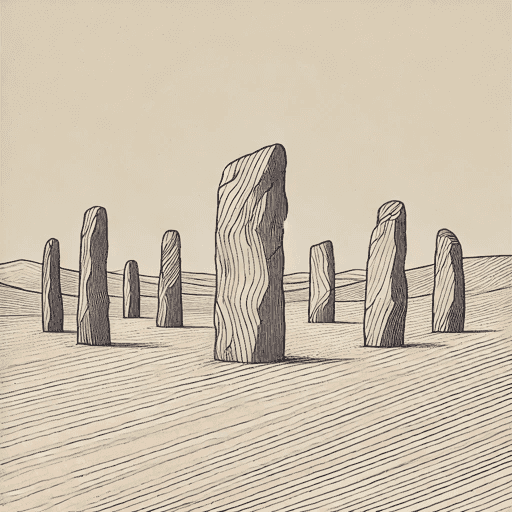
The Tombs of Atuan
The Tombs of Atuan
A modern alternative to SparkNotes and CliffsNotes, SuperSummary offers high-quality Study Guides with detailed chapter summaries and analysis of major themes, characters, and more.
Summaries & Analyses
Quizzes
NEWReading Tools
Games
Character Analysis
Tenar/Arha
Content Warning: This section of the guide includes discussion of gender-based discrimination, religious discrimination/trauma, and death.
Tenar is the protagonist and heroine of the novel. Though her true name is Tenar, part of her role as the One Priestess of the Tombs requires that her name be “eaten,” and thus she becomes Arha, the Eaten One. Even after Ged reveals her true name when she is 15, at the end of Chapter 7, the narrator still refers to her as Arha. She does not truly become Tenar again until she and Ged escape the Tombs and head into the desert in Chapter 11.
Tenar was taken from her family at the age of five, when the priestesses determined that she was the One Priestess reborn. After she is taken, Tenar lives in the Place of the Tombs, among other young girls until she officially takes her place as the One Priestess and lives in the Small House by herself. She does not recall her family, except for vague memories of gold hair in firelight. Tenar has fair skin and black hair, and dresses in the black robes befitting her status. The loss of her name and family in favor of a life of blind faith and isolation under an imposed name suggests that The Roles of Women in Patriarchal Society deny women individuality and agency, even when they have high status.
Tenar is devoted to the worship of the Nameless Ones and believes she has lived a thousand lives as the One Priestess reborn. Over time, she develops an outer persona of cold, haughty self-importance. Beneath that, however, she is bored, lonely, and terrified. The narrative uses her doubt and sense of moral conflict over the demands of her role as the One Priestess to explore The Nature of Faith. Her first moment of doubt arrives when she is required to sentence three prisoners to death. Though she carries out her duty, these deaths haunt her throughout the rest of the narrative, suggesting that blind adherence to the demands of faith is harmful to individuals. However, she learns from this experience that such blind adherence may not be the right choice, leading her to spare Ged’s life. However, her faith truly breaks when she realizes that Kossil has defied the Nameless Ones and is not punished.
At this moment of crisis and doubt, she turns to Ged for guidance and places her trust in him, still unable to make her own choices. Though she longs for freedom, it is only after she escapes her oppressive life as the One Priestess that she realizes that The True Meaning of Freedom is a burden that will require her to keep making difficult choices throughout her life.
Ged/Sparrowhawk
Ged is the second-most important character in the novel. Though he was the protagonist of the first Earthsea novel, he plays a supporting role in the second, as the character who triggers Tenar’s self-awakening. Believing that true names hold power and should be kept secret, Ged calls himself “Sparrowhawk” through much of the narrative. He reveals his true name to Tenar in Chapter 9 as a sign of trust.
Ged, a wizard from the Inner Lands, has dark skin that marks him as foreign among the Kargish, who have pale skin. He comes to Kargad and the Tombs of Atuan on a mission to retrieve the second half of Erreth-Akbe’s broken amulet. He already possesses the first half, having received it in the first novel, though he did not realize its significance at the time. Ged is a quiet, serious man, who has seen many dark and dangerous things in his life and faces challenges with calm confidence. This attitude is partly why Tenar comes to trust and rely on him. He appears to feel pain and guilt for his role in Tenar’s disillusionment and self-imposed exile from her homeland. He also clearly cares for her well-being and admires her strength and bravery.
Ged represents a middle ground between Tenar’s devotion and Kossil’s unfaith, suggesting that the nature of faith depends a great deal on subjective interpretation. Unlike Tenar, who doubts the existence of the Nameless Ones but not their worthiness of worship, Ged knows that the Nameless Ones, like many other Powers of the Earth, exist and should be respected, even feared, but asserts that are not worthy of worship. This reinterpretation of the Nameless Ones allows Tenar to change her relationship to her faith. He offers Tenar a new way of seeing her role in the world, as a vessel of light rather than darkness, and helps to break her free from the servitude she has been bred into.
Kossil
Kossil is the external antagonist of the novel, embodying Tenar’s struggles with both the nature of faith and the role of women in patriarchal society. Kossil is the High Priestess of the Godking, the most recent in a line of emperors who have fashioned themselves into living gods. Kossil is tall, thin, and hard, in comparison with Thar who is soft and large. She is the priestess who first found Tenar as a baby and confirmed she was the One Priestess reborn. She and Thar share the duty of educating Tenar and performing her role as priestess until she comes of age. Where Thar is stern, Kossil is cruel.
Kossil does not believe in the gods or worship them in her heart. She only believes in power and knows that her role as the priestess for the Godking gives her that power. She believes the Nameless Ones are weak or dead. In contrast with Tenar, who gives up her power to follow her faith, Kossil uses others’ faith in the Kargish religion to create power for herself. She is jealous of Tenar’s status as the One Priestess and would end the line if she could. Kossil also represents one possible response to the subjugated role of women in her society: using any power at her disposal to control her own life, even at the expense of others who are similarly oppressed.
Manan
Manan is an important secondary character who supports Tenar throughout the novel. He is a Warden of the temples, meaning that he is a eunuch, as men are not permitted within the temples or the Undertomb. Manan’s role, much like the roles of women in patriarchal society, suggests that men who are not seen as traditionally masculine are also subjugated under patriarchy.
Manan is assigned as Tenar’s guardian upon her arrival at the Place and takes his role seriously. He encourages and comforts her when she is lonely or sad and tries to protect her from her own questionable choices and other dangers, including Kossil and the retribution of the Nameless Ones. His dialogue and behavior indicate that he cares for and loves Tenar, though Tenar sometimes dismisses his concerns and speaks coldly to him. In contrast to Kossil, Manan is a true believer in the gods, which causes him a great deal of anxiety, suggesting the oppressive nature of faith. He encourages Tenar’s faith and fears that she has invited their wrath by permitting the intruder, Ged, to live. Manan dies while trying to prevent Ged from escaping, and his death weighs heavily on Tenar.
Thar
Thar is the High Priestess of the Twin Gods, Atwah and Wuluah, who are secondary gods to the Nameless Ones and the Godking. Thar is large, round, and soft, compared to Kossil who is tall and thin. Though she dies of illness in Chapter 5, Thar is important to Tenar’s growth and education in her role as a priestess. Thar was close with the previous One Priestess and teaches Tenar everything the previous priestess taught her, including the many paths through the Labyrinth and the locations of the spy holes throughout the grounds. Thar is stern but not cruel. When she dies, Tenar misses her and fears being left in Kossil’s sole care.
Penthe
Penthe is a minor character, but her perspective on the nature of faith and her role in Kargish society influences Tenar’s understanding of the world. Penthe is Tenar’s only friend among the other girls at the Place of the Tombs. She is a novice dedicated to the Temple of the Godking who, she explains, was handed off to the priestesses as a young girl by her father, because her poor family could not afford to feed their six children. This appears to be a common fate for girls from poor families in the Kargish Empire, suggesting the role of women in patriarchal society is one of utility, as assets or hindrances, rather than individuals with inherent worth. Penthe understands better than Tenar their true role in Kargish society, even when it is obscured by titles like “priestess.” Penthe confesses to Tenar that she feels no awe or loyalty to their Godking, who is only a man even if he is technically a god as well. Penthe’s lack of faith terrifies Tenar, who believes in the Nameless Ones’ power.

Unlock analysis of every major character
Get a detailed breakdown of each character’s role, motivations, and development.
- Explore in-depth profiles for every important character
- Trace character arcs, turning points, and relationships
- Connect characters to key themes and plot points