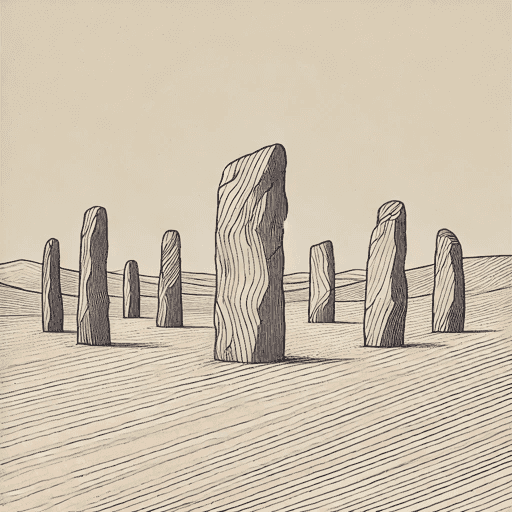
The Tombs of Atuan
The Tombs of Atuan
A modern alternative to SparkNotes and CliffsNotes, SuperSummary offers high-quality Study Guides with detailed chapter summaries and analysis of major themes, characters, and more.
Summaries & Analyses
Quizzes
NEWReading Tools
Games
Symbols & Motifs
Dark and Light
The first prominent motif of the novel is the contrast between dark and light that recurs throughout. Images of dark and light abound, beginning in the prologue and becoming more pronounced when Tenar enters the Undertomb, which she describes as the “home of darkness the inmost center of the night” (30). Tenar’s experiences highlight the powers of the dark. The gods she worships, the Nameless Ones, are gods of shadow, darkness, and death. As their high priestess, Tenar is the mistress of the silence and the dark, as Manan calls her, and having been raised in this environment, Tenar believes that the dark and silence of death is the only “true thing” (87). And yet, from the first page, the narrative makes it apparent that Tenar is caught between dark and light, which symbolizes her internal conflict between freedom and oppression. From the first moment she enters the Undertomb, though she is supposedly the mistress of the dark, she yearns for light in the oppressive space. When Ged appears in the cavern with the light from his staff, Tenar is torn between horror at such defilement and wonder at seeing the beauty of the cavern for the first time.
In contrast, Ged represents the light holding back the darkness, both literally and figuratively. Using magic, he brings light into the Undertomb for the first time, which allows Tenar to see the cavern’s beauty. He also uses his magic to hold back the force of the Nameless Ones who are constantly trying to consume them. Because of her role as priestess, Tenar believes she is a servant of the dark, and therefore evil. Yet, her shame and internal struggle demonstrate that she is the fulcrum in the balance between light and dark. Continuing the motif, Ged describes her as an unlit lamp. Though she has been claimed by evil, her true nature is good. His arrival in the Tombs may ignite the spark, and the process of change within her, but it is up to her to burn and cast her light into the dark.
Names
The true name is another recurring motif in The Earthsea Cycle and an important symbol of freedom and identity in The Tombs of Atuan. The first novel examines the power of true names extensively. Though it is not the primary focus of the second novel, it is still significant. Among the people of the Inner Lands, true names hold power. Knowing a person, animal, or object’s true name allows a certain amount of control over it, which is the primary source of a wizard’s magic. People keep their true names secret from all except those they trust most deeply and have “use names” or nicknames instead. Ged therefore goes by the name Sparrowhawk for most of the novel.
In contrast, the people of the Kargish Empire do not believe in such power, having only their one true name. However, Tenar loses her true name when she becomes Arha, the Eaten One. Her name disappears from her memory and from the narrative itself until Ged returns it to her in Chapter 7. This moment is meant to demonstrate that Ged can see who Tenar truly is beneath the role that has been imposed upon her. Tenar’s name ties to the theme of The Roles of Women in Patriarchal Society, as the patriarchal Kargish religion takes even her name and identity from her. It also connects to The True Meaning of Freedom, as Tenar’s first choice toward freedom is to lose the name Arha and become Tenar once again. The moment Tenar recalls her true name she feels terror and joy, implying that despite the Kargish attitude, her true name does have real power. Thus, names can represent several things, including a person’s true identity and the ability of others to see a person for who they are. They also represent the power of trust and connection. This is reinforced when Ged beckons her by her name in Chapter 10, to prevent her from collapsing with despair and giving up. Similarly, Ged demonstrates the power of true names in the mountains, when he calls a rabbit and then releases, warning that abusing this power would be like “breaking a trust” (128).
The Ring of Erreth-Akbe
The Ring of Erreth-Akbe is an important symbol in the novel. Its importance is first hinted at in Chapter 5, when Kossil and Thar tell Tenar the story of Erreth-Akbe and explain why the Labyrinth beneath the Tombs was built. This foreshadows Ged’s arrival to steal back the broken half of the ring. However, neither Tenar nor the other priestesses understand the significance of the relic they have in their position.
The ring’s importance and symbolic meaning become clear when Ged tells Tenar the story of how the ring was lost and why he was sent to retrieve the piece in the Labyrinth. At this point, Tenar learns that the ring symbolizes both a lost power of magic, as well as a state of unity and peace for the people of the Inner Lands. This sense of unity applies not only to the political powers in Havnor but to others who possess the ring as well. Ged reinforces the symbolism and significance of the ring when he gives the pieces to Tenar as a sign of trust and reconnects the two halves to restore their power. The ring then symbolizes the specific trust and unity between Ged and Tenar. It also thus contributes to the theme of the true meaning of freedom, which Ged argues is based on trust, collaboration, and community. The power of the ring is such that merely revealing its arrival to the crowd in Havnor is enough to give them joy and hope, which simultaneously indicates that Tenar has hope for the future as well.

Unlock the meaning behind every key symbol & motif
See how recurring imagery, objects, and ideas shape the narrative.
- Explore how the author builds meaning through symbolism
- Understand what symbols & motifs represent in the text
- Connect recurring ideas to themes, characters, and events