The Van Gogh Deception
The Van Gogh Deception
A modern alternative to SparkNotes and CliffsNotes, SuperSummary offers high-quality Study Guides with detailed chapter summaries and analysis of major themes, characters, and more.
Summaries & Analyses
Quizzes
NEWReading Tools
Symbols & Motifs
The Spider
Content Warning: This novel references children in foster care and harm to children. It also references kidnapping. It plays into stereotypes by at times referring to a child in foster care as “lost.”
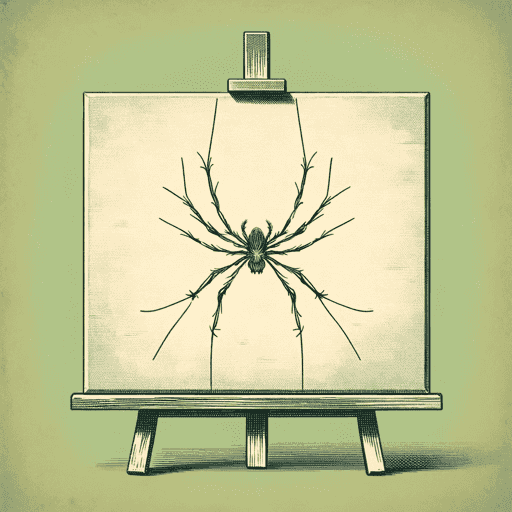
Hicks employs the term “spider” to refer to both the shape found on the back of the Guillou canvas and the missing notebook that exposes the van Gogh painting as a forgery. These two meanings of the spider are not revealed until Chapter 18 and Chapter 38, respectively. Until then, the spider functions as the novel’s “Macguffin,” and readers only know that the object is something Palmer and his men are desperately trying to obtain and destroy. As a typical device in spy thrillers, the MacGuffin motivates the main action of the plot. The novel introduces the spider as something that “was loose in the city” and needed to be located “within the next two days” (29). The premise allows for the chase and action scenes as Palmer’s prime motivation is to “[f]ind the boy, and they would find the spider” (32).
In the context of the art forgery, the spider is a symbol of deception. The creature and its ability to weave an intricate web refers to Palmer’s elaborate plan to forge multiple paintings and sell them over the course of years. The scale of his project extends over two continents with hidden identities and corrupt authorities. Palmer’s pervasive use of spyware and facial recognition also creates a web of surveillance that seems impossible for Art and Camille to escape. By exposing the spider-shaped watermark on the back of the van Gogh painting, Hamilton and the children succeed in exposing Palmer’s deception.
The Winter Cold
The novel is set in mid-December in the streets of Washington, DC, and the motif of the winter cold mirrors both the state of increasing danger that Art faces and his dramatic character arc. At the beginning of the novel, “a light snow [is] starting to fall” (24), reflecting Art’s quiet and vulnerable state as he rides silently in Mary’s car to her home. Art speaks very little and is uncertain of his identity and surroundings. The imagery of the “snow flickering through the glow of the streetlights” conveys a mood of somber contemplation as Art feels lost and stares out the window (24).
When the children escape their kidnappers, the relief of their freedom contrasts the foreboding weather. They are unaware that Palmer has sent more of his team to pursue them, and the weather “was dark, starting to snow, and turning colder by the minute” (157). As the weather drops, the children struggle to stay warm. Camille lost her ski jacket in a scuffle with McClain and is more exposed to the elements, highlighting the children’s increasing vulnerability. Art lends her his jacket, and the winter cold serves as a setting for the children to support and care for each other. Deception leads to sincerity when it comes to Palmer’s schemes versus Art and Camille’s developing friendship, and so, too, does coldness here lead to warmth, on a literal and figurative level.
As the suspense builds, the weather grows “heavier by the minute” and begins to obstruct their vision (199). The closer Art comes to the revelation of his identity, the more the snowfall makes it “difficult to see” (200). The contrast creates tension and highlights the many obstacles that Art has overcome to arrive at this moment where he stands in front of his father’s art studio. When Art recovers his memories and sets out to save his father, he faces the biting cold head-on and with confidence.
The Blue Jacket
The motif of Art’s blue jacket appears throughout the novel to represent Art’s sense of security and identity. In the Prologue, Art notices that the blue jacket he wears is similar to the boy’s jacket in the reflection and realizes that he is staring at himself. The jacket functions as an object of self-identification. When he is at the police station, he refuses to take the jacket off and clings to it as his only source of identity like a security blanket: “Despite the almost oppressive heat in the room, the boy didn’t remove his jacket. It was all he had—a blue zip-up he had been wearing when he was found” (17). The jacket has the name Arthur on its tag and also holds more clues to his identity in its pockets. For Art, the blue jacket is both an emotional and physical connection to his lost identity.
Art’s attachment to his jacket decreases the closer he gets to discovering his identity. When Camille loses her ski jacket during an altercation with McClain, Art “t[akes] off his jacket and hand[s] it to her” (179). The scene is significant for two reasons. First, Art is considerate, and giving Camille his jacket represents a closeness in their relationship and a willingness to support each other. Secondly, the scene also suggests that Art is now more comfortable in his own skin and does not need to cling to the jacket as his only source of identity. In the scene when the two children part ways, Camille wears Art’s blue jacket and Art is wearing the sweater Mary gave him that morning. The reversal of the children wearing each other’s clothing represents the bond of security in their friendship. Later as Art walks the cold streets, “[p]ulling the Sullivans’ thick sweater tightly around him” (262), the sweater symbolizes the ways both Mary and Camille have comforted and sheltered him, and he strides confidently in the winter cold. Clothing can sometimes represent identity, and here the exchange of clothing represents how Art has developed his identity as a member of Mary and Camille’s family and also how all three of their identities are now explicitly interconnected. One’s identity does not exist without the other two’s identities.
The Dam
The motif of the dam occurs throughout the novel as a metaphor for Art’s repressed memories. Diagnosed with dissociative amnesia, Art experienced a traumatic event that caused his memory loss. Although the doctors and Mary encourage him to have patience and wait for his memories to return, Art finds the healing process “frustratingly slow” and describes his mental block as “a dam holding back his memories” (129). At first resentful that the dam is a barrier to his memories, Art begins to feel overwhelmed and frightened when the paintings he sees trigger a flood of facts about art history. He describes “the memories pounding against the dam in his head […] but the dam holding back those memories held firm. It was all very confusing—and scary. The sudden rush of information made the boy anxious and worried” (133). The dam represents Art’s internal conflict where he struggles with the desire to remember and the need to forget. Only when the dam breaks and Art fully recovers his memory does he understand that “his mind had simply been protecting him” (260). Rather than regard his memory loss as something to be ashamed of, Art understands the dam was a coping mechanism for trauma and his way of keeping himself safe. The dam is itself helpful and supportive, but when it breaks, in this case at the right time, it of course releases a torrent of energy and power.

Unlock the meaning behind every key symbol & motif
See how recurring imagery, objects, and ideas shape the narrative.
- Explore how the author builds meaning through symbolism
- Understand what symbols & motifs represent in the text
- Connect recurring ideas to themes, characters, and events