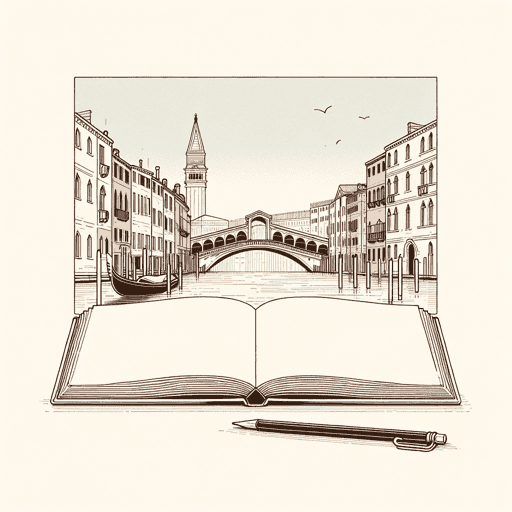
The Venice Sketchbook
67 pages • 2-hour read
Rhys BowenThe Venice Sketchbook
A modern alternative to SparkNotes and CliffsNotes, SuperSummary offers high-quality Study Guides with detailed chapter summaries and analysis of major themes, characters, and more.
Symbols & Motifs
Venice: “The City of Bells and Birds”
When Juliet first arrives in Venice at 18 years old, she deems Venice “the city of bells and birds” (8). The sounds of both bells and birds recur throughout the novel, with both Juliet and Caroline noting their appearance. The light, vibrant sound of the bells and the flight of the birds reflect the freedom that the characters long for and so rarely achieve. Venice itself acts as an embodiment of the life of freedom and happiness for Juliet, who falls in love with the city on her first night. Juliet notes the sounds of birds and bells many times while visiting or living in Venice, and they serve as reminders of the freedom for which she longs but is denied. When Caroline goes to Venice, she also notes the sounds of birds and bells, and unlike Juliet, she is able to grab hold of the freedom Venice offers.
Keys
The keys that Caroline receives as part of her inheritance from Great-Aunt Lettie are symbols of the secrets Caroline seeks to uncover. Juliet lived a life of secrets, trying to forget the heartache of her losses after World War II. Despite the long years of hiding her past, she leaves Caroline with the keys that not only provide Caroline access to the apartment but also reveal Juliet’s carefully guarded secrets.
Caroline becomes preoccupied with the keys, trying desperately to discover why her aunt left them to her: “What did Aunt Lettie want her to do with them? […] Did it actually come from Venice? Why would Aunt Lettie have needed to open any door apart from the pensione where she stayed? And why was Venice so special to her?” (106). They become representative of a Juliet that Caroline never knew and drive Caroline into a new life. By offering access to a valuable apartment, the secrets of Lettie’s life, and wealth through the acquisition of priceless art, the keys represent the beginning of a life of happiness for Caroline, fulfilling the happy ending Juliet was denied. In this way they also symbolize Juliet’s love for her grand-niece—a love made possible by her experiences in Venice.
Art
Art symbolizes expression and identity in The Venice Sketchbook. Juliet’s early artistic skills, like Juliet herself, reflect her lack of experience and wisdom; frustrated with her attempts at drawing the basilica in 1928, she notes, “I needed more lessons in perspective, obviously” (13). As she opens herself to new experiences in Venice, she sketches more and learns how to recognize and own her desires: “Now that I am here, I want to travel. To see the world. To be a free, independent woman” (31). She dreams of becoming a famous painter.
The more Juliet engages with her art, the more creative and open (both mentally and emotionally) she becomes. When she studies art again in Venice, she feels herself embracing the community she builds there with greater openness and putting herself into her art more—even earning the approval of Professor Corsetti, who so values modern art and artistic expression. On the other hand, when Juliet faces loss and heartache, she withdraws from creativity, first when she sacrifices her dreams after her father’s death and definitively when she loses Angelo, the contessa, Hanni, and Leo. The Venice Sketchbook reveals the way that creativity and emotion often play on and alter one another.

Unlock the meaning behind every key symbol & motif
See how recurring imagery, objects, and ideas shape the narrative.
- Explore how the author builds meaning through symbolism
- Understand what symbols & motifs represent in the text
- Connect recurring ideas to themes, characters, and events