59 pages • 1-hour read
The Wife Upstairs
A modern alternative to SparkNotes and CliffsNotes, SuperSummary offers high-quality Study Guides with detailed chapter summaries and analysis of major themes, characters, and more.
Important Quotes
Content Warning: This section of the guide includes discussion of death, physical abuse, and emotional abuse.
“If I had hesitated even a minute, everything would have been different.”
(Chapter 1, Page 1)
McFadden opens the novel with an in medias res approach, starting the action in the middle. She does not offer an immediate explanation of the past of Victoria’s accident or Sylvia’s tragic past; she instead focuses on how Sylvia got the job that introduces the mystery and suspense to the plot.
“I wonder if Victoria blames him too.”
(Chapter 2, Page 14)
Early in the narrative, Sylvia begins to form an empathetic connection with her care recipient, Victoria. Sylvia blames Freddy for ruining her life and wonders if Victoria shares her feelings, though their circumstances are different. This empathic connection opens the door for Sylvia to investigate the circumstances of Victoria’s accident.
“It gives the entire property a bit of an abandoned look. If somebody told me nobody lives here, I would believe it. Especially since there are no lights on inside the two-story house, even though Adam’s wife is supposedly inside. ‘We used to have a gardener,’ he explains. ‘But she… she’s no longer with us.’”
(Chapter 3, Pages 15-16)
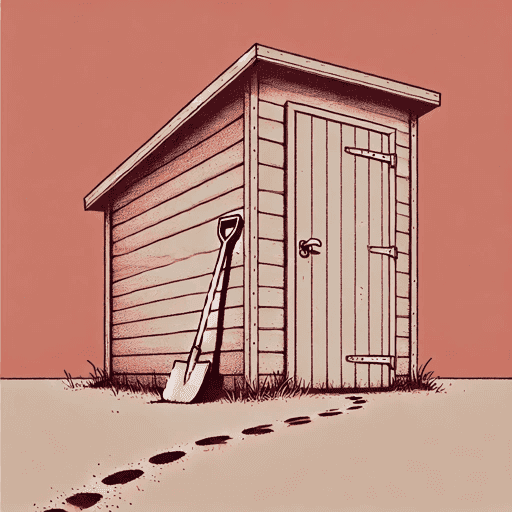
“I follow Victoria’s gaze out the window. She’s got a view of the front of the house—of the overgrown lawn and the trees and a small shed. The gate is visible in the distance.”
(Chapter 4, Page 22)
McFadden’s first mention of the shed is in passing, belying its importance in the narrative. The mention of the shed hints at the revelation of Mack’s body, but this hint will only become clear in retrospect after Sylvia reads about Mack’s murder in Victoria’s diary. Victoria also looks toward the gates of the property, illustrating her desire for freedom from the house and from Adam.
“I get the sense Maggie is reluctant to talk about Victoria Barnett. Which is frustrating, because I get the feeling she’s the only one in this house who might be capable of telling me the truth.”
(Chapter 6, Page 36)
“I may be a sensible nurse practitioner rather than a writer, but I can at least use my skills to keep beautiful notes of every detail, so that someday when my children ask how I met their father, I can hand them this book and say: Here!”
(Chapter 9, Page 49)
Victoria describes her motivation for writing the diary. This is another instance of irony, this time tragic irony, present in the text. She never ended up having children. She intended for her diary to pass to her descendants, but instead, it becomes a tool for Sylvia to use to solve a murder.
“Did Victoria have any inkling of what was about to happen to her? And how would she feel if she knew another woman was sitting here with her husband right now? But I don’t have to wonder about that last one. I know the answer.”
(Chapter 10, Page 68)
“I hope things are better for women at the time you’re reading this. Thank goodness there are men like your father to look out for women like me.”
(Chapter 12, Page 83)
“It’s all fiction, of course. It’s the life I had imagined with Freddy a long time ago. It’s the happy ending I always wanted to have.”
(Chapter 13, Page 89)
“The truth is, I’m not sure how much money Adam has. He certainly spends like he has a lot of money. Not that it matters to me either way. I’d like him just as much whether he’s rich or poor.”
(Chapter 14, Page 94)
Victoria frequently states in her diary that money does not matter to her. This is an important detail given that Adam later accused her of being a gold digger and using him for his money, illustrating Adam’s paranoia and disconnection from reality.
“There’s a certain irony to the fact that a woman with such an amazing wardrobe now dresses primarily in sweatpants, T-shirts, and hoodies. Obviously, Victoria was someone who cared a lot about style.”
(Chapter 17, Page 120)
McFadden creates irony in the example of Victoria’s attire, even using the word “irony” herself. Sylvia thinks that Victoria was obsessed with clothes, when, in reality, Victoria enjoyed wearing scrubs and sweatpants. Adam is the one obsessed with status and appearance, and these sentences illustrate Sylvia’s misunderstanding of Victoria.
“I had thought I would feel relief when he left, but I didn’t. I felt sad that the only man I had ever loved had left. And angry that it was so easy for him to go. He was just waiting for me to give him permission. I thought maybe he would come back the next day, after he had a chance to cool off. But he didn’t.”
(Chapter 20, Page 144)
Sylvia and Freddy’s relationship is complex, as they share a deeply painful past that drove them apart. Sylvia told Freddy that she wanted him to leave, but his departure hurt her, illustrating her disconnection from her own feelings. While she works to understand the mystery in Montauk, she also works to understand how she feels about Freddy.
“Except he told me on the first day here that all the doctors told him she wouldn’t. Victoria will never get better. She will be like this for the rest of her life.”
(Chapter 22, Page 152)
“Does he not realize how close we came to kissing last night? Maybe he has the right idea though. It’s better to pretend that it never happened. Because Victoria is watching us. She knows.”
(Chapter 24, Page 169)
“Adam has already opened the door and now Freddy is standing in the doorway. He’s holding a bouquet of flowers. Not roses, like what Adam used to buy for Victoria, but carnations. Something cheap. Not that I should be surprised.”
(Chapter 26, Page 174)
“He’s extremely particular about how he wants the house and also about how he wants…well, me. When we go out for meals, he insists on approving my outfit. It’s important to him. And if he doesn’t like what I’m wearing, I have to go back in the bedroom and put on something different.”
(Chapter 28, Page 184)
Victoria’s description of Adam’s controlling behaviors informs the theme of manipulation, as she attempts to justify his troubling conduct and obsession with appearance. Adam hid behind the excuse of being “particular,” when, in reality, he just wanted more ways to control and denigrate Victoria.
“I started writing this for my future children to tell them the story of how I met their father. But if that doesn’t end up happening with Adam, at least this will serve as a reminder to me that even the best relationship can go sour.”
(Chapter 28, Page 196)
Victoria almost left Adam after he smashed her phone, but she took him back. For the first time, she left room for the possibility of her relationship with Adam not working out, but she continued to misperceive the relationship as a good one that “went sour,” rather than one that was based in manipulation and psychological abuse from the beginning. The tragedy in these lines is that the diary will never serve as a reminder to Victoria, as she needs no reminder of how dangerous Adam is after he pushed her down the stairs.
“He makes a decision and then…he just does it. I wish he didn’t do that, but maybe after he gets used to being married, he’ll get more used to consulting me on things.”
(Chapter 32, Page 217)
Victoria continued to wish that Adam would change and to offer him grace on his shortcomings, which was not reciprocated. When Adam wanted something to change, he demanded it, illustrating his domineering nature. Victoria instead gave him time to “get more used” to things, illustrating her contrasting gentle nature.
“I have to find Mack. More and more, it feels like he is the missing piece of this puzzle.”
(Chapter 33, Page 227)
“I wanted to throw something at him. The iron was still on the ironing board, and even though I had turned it off, the metal was still very hot. For a moment, I was seized with the urge to pick up that iron and go right for his face. That would teach him a lesson.”
(Chapter 35, Page 248)
Victoria fantasized about treating Adam with the same violence with which he treated her, and this brief revenge fantasy helps to establish the red-herring trope of Victoria as a murderer. These fantasies also illustrate how candid and honest Victoria was in her diary, even with her less than savory thoughts and experiences.
“For a moment, I thought of that gun up in our closet. I imagined grabbing it out of the closet, pointing it at Irina’s pretty face and pulling the trigger. I might have missed the tree, but I wouldn’t miss at such close range. I imagined her beautiful, smug face exploding in a spray of blood. Of course, I wouldn’t really do that.”
(Chapter 43, Page 289)
“He seems to trust me at least. Even though I haven’t given Victoria her medications in a week.”
(Chapter 48, Page 313)
The idea of trust is important in The Wife Upstairs, as trust is scarce in Montauk. Sylvia initially trusts Adam, but that trust dissipates with her exploration of Victoria’s diary, while Adam’s trust in his own abilities as a manipulator leads him to trust Sylvia, believing that she has been taken in by his idealized husband persona.
“She seems better. I should be happy. But everything in this house is giving me a horrible feeling, like I should run away and never come back. Unfortunately, that’s not possible. I’m trapped here. At least until all this damn snow is gone.”
(Chapter 52, Page 336)
Sylvia’s feelings of dread while in the house intensify as the climactic discovery of Mack’s body approaches. She also shares the feeling of being trapped and isolated in the snow with Victoria when she attempted to leave in the past, further cementing the connection between the two characters.
“Apparently, she was really unprofessional and used to have temper tantrums where she would throw things.”
(Chapter 53, Page 340)
Maggie’s use of the term “temper tantrums” to describe Victoria’s alleged outbursts at work illustrates how Adam secures his own power by infantilizing Victoria. “Tantrum” is a word often used to describe the behavior of a toddler, and Maggie’s use of it hints that she is parroting Adam’s lies.
“Freddy is standing in the doorway, his dark hair plastered to his skull from the snow. And he’s holding a large shovel in his hand. I look up at his familiar face and almost burst into tears. ‘Looks like you needed me after all,’ he says. ‘And this time, I was here.’”
(Chapter 60, Page 365)
Freddy’s return to rescue Sylvia from Adam’s violence redeems his earlier failure to protect Sylvia from her father’s violence. His return serves as a rebirth of their relationship, a way to start anew after making amends for the failures of the past.

Unlock every key quote and its meaning
Get 25 quotes with page numbers and clear analysis to help you reference, write, and discuss with confidence.
- Cite quotes accurately with exact page numbers
- Understand what each quote really means
- Strengthen your analysis in essays or discussions