73 pages • 2-hour read
The Witches
A modern alternative to SparkNotes and CliffsNotes, SuperSummary offers high-quality Study Guides with detailed chapter summaries and analysis of major themes, characters, and more. For select classroom titles, we also provide Teaching Guides with discussion and quiz questions to prompt student engagement.
Character Analysis
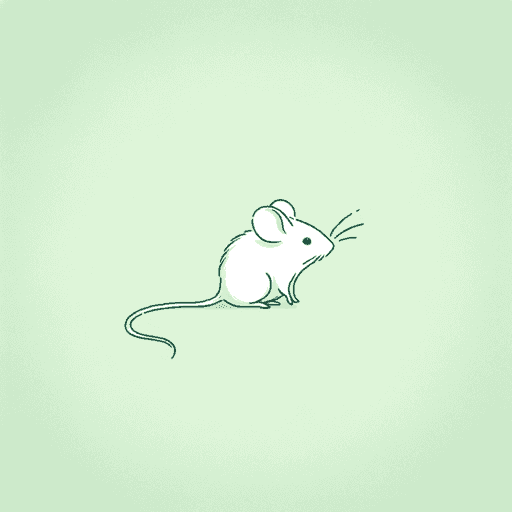
The Narrator/the Boy/the Mouse
The unnamed boy is the main character, narrator, and protagonist. The novel means for the reader to be on his side, fear for his safety when he’s stuck in the ballroom with the witches and trapped in the Grand High Witch’s room, and root for him to survive and put the mouse formula in the witches’ food.
The boy has many positive traits. He is loving and loyal. He tells his grandma: “I would never want to live longer than you. I couldn’t stand being looked after by anybody else” (205). He also thinks for himself. He adores his grandma, but he doesn’t just accept what she says. When his grandma tells him about witches, the boy acknowledges: “I was not prepared to believe everything my grandmother told me” (23).
Aside from his grandma, the boy doesn’t spend much time with people. He has a best friend, Timmy, but Timmy isn’t a consequential character. Separate from his grandma, the boy is independent and can find ways to occupy himself and get by. He trains his mice, William and Mary, in the ballroom and fends for himself in the kitchen and Grand High Witch’s room. Thus, the boy has confidence. He believes in himself and his purpose—to do good by getting rid of the evil witches.
The boy welcomes his metamorphosis into a mouse. He’s adaptable and tolerant. He doesn’t think humans are automatically superior to other creatures. The boy asks: “What’s so wonderful about being a little boy anyway? Why is that necessarily any better than being a mouse?” (125). He adds:
I know that mice get hunted and they sometimes get poisoned or caught in traps. But little boys sometimes get killed, too. Little boys can be run over by motor-cars or they can die of some awful illness. Little boys have to go to school. Mice don’t. Mice don’t have to pass exams. Mice don’t have to worry about money (125).
The boy sees the upside of his new identity. He’s optimistic and learns how to use his transformation to take down the witches. In the kitchen, he has so much fun as a mouse that he forgets about the antagonistic kitchen staff. The kitchen workers, as with most other adults, don’t like mice, but the boy proves that mice are powerful creatures. As a mouse, the boy saves the children of England. The mouse is an invaluable spy and hero.
Yet the boy doesn’t seek attention for his heroic deeds. He’s humble and doesn’t brag about his accomplishments or his privilege. About the hotel guests, the boy notes: “They were all well-to-do people. You had to be if you wanted to stay in the Hotel Magnificent” (185). As the boy stays at the hotel, he’s presumably well off. Yet his affluence doesn’t make him entitled or spoiled. He doesn’t think he’s better than other people. Throughout the story, he remains a symbol of goodness and love.
Grandmamma
The boy’s grandma, Grandmamma, is meant to be a likable character, like the boy. While most adults in The Witches have unbecoming qualities, the grandma represents laudatory traits. She dutifully cares for the boy after he becomes an orphan and sacrifices her wishes to be with him. The boy says: “You don’t want to go and live in our English house, I know you don’t!” The grandma replies: “Of course I don’t. But I am afraid I must. The will said that your mother felt the same way about it, and it is important to respect the wishes of the parents” (37). Thus, the grandma believes in honor and loyalty. She abides by the wishes of her daughter and son-in-law and sticks by the boy.
Grandmamma acts as a mentor to the boy. She teaches him all about witches. The grandma is a witchophile—a witch expert—and she shares her knowledge with her grandson. Initially, the boy thinks his grandma is trying to scare him. Grandmamma replies: “I am trying to make sure you don’t go the same way. I love you and I want you to stay with me” (17). Her role as the boy’s primary caretaker links to her role as mentor. She wants the boy to know about witches because she loves him: She doesn’t want him to turn into another one of their victims.
When the witches turn the boy into a mouse, she doesn’t blame the boy, nor does she reject his new identity. At first, she cries and is worried. After the boy assures her he’s fine and likes being a mouse, the grandma says: “Of course I’ll look after you” (134). The grandma is tolerant and accepting. It doesn’t matter how her grandson appears; she’ll love him. Unlike most of the adults in the story, Grandmamma doesn’t have a hateful relationship with mice. Without meaning to, she foreshadows her grandson’s transformation when she gives him two mice, William and Mary, to train.
Once the boy becomes a mouse, Grandmamma turns into something of a sidekick. She and the boy become a team, as if they’re both spies or secret operatives. They have to stay undercover and covert to take down the witches. While the main action revolves around the boy, Grandmamma’s support is essential. She comes up with the idea to lower the boy into the Grand High Witch’s room in the sock, and she brings him with her into the dining room and releases him into the kitchen. The role of sidekick connects to the caretaker role. She bandages his tail after it’s cut in the kitchen.
The grandma doesn’t follow gender norms. The boy says: “My grandmother was the only grandmother I ever met who smoked cigars” (17). In Western culture, cigars are often linked with powerful male figures—mob bosses like Tony Soprano or Tony Montana. Men don’t intimidate Grandmamma. She puts the manager in his place and keeps her cool with the peevish Mr. Jenkins. She bends gender norms when pretending to be a man on the phone with the police chief. She boasts: “I am very good at imitating a man’s voice” (210).
Grandmamma isn’t perfect. She makes mistakes. When she tells the boy about the five kids who disappeared, the boy reminds her that not all of the children vanished. Later, she overestimates the number of witches in England. The grandma is also mysterious. It’s not clear what happened to her thumb or her brother. The narrative doesn’t explain why she knows so much about witches. Perhaps the grandma is a witch who turned good.
The Grand High Witch and the Witches
The witches are the antagonists, the villains. They hate children and want to extinguish every single child in England. As the boy is a child in England, his life is in danger. The Grand High Witch is the leader, and is the primary antagonist. Grandmamma describes the Grand High Witch as “the ruler of them all. She is all-powerful. She is without mercy. All other witches are petrified of her” (40). The Grand High Witch is a tyrant. She expects unthinking devotion from the other witches. She has no tolerance for debate or questions. All she wants is praise, and that’s what she gets. About her plan, the witches exclaim: “Brilliant! Sensational! Marvellous! You are a genius, O Brainy One! It is a thrilling invention, this Delayed Action Mouse-Maker! It is a winner!” (95).
After one witch questions the plan, the Grand High Witch demonstrates her pitiless, violent, and authoritarian nature by incinerating the doubting witch. The Grand High Witch then reminds her followers: “A vitch who dares to say I’m wrrrong / Vill not be vith us very long!” (80).
The questioning of the unnamed witch suggests that not all of the witches are as evil as the Grand High Witch. Some witches have consciences. This doesn’t mean that the witches represent good, but it makes it feasible that they all don’t represent extreme evil. Even the Grand High Witch possesses a few laudable traits. The witches are a community—they’re like a family—and the Grand High Witch can harm them, but she also helps them. She doesn’t discriminate against older witches, but includes them in her plan by giving them formulas. She says: “You ancient vuns have served me vell over many years, and I do not vish to deny you the pleasure of bumping off a few thousand children each just because you have become old and feeble” (114). Though it’s for an evil purpose, the Grand High Witch shows sympathy and understanding for her own kind.
Mystery surrounds the Grand High Witch. Her accent makes it seem like she’s from Germany, but that’s conjecture, not explicit, and the boy and his grandma don’t know where she lives until the end. As the witches engage in wicked behavior, they have to shroud themselves in secrecy. They pretend to be women and are deceptive. The grandma tells the boy that the witches aren’t women. She explains: “[T]hey are totally different animals. They are demons in human shape” (32). The witches embrace malleable identities, evoking the theme of Appearances and the Fluidity of Identity.
Bruno Jenkins and His Parents
Bruno Jenkins is a foil, or a character who illuminates another character’s traits through contrasting ones. He is the opposite of the protagonist, the unnamed boy narrator/mouse. His negative traits emphasize the boy’s positive ones. Bruno is gluttonous. He also boasts about his family’s wealth and burns innocent ants. Unlike the boy, Bruno isn’t thoughtful or humble. He can’t dedicate himself to good. He can’t be a part of a higher cause because he only thinks about himself and food.
Bruno is harmless; he is too busy eating to get in the way of the boy and Grandmamma’s mission. Even though Bruno isn’t thoughtful, he is tolerant. He accepts his new identity as a mouse once he realizes it allows him greater access to food. He tells his parents: “I shall live in the kitchen cupboard and feast on raisins and honey!” (188).
Bruno’s parents are antagonists. His dad belittles and insults Grandmamma. He calls her a “silly old woman” and a “nasty cheeky old woman” (159). He’s coarse and dismissive. He lacks imagination and, thus, doesn’t understand how a person can become a mouse or why such a transformation isn’t automatically an adverse development. He declares: “I can’t have a mouse for a son” (188). Although Bruno’s mom doesn’t speak, she seems to agree. She’ll choose her cat over her mouse son.
The Jenkins embody the opposite of love and tolerance. They symbolize stubborn, exclusionary adults. Like the other adults in the story, they don’t want to be around different creatures—for instance, mice. Arguably, Bruno’s parents have something in common with the witches. The witches want to kill the children of England, and Bruno’s father might have killed his mouse son. The narrator speculates: “I wouldn’t be surprised if his father gave him to the hall-porter to drown in the fire-bucket” (203).

Unlock analysis of every major character
Get a detailed breakdown of each character’s role, motivations, and development.
- Explore in-depth profiles for every important character
- Trace character arcs, turning points, and relationships
- Connect characters to key themes and plot points