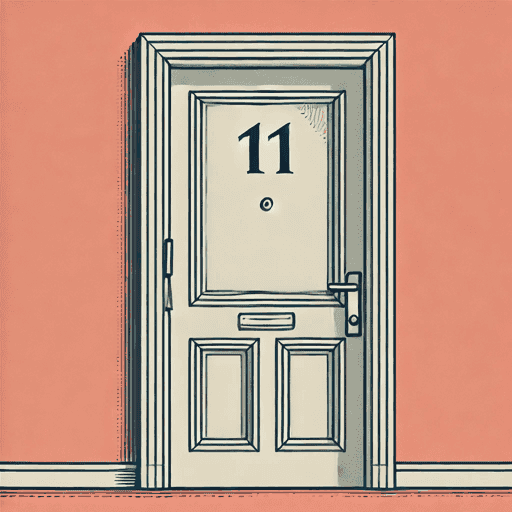
The Woman in Suite 11
56 pages • 1-hour read
Ruth WareThe Woman in Suite 11
A modern alternative to SparkNotes and CliffsNotes, SuperSummary offers high-quality Study Guides with detailed chapter summaries and analysis of major themes, characters, and more.
Symbols & Motifs
Content Warning: This section of the guide includes discussion of physical abuse, emotional abuse, and death by suicide.
Dreams
The motif of dreams helps develop the theme of The Effects of Trauma Due to Imprisonment. The first residual effect of trauma that the novel pictures is a nightmare. Lo’s unconscious mind makes her relive being trapped in the Aurora; her trauma is undesired remembering. The nightmare recurs in Chapter 23, when the in medias res Prologue occurs in the main narrative. Lo notes the frequency of “the bad old dream I’d had more times than I could count” (248). The dream is familiar and occurs even when her life is free of major stressors. However, in this specific moment, Lo is triggered by being a prisoner in a jail cell: her nightmare “come true.” She only dreamed of being imprisoned for a decade.
Lo has more fantastic dreams when she’s in the hospital after Pieter attacks her. She describes them as “the strangest dreams—dark, hallucinogenic dreams of the kind I hadn’t had since I was pregnant” (372). These dreams are about helping Pieter put his brain back together, chasing Carrie, who turns out to be Lo (Lo is chasing herself), and trying to reform Carrie’s phone with evidence that has turned to goo. Here, she isn’t reliving the trauma of seeing Pieter’s death by suicide or Marcus’s corpse. Her mind is processing the trauma differently because of the drugs she’s on, just as the hormones brought on by being pregnant altered her mind.
Books
The first symbolic book in The Woman in Suite 11 is Lo’s own book, Dark Waters. It’s about her time on the Aurora, and another passenger describes it as an “extremely frank memoir-slash-expose on the subject […] Utterly shocking and well worth the cover price” (64). It was a successful publication and garnered Lo short-term fame. It represents her turning her trauma into art. The book also functions as a mirror for Ben. After reading it, he sees how wrong he was and apologizes for his actions on the ship. This is a highly desired response to a memoir: to humble a former lover.
However, the book also symbolizes Lo’s vulnerability. She thinks, “[T]hat book [was] more than honest. I’d written about my mental health, my fears, my own fragility. Knowing that Marcus had read all that, had spent time in my head […] was a strange and not entirely pleasant feeling” (113). While Lo is happy that her book inspired Ben’s introspection, she’s unhappy that he can access her emotions and inner thoughts.
The other symbolic book is a specific copy of Winnie-the-Pooh. Carrie gave it to Lo when she was imprisoned “in a cabin far below decks on a boat in the North Sea—a boat where [Lo] had once expected to die and where Pooh had become an unexpected lifeline” (281). It represents an emotional connection between the two women, how they turned from enemies to friends. Carrie loves the book because “when she was a little girl, her mum had nicknamed her Tigger, telling her, You’re like Tigger, you are, no matter how hard you fall, you always bounce back” (281). Carrie, like Milne’s character, always bounces into and out of trouble. Lo, on the other hand, is like Pooh, who cares deeply about other people. At the very end of the novel, Lo responds to Carrie’s message with, “Dear Tigger, glad you bounced” (384). Carrie’s bounce was escaping persecution for Marcus’s murder and falling in love with Filippo.
Rings
The first symbolic rings are Lo’s wedding rings, which she doesn’t usually wear. After having children, she “no longer wore them every day—the engagement ring had a stone that was a little too large for practicality, and the wedding band was a slender antique that had belonged to Judah’s great-grandmother” (41). They represent the love between Judah and Lo, as well as Judah’s family. However, they represent these things from a jewelry box, rather than on Lo’s hands, because toddlers and young children can be destructive or could be hurt by a diamond.
When the police ask Lo about her rings, she doesn’t initially mention this. This is the initial exchange between DC Wright and Lo: “‘No jewelry, no wedding ring or wristwatch, anything like that?’ I shook my head. I hadn’t worn a watch since school. ‘I don’t have one’” (206). Lo responds only to one of the items that Wright lists; she doesn’t respond to each item individually. When the police locate a picture of her with her wedding rings on, they think she deliberately lied about not having a ring. To the police, the ring symbolizes guilt because Marcus’s corpse bears a mark from a large ring.
The mark was made by the second symbolic ring: Carrie’s sapphire one. When Carrie is free of Marcus and goes to dinner at the Old Manor with Lo, she wears “a riviera of what [Lo] suspected were probably real sapphires, and a gigantic ring, and she looked like a movie star” (168). The ring represents glamour and the money Carrie received as Marcus’s girlfriend. During the murder, Carrie “lost [her] grip; [she] didn’t even notice [her] ring had turned around” (330). Her ring upsets her because it’s one of the only clues that point to a murder. It symbolizes homicide rather than an accident, like a heart attack.
Additionally, an auditory ring from a phone symbolizes the evidence Carrie leaves behind to clear Lo’s name. Lo hears an unfamiliar ring and follows it to “the denim jacket I’d packed for nicer weather […] a cheap burner phone” (363). This ring represents Lo’s freedom after Carrie escapes.

Unlock the meaning behind every key symbol & motif
See how recurring imagery, objects, and ideas shape the narrative.
- Explore how the author builds meaning through symbolism
- Understand what symbols & motifs represent in the text
- Connect recurring ideas to themes, characters, and events