The World That We Knew
51 pages • 1-hour read
Alice HoffmanThe World That We Knew
A modern alternative to SparkNotes and CliffsNotes, SuperSummary offers high-quality Study Guides with detailed chapter summaries and analysis of major themes, characters, and more.
Chapters 14-19Chapter Summaries & Analyses
Chapters 14-19 Summary
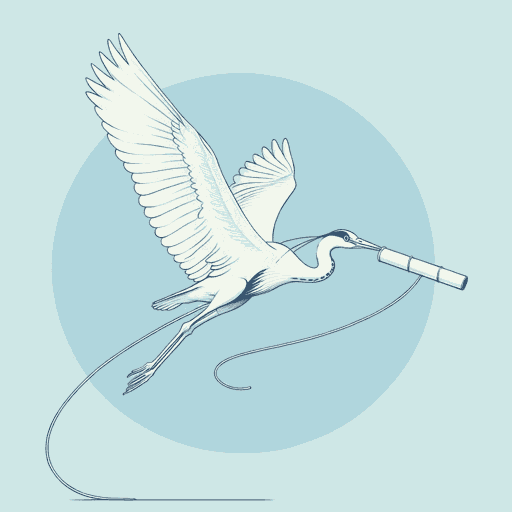
Lea delights in exploring the lush gardens and the spacious, fortress-like buildings at the convent where she’s hiding. However, she chafes at the tight authoritarian system of the nuns. She doesn’t enjoy pretending to be Catholic. The Catholic school uniform, the group recitation of prayers, the study of the saints, and the regimented meals make her feel out of place. The nuns drill her on ridding her voice of its telltale German accent. Lea misses Julien. She approaches Ava, who has taken work in the kitchen, and asks if Ava can help send a message to Julien in Paris using the convent’s pigeons. She begs Ava to teach her how to talk to birds. Ava agrees but suggests they use the beautiful gray heron that followed them from Paris. They strap a tiny metal cylinder to the bird’s spindly leg. Lea begs the great bird, please find him. In the cylinder is a simple message in tidy and neat script: “I am fine, but no one knows me as you do. Please stay alive” (168). Within a week, the heron returns with Julien’s answer, “I’m here” (169). Ava worries over Lea’s infatuation, while Lea is astonished that Ava—a golem shaped from river mud and rainwater—is beginning to show emotions at all, marveling at “how human she could seem” (172). She frets about how she can bring herself to destroy the golem once the war is over.
Back in Paris, the Gestapo have stepped up the deportation of the Jews. The Lévis have moved to their greenhouse while Nazi officers live in the spacious main house. They conscript Julien and his father to clean the streets. In July, the Nazis round up the remaining Jews and take them by bus to a soccer stadium for deportation processing to the extermination camps. Julien sees what’s happening: “We’re like lambs, doing as we are told” (172). Desperate to save his son, Julien’s father bribes a security officer, once the family’s gardener, with an expensive heirloom wristwatch to buy Julien his freedom. The officer lets Julien out of the stadium. At 15, he is suddenly on his own. He doesn’t want to leave his family behind, but he runs, hiding in alleys near the stadium. A man he doesn’t know accosts him and mysteriously tells him that he’s been sent to take Julien out of the dangerous city. The two flee the city, running by night and hiding by day until a car picks them up. Julien doesn’t at first recognize his brother Victor at the wheel. Victor sports a wild beard and a crazy tangle of hair. The left side of his face has a bad burn. His brother seems happy, somehow freed. Victor tells his younger brother that they’re heading to Marianne’s farm to hide. Julien is surprised to learn that his older brother has begun a relationship with the family’s former maid. Once there, Julien works on the farm, tending the goat and the bees. Marianne, he learns, now helps lead Jewish children across the border to Switzerland, while Victor disappears sometimes for days at a time to implement the clandestine operations of the Resistance.
Victor has begun to work with another Resistance fighter, the spunky Ettie: “Ettie was always a surprise, so much tougher than she looked” (192). Together, the two take on difficult and dangerous missions throughout the Nazi-occupied countryside. One mission takes them to the rural home of a kind and gentle doctor, Henri Girard, known not only for his gracious and diligent doctoring but also for his commitment to the Resistance. When Ettie meets the doctor, she’s at once taken by his compassionate spirit. She finds out he’s a widower, as his wife succumbed to breast cancer years earlier. The first thing the doctor does is give Ettie a quick and careless haircut: “You have to forget some of what you’ve been taught but nothing of what you are” (196). At the doctor’s farm, Ettie feels at last free: “She sat to breathe in the mountain air. She was finally here, in the place where she had found a future” (197).
At the convent, Lea slips up. She and another Jewish refugee from Germany enjoy a casual chat in the convent gardens. Relieved to be apart from everyone else, they lapse easily into speaking German. A baker from town, a Nazi sympathizer, overhears their conversation while delivering the convent’s bread order. The convent at once goes under alert, knowing that it’s only a matter of time before the Gestapo raids the convent. Ava and Lea pack quickly and leave in a panic just ahead of a raid in which Nazis ravage the convent’s rooms in search of Jewish refugees and then beat and arrest the mother superior and deport her to a concentration camp. The courageous martyr Madeleine de Masson—the mother superior at the Catholic convent and school where Lea briefly finds refuge—defines the courage and resilience of the wolf, doomed in a world of too many blood-thirsty hunters. She embodies the heroic spirit of Bobeshi’s wolf: “Brother Wolf…you are not the beast that I fear. I fear men and their bloodshed, I fear soldiers with guns, I fear those who hate for no reason” (220).
Ava and Lea, now on the run in the shelter of the mountains and open pastures, feel protected but are both aware now of the dimensions of the Shoah, “an attempt at the total destruction of the Jews” (216). Sleeping under the night sky, Lea dreams of her mother. Ava relishes the freedom of the open country. In the morning she cavorts with the heron, who has again followed them. Lea muses, “If a golem was made of clay, how was it possible for her to feel?” (217). Meanwhile, winter begins to close in. The heron could easily leave; in fact, Ava tells him to go, to migrate to warmer climates. The bird resolutely refuses to abandon Ava and Lea.
Chapters 14-19 Analysis
In these chapters, the novel uses three minor figures to explore its thematic dynamics of wolf versus hunter; love of life versus surrender to despair; and the energy of love versus the toxin of hate. The mother superior’s backstory—revealed only after Nazis raid the convent and beat her, arrest her, and dispatch her to her death in a concentration camp—suggests the dimensions of her heroism. She was born a Jew to a rich family. During a brief love affair with a widowed Jewish Algerian, she saw his generosity to Hebrew schools in the memory of his dead wife. This convinced her to dedicate herself to teaching. Seeing the complete dedication of Catholic nuns to service in a dark and evil world inspired Madeleine to take up that life of service. She first donated her trust fund to Catholic charities and then took her vows as a Catholic nun. In the school, she saw a chance to help “girls no one else would take” (214). Resistance in the face of overwhelming evil is all she knows. She’s the architect of the convent’s underground network that helps Jewish children, and when she knows that it’s over, that Lea’s slip-up in the garden will cost her everything, she calmly dispatches the children where she can, quietly saying goodbye to her fellow nuns as she dresses them in civilian clothes and sends them away before the soldiers arrive. By the time the soldiers begin to interrogate her, they already know her real name, and she understands what will happen to her. She exemplifies the spirit of the wolf whose brave resistance and shadowy heart are in the end insufficient. Her tragedy may be the keenest in the novel. Hoffman herself, in the novel’s Afterword, admits that the mother superior character moved her the most.
The magical heron who follows Lea and Ava in their flight from the convent brings a sense of love for the world. As a part of nature, not a part of the world shaped by humanity, the heron—known within the totem world of spirit animals as a symbol of resiliency because of its ability to survive in a variety of inhospitable environments—knows nothing of paranoia, hate, brutality, and violence. As such, the heron delights in the golem’s friendship and their sympatico relationship. They dance together in the morning sun and chat away in happy inanity. (As a golem, Ava speaks the languages of birds.) The heron symbolizes—even embodies—the love of the now, the urgent celebration of the immediate, innocent of the implications of humanity and its predilection for brutality and irrational acts of bloody violence.
However, as the willing messenger of the love notes between Lea and Julien, the heron emerges as a crusader for the raw energy of love in a world otherwise steeped in hate. The fragile love between the separated lovers owes its preservation entirely to the heron’s intervention. Julien himself cannot entirely understand how the communication works, why this gorgeous bird comes to his garden in Paris bearing notes from Lea: “He told himself he was part of a dream in which a huge, gray bird allowed him to tie a message to its leg before rising to the sky” (169). That connection, at once entirely logical and yet also magical, symbolizes the unsuspected resiliency of love. Indeed, the relationship that Victor, now a committed guerrilla fighter with the Resistance, develops with Marianne emerges quietly as evidence of the ability to nurture love in an environment in which such delicacy of emotion, such unselfish caring for another, and such vulnerability can seem at best a dangerous risk and at worst a foolish fantasy. The highest expression of love in these chapters, however, may be at the soccer stadium in Paris from a most unexpected source. Julien’s father—with his professional dedication to the insular world of mathematics and his awkward relationships with people, even those he loves—reveals a selfless, heroic love when he bribes the stadium guard, his former gardener, who’s now a Nazi collaborator, to release his son. Julien is initially confused by his father’s gesture, as he understands that his father could have used the watch to secure his own release or his wife’s. The parents accept the highest expression of sacrifice, accept what they know will be their doom in the extermination camps, in return for giving their son a chance to live. That noble gesture establishes the novel’s template for being genuinely human: The ability to love indicates a soul that a world of evil cannot destroy. Bewildered, Julien struggles to understand his parents’ love as he’s brusquely led out of the stadium: “The sun was so bright Julien lifted a hand to shade his eyes. His parents seemed to have disappeared, swallowed up, lost in the light and masses of people” (179).

Unlock all 51 pages of this Study Guide
Get in-depth, chapter-by-chapter summaries and analysis from our literary experts.
- Grasp challenging concepts with clear, comprehensive explanations
- Revisit key plot points and ideas without rereading the book
- Share impressive insights in classes and book clubs