The Wrath of the Fallen
78 pages • 2-hour read
Amber NicoleThe Wrath of the Fallen
A modern alternative to SparkNotes and CliffsNotes, SuperSummary offers high-quality Study Guides with detailed chapter summaries and analysis of major themes, characters, and more.
Symbols & Motifs
Content Warning: This section of the guide features discussion of graphic violence, physical abuse, emotional abuse, sexual content, and death.
Oblivion
The motif of Oblivion is the physical manifestation of Samkiel’s title as the “World Ender,” a destructive force of pure darkness that links his emotional state to the fate of the universe. It represents his central internal conflict, exploring The Redemptive and Destructive Power of Love. Samkiel’s immense power to destroy is constantly at war with his desire to protect, particularly Dianna. Oblivion is not a tool he wields but a reaction to grief or rage; the force that saves Samkiel’s soul is the same one that threatens to unmake reality when that love is threatened. His struggle to control Oblivion, especially after losing the ring that helped contain it, symbolizes his fight against the monstrous part of his own nature.
In Samkiel’s nightmare, Nismera murders Dianna, and he watches as “her skin burned, flakes peeling off and rising into the air until only ash was left” (14). This vision of bodily annihilation becomes a threat to the world when the dream triggers a real manifestation of Oblivion. Samkiel’s emotional stability is the bedrock of the world’s safety. When Kaden is killed by Oblivion, he too bursts into ash, demonstrating that the power is absolute. The motif thus serves as a constant reminder that Samkiel’s heart holds the capacity for both ultimate love and ultimate ruin.
Nightmares and Prophetic Dreams
The recurring motif of prophetic dreams is a narrative device, providing a gateway into characters’ subconscious fears, buried histories, and the supernatural forces influencing their world. These sequences are dangerous psychic spaces where the past and future collide. For Samkiel, nightmares of losing Dianna are the primary trigger for unleashing Oblivion, directly linking his psychological trauma to his destructive capabilities and exploring the theme that love can be a catalyst for destruction. For Dianna, the dreamscape becomes the battleground where the ancient Ig’Morruthen Gathrriel first makes contact, reveals his history, and eventually possesses her. Camilla’s prophetic dream about the medallion likewise reveals the artifact’s true purpose and raises the novel’s stakes to a cosmic level. The dream motif thus serves as the primary engine for foreshadowing, character development, and revealing essential, world-altering exposition that would otherwise remain hidden.
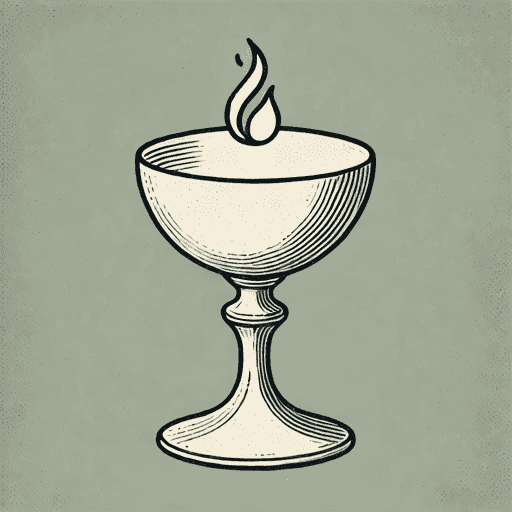
Within this motif, the Chalice of Gathrriel appears as a potent symbol during Dianna’s dream encounters. It represents the temptation of Gathrriel’s immense power and the dark history of the Ig’Morruthen bloodline. As Gathrriel tells her in the dream, “Countless warriors, kings, queens, and beasts have braved this cavern in search of the gift that chalice holds” (72). This statement frames the chalice not just as an object but as a coveted source of immense, dangerous power. Its appearance in her dream solidifies her connection to Gathrriel and foreshadows her later desire to seek it out to gain the strength needed to protect her family. The chalice symbolizes a legacy of power rooted in grief and vengeance, forcing Dianna to confront the darkest aspects of her own identity and the potential monstrosity within her.
The Medallion
The ancient medallion is a symbol representing the dangerous pursuit of forbidden power and ambition that extends beyond the known realms. It functions narratively as a MacGuffin—an object whose pursuit drives the plot, as Nismera’s search for the medallion reflects her desire to conquer not just her world but all of reality. The medallion’s significance is tied directly to the theme of Fear as a Tool of Political Domination. While Samkiel seeks to reclaim his throne through ancient loyalties and earned trust, Nismera bypasses all legitimacy by seeking a power that can shatter the boundaries between worlds. She does not wish to rule the kingdom she inherited but to seize control of existence itself, a tyrannical ambition perfectly encapsulated by this single, world-breaking artifact. The Medallion is therefore more than a magical object; it is the ultimate symbol of unchecked, cosmic ambition.
The true, terrifying purpose of the Medallion is revealed through Camilla’s prophetic dream, which elevates the novel’s central conflict from a war for a throne to a battle for the fate of all realms. In her vision, she sees that the Medallion can open portals to the Sovereigns, god-like beings who rule over other universes. A witch in her dream gives a stark warning about the consequences of its use: “You have to destroy it, or it will destroy all” (55). This revelation reframes the stakes entirely. The fight is no longer just against Nismera, but against the potential invasion of forces more powerful than anyone in their world. The Medallion thus symbolizes the catastrophic consequences of meddling with powers beyond comprehension and the horrifying scale of Nismera’s willingness to risk total annihilation for ultimate control.

Unlock the meaning behind every key symbol & motif
See how recurring imagery, objects, and ideas shape the narrative.
- Explore how the author builds meaning through symbolism
- Understand what symbols & motifs represent in the text
- Connect recurring ideas to themes, characters, and events