The Younger Wife
57 pages • 1-hour read
Sally HepworthThe Younger Wife
A modern alternative to SparkNotes and CliffsNotes, SuperSummary offers high-quality Study Guides with detailed chapter summaries and analysis of major themes, characters, and more.
Chapter 53-EpilogueChapter Summaries & Analyses
Content Warning: This section of the guide discusses graphic violence, physical abuse, emotional abuse, illness, mental illness, and death.
Chapter 53 Summary: “Tully”
Tully and Sonny sit in their empty home and discuss their family’s struggles. Sonny suggests that Miles acts out with Tully because he feels safest with her, and he recommends professional help for them both. Sonny regrets not recognizing her pain sooner and asks her to be more vulnerable. They agree to face their fears about Stephen together.
Chapter 54 Summary: “Heather”
Heather attends a therapy session with a psychologist named Inna. Heather explains that her childhood trauma and a lack of physical proof make her doubt her own perceptions of Stephen’s abuse. Inna asks what Heather believes in her heart.
Interlude 4 Summary: The Wedding
The narrative shifts forward to the wedding, where a group of guests, including Fiona, moves to a nearby pub and gossip about the strange events. After hearing a group of women praising Stephen, Fiona speaks up and states that Stephen beginning a new relationship while still married to Pamela is in keeping with his character.
Chapter 55 Summary: “Tully”
At the wedding rehearsal dinner, Tully notices that Heather looks calm. Tully reflects on recent changes: her family has moved, Miles is in therapy, and she has a new job. She fights the daily urge to shoplift while awaiting her court date. Stephen proposes bringing Pamela to the wedding. Tully sees Rachel’s unease but reluctantly agrees.
Chapter 56 Summary: “Rachel”
Rachel attends the rehearsal dinner with Darcy and feels steadier since starting therapy. Stephen greets Darcy warmly, and Rachel struggles to reconcile his kindness with her fears. Stephen apologizes for the recent strain in their relationship and pleads for Rachel to acknowledge that he would never hurt Pamela. Rachel cannot say the words.
Chapter 57 Summary: “Heather”
Heather feels happy at the rehearsal dinner. Stephen gives an emotional speech, and she feels safe with him. About a week earlier, Heather finally revealed to Stephen that her father is in prison after murdering her mother. Stephen already knew this information, but he expressed his happiness that she trusted him. In turn, he confided that he was married to Fiona Arthur before his marriage to Pamela. This newfound trust makes Heather feel confident and safe as she prepares for her wedding.
Chapter 58 Summary: “Rachel”
On the wedding day, Rachel and Tully bring a confused Pamela to the chapel. When Stephen appears at the altar, Pamela walks toward him, and he gently guides her back to her seat. Heather walks herself down the aisle. As the ceremony begins, Pamela shrugs off Rachel’s hand and walks toward the altar.
Chapter 59 Summary: “Heather”
When Pamela reaches the altar, Heather offers her the bouquet to defuse the moment. Pamela accepts and returns to her seat. The ceremony resumes. As Stephen produces the rings, Pamela grows restless. She rises a second time and walks with purpose toward the altar.
Chapter 60 Summary: “Tully”
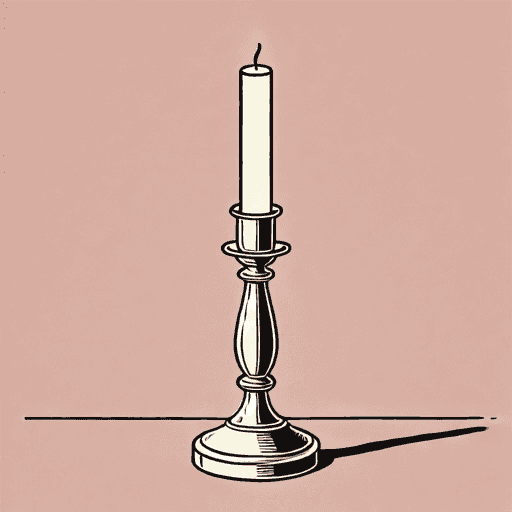
As the ceremony concludes, Pamela picks up a heavy candlestick. The wedding party moves into the sacristy to sign the register. Pamela begins swinging the candlestick erratically, which becomes dangerous as Tully’s young sons leap around the room.
Stephen intervenes, locking Pamela in a chokehold. Tully and Rachel both observe with shock that Stephen handles Pamela far more roughly than he needs to and seems to be enjoying grabbing hold of her. Tully watches as Rachel (who had taken the candlestick from Pamela) strikes her father in the head.
Chapter 61 Summary: “Rachel”
Stephen collapses, and blood spreads across the floor. Tully, Heather, and Pamela stand shocked. Rachel feels confident that Stephen’s behavior confirmed her suspicions and that he abused Pamela. The celebrant runs from the room to call for a doctor.
Chapter 62 Summary: “Tully”
Several guests rush in to help while Sonny calls an ambulance. When Sonny asks what happened, Tully lies that Pamela hit Stephen by accident. Rachel starts to confess, but Heather quiets her and supports the cover story. Sonny repeats Tully’s version to the doctors.
Chapter 63 Summary: “Heather”
Hours later, Heather waits in a hospital hallway in her bloodied wedding dress. A doctor confirms Stephen’s death. Heather returns home alone and in shock.
Interlude 5 Summary: “Fiona Arthur: After the Wedding”
At the pub, Fiona Arthur waits with other guests. A man announces that Stephen was accidentally injured and did not survive. Guests toast Stephen as a good man. Fiona lifts her glass but mutters her own, different verdict.
Chapter 64 Summary: “Tully”
Tully, Rachel, and Heather gather after Stephen’s funeral. Heather toasts to bad fathers and reveals that her father is in prison for murdering her mother. The three women acknowledge their secrets and decide to stop hiding the truth from each other.
Chapter 65 Summary: “Rachel: A Month Later”
After Stephen’s death, Rachel, Tully, and Heather all give statements attesting that Pamela accidentally killed Stephen while swinging the candlestick randomly. Pamela’s Alzheimer’s disease makes it unlikely she will face criminal charges. Rachel and Darcy begin to visit Pamela regularly. To stir Pamela’s memory, Rachel brings old photos. When Pamela sees an early picture of herself with Stephen, she lifts the frame and kisses his image.
Chapter 66 Summary: “Tully: Two Months Later”
Two months later, a court sentences Tully to 100 hours of community service for theft. She finds satisfaction in the work and befriends another participant. Her son Miles improves, and her family’s smaller life feels manageable. She admits she misses some good parts of her father, accepting that he was not entirely evil.
Chapter 67 Summary: “Heather”
On Christmas Day, Heather hosts the family. Pamela died of pneumonia a month earlier. Tully and Rachel wish that they had confronted Stephen and heard him admit the truth. Rachel also expresses that she sometimes has nagging doubts about whether Stephen was abusive. Heather tells them to trust what they saw at the wedding, saying Pamela’s hidden money proves she felt confident in her instincts. The sisters agree to move forward.
Epilogue Summary: “Pamela: Three Years Earlier”
The epilogue takes place three years before the main plot, at which time Pamela is just beginning to experience confusion and trouble with her memory, signs of her incipient cognitive decline. Pamela has received the water bottle stuffed with money from her own mother, who gave it to Pamela just before passing away. Pamela wonders what to do with the money. She has recently begun having suspicions about whether Stephen might be physically harming her; while Stephen has always denied this, Pamela has noticed that she experiences strangely unexplained injuries.
Pamela recalls that, years earlier, Fiona made a cryptic statement, warning her about Stephen. She decides to reach out to Fiona to ask if Stephen ever harmed her. Not wanting to forget this intention, Pamela writes down Fiona’s name. She also writes down Tully’s name because she plans to ask for her daughter’s help if she receives confirmation that Stephen is abusing her.
Startled by the sound of Stephen approaching, Pamela places the notes with the names and the money back in the water bottle and tucks it away, intending to come back and carry out her plan. The narrative implies that, due to her failing memory, she never did so.
Chapter 53-Epilogue Analysis
The novel’s concluding section moves toward a definitive condemnation of patriarchal abuse. The narrative accelerates toward the wedding, which functions as the convergence point for all preceding subplots, returning the narrative to its beginning and the wedding. During the chaotic events in the sacristy, the alternating perspectives among Rachel, Tully, and Heather shift more rapidly, creating a fragmented and subjective account of the violence. This technique mirrors the characters’ psychological shock, and the structural choice to follow this climax with an interlude from Fiona Arthur is a crucial framing device. Her final, quiet condemnation, “May that bastard rot in hell” (322), provides an external, historical validation of Stephen’s villainy. Furthermore, the epilogue confirms that Pamela (like Heather after her) was questioning whether her marriage could be abusive.
In the violent climax, the three central female characters are forged into their final forms, and their relationship is solidified. Rachel, who has spent her adult life using the methodical control of baking to manage past trauma, reclaims her agency through a definitive, physical act. Striking Stephen is not premeditated but instinctual—a bodily response to what she perceives as the visual confirmation of his abuse. Tully, whose outward composure and kleptomania have been mechanisms for controlling her internal anxiety, immediately shifts from self-preservation to collective protection. Her spontaneous decision to create a cover story—blaming her mother—is an act of solidarity that cements the bond between the women. For Heather, who has been systematically manipulated by Stephen, the moment is one of painful clarity. Witnessing Stephen’s chokehold on Pamela validates every suppressed fear, liberating her from the psychological prison of his manipulation.
In these wedding scenes, Female Solidarity as a Means of Survival emerges as the novel’s ultimate ethical conclusion. The initial animosity among the three protagonists gives way to an unspoken pact forged in the instant of the attack. Tully’s lie, Heather’s corroboration, and Rachel’s acceptance of their protection form a powerful triad that allows them to withstand scrutiny, demonstrating that solidarity is a necessary foundation for healing and self-determination. The women’s deliberate act of survival is shielded by the very language that was used to conceal their abuse, demonstrating their seizure of narrative control as an essential component of their freedom. The subsequent funeral and holiday gatherings depict the women’s evolution from suspicious rivals into a cohesive unit. Their blunt toast, “To shitty fathers” (325), is a verbal crystallization of their shared experience, acknowledging a common wound that has become the foundation for their collective survival.
In these final chapters, the novel’s primary themes achieve their full resolution. The theme of Concealing Shameful Secrets with Social Status is resolved when Stephen is exposed in the public setting of his own wedding as a violent abuser. While the fabricated cover story preserves his public reputation in death, for the women who survive him, the truth of his nature is finally undeniable. This resolution underscores that such facades are not only deceptive but also actively dangerous. The theme of The Corrosive Nature of Family Secrets is also resolved, ironically, through the exposure of an old, destructive secret (Stephen’s abuse) that is immediately followed by the creation of a new, protective one (the truth of his death). This dynamic suggests that the moral weight of a secret is determined by its function: While Stephen’s secrets were instruments of isolation and control, the women’s shared secret becomes a tool of liberation.

Unlock all 57 pages of this Study Guide
Get in-depth, chapter-by-chapter summaries and analysis from our literary experts.
- Grasp challenging concepts with clear, comprehensive explanations
- Revisit key plot points and ideas without rereading the book
- Share impressive insights in classes and book clubs