The Younger Wife
57 pages • 1-hour read
Sally HepworthThe Younger Wife
A modern alternative to SparkNotes and CliffsNotes, SuperSummary offers high-quality Study Guides with detailed chapter summaries and analysis of major themes, characters, and more.
Character Analysis
Content Warning: This section of the guide discusses graphic violence, mental illness, illness, disordered eating, rape, physical abuse, emotional abuse, and substance use.
Tully Harris
As one of the novel’s central protagonists, Tully Harris is a dynamic character whose identity is built on a foundation of immense anxiety and a compulsive need for control. Her primary coping mechanism is kleptomania, which represents her attempts to gain agency in a life where she feels powerless. The act of stealing provides a temporary release from the pressure of maintaining a perfect image, a “game face” her father taught her to wear. This compulsion is not about acquiring objects; it is about the act of taking, which gives her a fleeting sense of control that her highly structured life as a wealthy wife and mother fails to provide. Her fixation on cleanliness and order in her home is another manifestation of this need, creating a contrast with the internal chaos that drives her to shoplift.
Tully’s character arc is defined by the dismantling of this facade. The process begins with an external crisis when her husband, Sonny, reveals he has lost their fortune in a bad investment. This financial precarity shatters her sense of security and exacerbates her anxiety, leading to an increase in her stealing. The social humiliation she fears comes to fruition when she is caught shoplifting by a local store owner, and later, when the gossip spreads through her community. This public exposure, combined with her confession to Sonny, forces her to confront the secret she has hidden since she was 11 years old. Her journey toward healing begins with therapy and a commitment to stop stealing, illustrated by the moment she intentionally smashes a bottle of vanilla extract rather than stealing it, at her therapist’s advice, creating a “circuit breaker” to interrupt her compulsion. This act signifies her first step toward finding a healthier way to manage her anxiety.
Tully’s relationships, particularly with her sister Rachel and father Stephen, are central to her development. Initially, she views her father with a mixture of adoration and fear, seeking his approval while being subconsciously unsettled by his controlling nature. Her relationship with Rachel is strained by a lifetime of competition, but it transforms as they begin to share secrets and support one another. Tully transitions from an isolated individual, trapped by her own secrets and the family’s unspoken rules, into an active member of the female alliance against Stephen. By choosing to protect Rachel, Tully makes a conscious decision to break the cycle of patriarchal control and secrecy, embracing Female Solidarity as a Means of Survival and finding a more authentic version of herself.
Rachel Aston
Rachel Aston is a co-protagonist and the narrative’s principal investigator. A dynamic character, she initially appears to be the more secure of the Aston sisters, running a successful baking business and serving as a calm counterpoint to Tully’s overt anxiety. However, her composed exterior conceals deep, unhealed trauma from a rape she experienced at 16, which she has told no one about. For nearly two decades, she has used food and baking as a coping mechanism to manage her emotional pain. The methodical process of baking gives her a sense of control, while the physical act of eating allows her to “obliterate” and bury painful memories.
Rachel’s journey is one of unearthing secrets, both her own and her family’s. The discovery of their mother’s hot-water bottle, stuffed with nearly $1,000 and a note bearing the name “Fiona Arthur,” triggers her transformation into an active detective. This discovery launches her on a quest to understand her mother’s hidden life and the reasons behind her family’s dysfunction, driving the novel’s central mystery. As she pieces together clues from her mother’s fragmented statements and her meeting with Fiona Arthur, Rachel begins to question the narrative of her idyllic family life. She is the first to seriously entertain the possibility that her father is an abuser, a realization that forces her to confront the terrible secrets she and her family have kept.
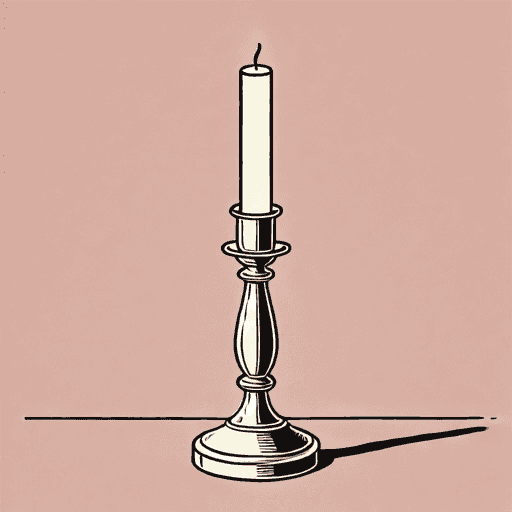
Her relationship with Darcy, her charming and witty delivery driver, catalyzes her emotional healing. His nonjudgmental acceptance creates a safe space for her to finally articulate the story of her assault, a secret she has never shared with anyone. This confession marks a turning point, allowing her to begin reclaiming her sexuality and her sense of self. It also sharpens her perception, enabling her to recognize the signs of abuse within her own family. In the novel’s climax, Rachel acts decisively, striking Stephen with a candlestick to protect her mother. This violent act is a symbolic release of years of repressed anger and a definitive break from her father’s control, cementing the bond of female solidarity with Tully and Heather.
Heather Wisher
As the titular “younger wife,” Heather Wisher is a dynamic character who serves as the primary catalyst for the novel’s events. She enters the narrative as an outsider to the Aston family, a woman whose youth and relationship with the much older Stephen lead his daughters, Tully and Rachel, to suspect she is a gold digger. This initial perception, however, is a misjudgment that speaks to the novel’s exploration of the gap between appearances and reality. Heather’s true motivation is not financial gain but a deep-seated desire for the safety, stability, and sense of family that were absent from her traumatic childhood. Having grown up with a violent father who murdered her mother, Heather gravitates toward Stephen’s kindness, wealth, and social standing as markers of a secure and stable life.
Heather’s central conflict is internal, as she struggles to reconcile her image of Stephen as a perfect, caring partner with his increasingly controlling and subtly threatening behavior. Because of her past, she is conditioned to overlook red flags and rationalize his actions. When she suffers injuries from “falls” that seem to occur after disagreements, she accepts Stephen’s explanations that she is clumsy or was drunk, internalizing the belief that she is unreliable or “going mad.” This pattern of gaslighting is a continuation of the abuse she witnessed and experienced in her youth, making it difficult for her to trust her own perceptions. Her journey is one of slowly awakening to the truth as she observes Stephen’s interactions with his family and begins to connect with Tully and Rachel.
The evolution of Heather’s relationships with Tully and Rachel is central to the theme of female solidarity as a means of survival. What begins as mutual suspicion gradually transforms into a powerful alliance. The lunch where the three women bond without Stephen present marks a significant shift in their dynamic, as they begin to see one another as individuals rather than rivals. Heather’s growing realization that Stephen is abusive, confirmed in the moment he grabs Pamela at the wedding, solidifies her place within this trio. By the novel’s end, she has moved from being the outsider to an integral part of a new family structure founded on mutual protection and shared truth. She fully sheds her desire for a traditional patriarchal family and embraces the one she has forged with the Aston sisters.
Stephen Aston
Stephen Aston is the novel’s primary antagonist, a character whose charming public persona conceals a manipulative and violent nature. As a highly respected heart surgeon, devoted father, and charismatic community member, he perfectly embodies the theme of Concealing Shameful Secrets with Social Status. He curates an image of unimpeachable moral character, which he uses as a shield to deflect suspicion and maintain control over his family. His insistence that his first wife, Pamela, attend his wedding to Heather is not an act of inclusive kindness but a demonstration of his power and his need to manage appearances, ensuring his narrative of a happy family remains intact.
Beneath this polished exterior, Stephen employs gaslighting, intimidation, and physical violence to dominate the women in his life. He subtly undermines Heather’s confidence by questioning her memory and suggesting she has a drinking problem after she suffers mysterious injuries. His history of abuse is gradually revealed through both Rachel’s investigation into his first marriage to Fiona Arthur and Pamela’s fragmented accusations. The novel’s climax corroborates his violent nature when he restrains Pamela in a chokehold at his wedding. This public display shatters the perfect image he has so carefully constructed and confirms the women’s deepest fears, proving that his affable demeanor is a mask for profound cruelty.
Stephen’s relationships are built on control rather than genuine affection. He pits his daughters against each other from a young age and manipulates them into accepting his relationship with Heather. His motive for marrying Heather is the acquisition of another beautiful possession who can be molded to fit his perfect life. Ultimately, his death at Rachel’s hand is a symbolic overthrow of the patriarchal tyranny that has defined the Aston family for decades.
Pamela Aston
Pamela Aston is a pivotal minor character whose story illustrates The Corrosive Nature of Family Secrets. Pamela has Alzheimer’s disease, and the cognitive symptoms associated with this disease create narrative ambiguity. While her family dismisses her accusations against Stephen as confused ramblings, her fragmented statements—such as calling him a “sadistic bastard”—are later revealed to be moments of pure, unfiltered truth. In this way, she acts as an oracle, providing the clues that Rachel and Tully must decipher to understand their past.
Pamela’s character remains static over the course of the narrative, and she dies at the end of the novel. An epilogue reveals that Pamela became suspicious of Stephen around the same time that she began to experience cognitive symptoms. Pamela never experiences full agency or the chance to understand what was happening in her marriage and exit it. However, she does live to see Stephen face consequences for his actions.
Sonny Harris and Darcy
Sonny Harris and Darcy are important secondary characters who act as catalysts for Tully and Rachel, respectively. As Tully’s husband, Sonny is initially presented as a stable, law-abiding barrister who is oblivious to the depth of his wife’s anxiety. His accidental loss of their family fortune precipitates a crisis that forces Tully’s carefully constructed world to collapse, ultimately leading her to confront her kleptomania. Though he is initially judgmental, he eventually comes to understand her compulsion as an illness and supports her path to recovery. In the end, by revealing her secret to him, Tully creates a deeper bond with her husband, and their example models how honesty and vulnerability can strengthen a relationship.
Darcy is the catalyst for Rachel’s emotional and romantic awakening. As her witty and charming delivery driver, he gently challenges the protective walls she has built around herself. His kindness and humor provide a safe environment for Rachel to finally speak about the rape she suffered as a teenager. His nonjudgmental reaction to her confession allows her to begin the healing process and reclaim a part of her life she believed was lost forever.
Fiona Arthur
Fiona Arthur is Stephen Aston’s first wife, unbeknownst to his daughters and Heather. She attends the wedding and narrates events that occur on that day as she watches them unfold, acting as the initially anonymous narrator of the wedding passages throughout the novel. Her name, found on a note inside Pamela’s hot-water bottle, is also the first concrete clue that leads Rachel to question her father’s past. When Rachel finally tracks her down, Fiona’s confirmation that Stephen hurt her serves as the critical piece of evidence that validates the women’s growing suspicions, solidifying their alliance and giving them the courage to trust their instincts about Stephen’s dangerous nature. Fiona is the rare character who understands Stephen’s true nature throughout the plot and thus can provide insights to the other women.

Unlock analysis of every major character
Get a detailed breakdown of each character’s role, motivations, and development.
- Explore in-depth profiles for every important character
- Trace character arcs, turning points, and relationships
- Connect characters to key themes and plot points