There Is No Antimemetics Division
58 pages • 1-hour read
qntmThere Is No Antimemetics Division
A modern alternative to SparkNotes and CliffsNotes, SuperSummary offers high-quality Study Guides with detailed chapter summaries and analysis of major themes, characters, and more.
Character Analysis
Content Warning: This section of the guide includes discussion of substance use and death.
Marie Quinn (née Sheridan)
The novel’s central protagonist, Marie Quinn, is the chief officer of the Unknown Organization’s Antimemetics Division. She rose through the ranks as a field officer before serving as Deputy Chief under her predecessor, Jason Lo. Though Quinn dies halfway through the novel, her husband, Adam, preserves her memory, which allows her to return in an abstract form to resolve the conflict.
Quinn is a work-driven character. Though the mandate of the Organization is focused on research, the nature of some antimemetic Unknowns requires her to implement countermeasures at the first sign of a threat. This drives her to sacrifice important parts of her life to prevent the spread of antimemetic ideas, such as U-3125. For instance, her regular use of mnestic drugs has a long-term impact on her physical health, though she justifies this in the first chapter of Part 1, asserting that it’s a necessary safeguard against antimemetic effects. Later, in the third chapter of Part 1, Quinn admits to Hilton that she’s drawn to the addictive thrill her work gives her, making it difficult to resign despite the risks. Because of her commitment to the Organization, Quinn embodies its ideals, which allows her to transcend her earthly form, becoming the WILD LIGHT countermeme that defeats U-3125.
Quinn’s devotion to her work also affects her relationship with Adam, which is the primary source of tension in her characterization. Though Adam never resents Quinn for letting her work interfere with her personal life, Quinn chooses to let her work mandate take precedence over her marriage when she chooses to redact all living memory that their marriage ever existed in the second chapter of Part 2. The novel suggests that Quinn does this out of hubristic confidence that her efforts will eventually pay off and that she can undo the impact of her work on her life. She initially reassures Adam that she’ll restore the memories of their marriage after she wins the war, but when Adam asks her what she’ll do if she loses, she doesn’t answer, suggesting that no contingency exists for loss. The reverse is eventually revealed as true once Adam brings Quinn’s memory to Hix, allowing them to activate the Irreality Amplifier and defeat U-3125. However, Quinn remains dead after she transforms into the countermeme and travels to the edge of ideatic space.
Quinn’s relationships with the Unknowns aren’t always antagonistic. In some cases, Quinn receives aid and guidance from Unknowns in both her work life and personal life. She has a symbiotic relationship with the Unknown designated U-4987, which she and Adam commonly refer to as “Sunshine.” Sunshine often feeds on Quinn’s trivial knowledge, but Quinn weaponizes Sunshine’s antimemetic capabilities to evade detection, as in the first chapter of Part 1 when she faces Mahlo’s fake assistant, Levene. In addition, Quinn maintains a friendship with U-2200, a deity named Gua who resides in a limestone monolith. To navigate UO Wyeleigh during U-3125’s assault on the facility, Quinn uses a disintegration ray, designated U-7381, to fight back combatants. This proves that she embodies the ideal that the Organization stands for, living without fear of the Unknown once she understands their true nature.
Adam Quinn
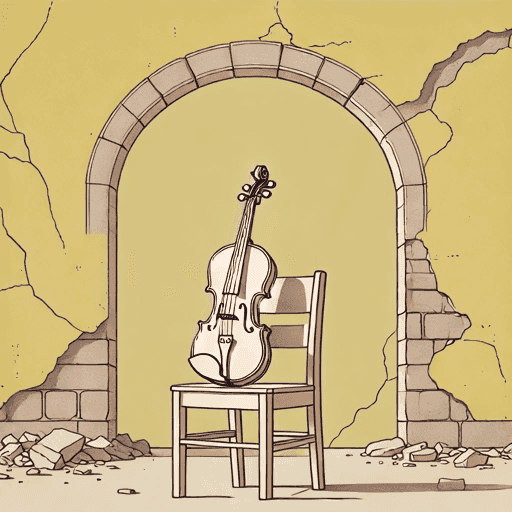
Marie Quinn’s husband, Adam Quinn, is a secondary protagonist. Unlike Marie, Adam isn’t directly involved in the Unknown Organization. He works as a concert violinist, touring countries with the New English Symphony Orchestra. When Marie dies in the middle of the novel, Adam must complete her work and free the world from U-3125’s dominion by using the Irreality Amplifier. Though Marie returns in the novel’s final chapters in an abstract form to defeat U-3125, she manages to do so only through Adam, who carries the memories that allow her to manifest in ideatic space.
Adam’s character arc centers on his understanding of Marie’s relationship with her work. Adam never openly resents Marie’s discretion because he understands that the nature of her work requires it. The novel suggests that Marie does share some aspects of her work with Adam, including her symbiotic relationship with U-4987, which they both call “Sunshine.” Adam similarly extends care to Marie when she’s home, functioning as an important ally during her leadership of the Antimemetics Division. However, when Sunshine consumes Marie’s memories of their relationship, Adam appeals to Marie to restore those memories, a choice she ultimately declines. Adam expresses his fear of losing Marie forever when he asks her what she plans to do if she loses the war. This effectively establishes Marie’s personal stakes in the conflict.
The novel revisits Adam in Part 3, revealing that he has survived U-3125’s takeover of the world. His listlessness reflects his sense that something is wrong with the world he inhabits, including his instinctive awareness of Marie’s absence. Though Adam doesn’t recognize Marie upon finding her corpse, he comes to trust in the memories of their relationship once Sunshine shares them with him. This culminates in the moment of vulnerability he experiences while recording a statement on the war-room laptop in the fourth chapter of Part 3, recalling how Marie saved his life the first time they met.
When Adam reunites with Marie at the novel’s end, he acknowledges that her gambit to sacrifice their relationship was necessary to save the world. Marie likewise acknowledges that she was unwilling to let her work affect her personal life. In this case, she couldn’t avoid it because Adam’s intimate knowledge made him the only person who could bring her memory to the amplifier after her death. Adam’s final memory of Marie is her singing, which references a part of her personality outside of her work. This illustrates that Marie was much more than her role as Antimemetics Chief, and that Adam chooses to hold onto this part of her after his memories have been restored.
U-3125/The escapee/Va
The novel’s central antagonist is the Unknown designated U-3125. The novel refers to it by several names, including “the escapee,” which Andrew Hilton uses to introduce it in the third chapter of Part 1, and an ideogram pronounced “Va,” which the novel reveals in the early chapters of Part 3. The absence of a definitive identity for U-3125 reflects its nature as a complex abstract concept. Were U-3125 tied to a definitive name and identity, it would signal this Unknown’s capacity to be understood. Instead, U-3125 constantly avoids attempts to be known, becoming hostile as soon as someone grasps its existence.
The novel suggests that U-3125 represents the ideal related to fear and cynicism. In the sixth chapter of Part 3, Quinn confronts U-3125 and observes its capacity to corrupt all ideas into “the worst version of itself” (268), adding, “It takes joy and turns it into vindictive glee; it takes self-reliance and turns it into solipsistic psychosis; it turns love into smothering assault, pride into humiliation, families into traps, safety into paranoia, peace into discontent” (268). The countermeme WILD LIGHT, which Quinn embodies and which represents fearlessness, overcomes U-3125, suggesting that U-3125 gains power by weaponizing people’s worst thoughts before they can discover better ways of thinking about the world around them.
Supporting this characterization of U-3125 is its visualization in Part 3. It appears as a gigantic eye that sits on the horizon, turning the world into a panopticon. Its presence blocks out the sun, creating the illusion that day and night no longer exist. This creates the impression that U-3125 lives in a constant state of paranoia, watching out for people who resist its dominion. When referred to by the name “Va,” U-3125 forces humanity to operate as a hive mind, all sharing the same thought and lending their bodies to the fulfillment of the same purpose. This is the antithesis to the ideals that the Organization represents, as humanity lives without freedom and therefore in a perpetual state of fear.
Simon Lee
The minor protagonist Simon Lee leads the action in the second chapter of Part 1. He helps broaden the novel’s scope by introducing the work that other Antimemetics Division staff members do in support of Quinn’s objectives. Lee’s natural curiosity defines him, leading him to master different fields of knowledge. This makes him an attractive target to the Unknown, which uses the name Adrian Gage, since Gage preys on knowledge, systematically erasing Lee’s skills as he closes in on him.
Lee’s confrontation with Gage introduces the idea of instinctive or implicit knowledge, which is central to the resolution of the novel’s conflict. Though Lee is led to believe that he’s a junior researcher on his first day at work, the memory encoded in his reflexes allows him to overcome Gage’s exploitation of his mind. These reflexes enable him to absorb the research compiled by Gage’s past targets and then devise a solution that effectively defeats Gage. In a debriefing session, Quinn affirms Lee by emphasizing the importance of his implicit knowledge, which he has carried with him since his first real day at the Organization.
Andrew Hilton/Red
Andrew Hilton is a minor character whom the novel introduces as Quinn’s former mentor and the founder of the Antimemetics Division. He provides the crucial exposition that gives rise to the novel’s overarching conflict with U-3125. He also introduces the cycle of death and rebirth that foreshadows the fate of the Division while also laying the foundations for Quinn’s eventual victory in the antimemetic war.
Hilton undergoes a reverse aging process in the third chapter of Part 1, which is intended to kill him, per his agreement with the Organization. This mirrors Quinn’s self-sacrificing tendencies, suggesting that she learned this behavioral pattern from Hilton himself. As Hilton regresses in age, however, he fails to maintain the safeguards against U-3125, allowing it to take over his mind and control him. From then on, the permanently young body of Hilton is a minor antagonist and minion to U-3125. He reappears as the rider of the pillar of spiders that kills Oli Morgan in the first chapter of Part 2. In addition, he defeats Memetics operative James Bess in the sixth chapter of Part 2, after Bess tries to neutralize him and his cult operations in Ojai. The same gunshot wounds that Quinn fires at Hilton during his first appearance define him as Red later in the novel. When Adam and Sunshine defeat Red in the fourth chapter of Part 3, Red possesses the same wounds, denoting that he and Hilton are the same.

Unlock analysis of every major character
Get a detailed breakdown of each character’s role, motivations, and development.
- Explore in-depth profiles for every important character
- Trace character arcs, turning points, and relationships
- Connect characters to key themes and plot points