There Is No Devil
44 pages • 1-hour read
Sophie LarkThere Is No Devil
A modern alternative to SparkNotes and CliffsNotes, SuperSummary offers high-quality Study Guides with detailed chapter summaries and analysis of major themes, characters, and more.
Character Analysis
Content Warning: This section of the guide includes discussion of death, death by suicide, graphic violence, sexual violence, child abuse, physical abuse, emotional abuse, and gender discrimination.
Mara Eldritch
As the female protagonist of the novel, Mara is a dynamic and round character whose arc drives much of the narrative. A survivor of childhood abuse, the adult Mara embodies a fierce independence born from a lifetime of fending for herself. This independence is, however, coupled with a deep-seated vulnerability and a desire for the safety and protection she has never known. These internal emotions, conflicts and motivations are revealed through the alternating chapters told from her fist-person perspective. Her character arc centers on the reconciliation of these conflicting needs as she navigates her relationship with Cole Blackwell and the looming threat of Alastor Shaw, most starkly illustrated through her changing relationship with violence and conventional moral codes. Her initial efforts to suppress her anger are tested and ultimately dismantled through her experiences with Cole and Shaw, leading her to accept and eventually participate in acts of lethal vengeance. The novel’s final chapters signal her full embrace of an alternative, brutal moral code where personal retribution overrides compliance with socio-legal norms.
Mara’s role draws on the traditional literary figure of the ingenue who is drawn into a dependency on an older, powerful man who seeks to shape and control her. While Mara recognizes the dangers of Cole’s obsessive need for control, her interior monologue suggests that this dynamic paradoxically offers her the sense of security that she has never experienced before and therefore longs for. Cole’s desire to manage every aspect of her life, from her clothing to her actions, is a form of infantilization, which the novel suggests Mara explores as a substitute for the safe structures and guidance that were missing from her childhood. Gradually, however, the novel shows that Cole and Mara reach a more equal partnership that, while still obsessional and based on power-play, reflects her character’s growth toward increased agency and self-esteem.
Mara’s identity as an artist is central to her characterization, serving as the primary vehicle through which she processes past trauma. Her creative evolution parallels her psychological one. Before meeting Cole, her art was a means of escape, but under his influence, it becomes a tool for emotional processing. He encourages her to embrace her personal history as her “product,” leading her to create autobiographical works that externalize her pain, like The Two Maras and The Burial. Mara’s creative work is shown as a form of catharsis, allowing her to frame and control memories that once held power over her. The growing success of her art career is both figuratively expressive and symbolic of her character’s emotional growth.
Cole Blackwell
Cole functions is the novel’s second protagonist and Mara’s male partner, following the dark-romance archetype of the antihero. Cole is a man leading a double life: He is a meticulous and celebrated artist who is also a cold, methodical serial killer. In his first-person chapters, the narrative shows that his psychology is rooted in a traumatic childhood, losing his mother to suicide, and experiencing neglect and abuse from his father and uncle. This upbringing forged him into a solitary, emotionally detached individual who believes in absolute control as the only means of ensuring safety and order. His character arc is shaped by Mara’s influence, challenging his isolated existence and forcing him to embrace a level of emotional vulnerability that he has long suppressed.
Cole’s worldview is predicated on a zero-sum survivalist belief that violence is a rational and necessary tool for correcting imbalances and eliminating threats. He has killed 14 men prior to the novel’s events, and each murder was a calculated act to, in his view, right a wrong or remove an obstacle. He explains his philosophy to Mara, framing it as a pragmatic approach to a flawed world, almost as self-defense: “There are two ways: Shaw dies, or we do” (11). Cole also uses the fear of Shaw to bind Mara to him, framing himself as her only protector.
Cole serves as a dark mentor to Mara, shown most unsettlingly through his paternalistic application of violence toward her to “help” her, such as when chokes her in Chapter 7 and makes her watch his video of Randall’s torture and murder in Chapter 15. His relationship with Mara becomes his ultimate artistic project, drawing on dark literary figures of mentorship and control, such as Pygmalion or Svengali. He seeks to shape and refine her, stating, “A diamond can’t shine until it’s cut” (6). While this mentorship is undeniably a form of control, it is also what enables Mara’s artistic and personal growth. He is the first person to recognize and champion her talent, pushing her toward success. This dynamic makes him a deeply complicated figure whose actions, however dark, are presented as instrumental to Mara’s increased empowerment. His character remains morally gray, as he is a killer who paradoxically becomes a source of safety, love, and liberation for Mara.
Alastor Shaw
Shaw is the novel’s primary antagonist and is a static character who serves as a foil to Cole. Both men are successful artists and killers, but they operate from fundamentally different psychological motivations, making Shaw a form of alter-ego to Cole. Where Cole’s violence is cold, controlled, and methodical, Shaw’s is driven by a euphoric, sadistic rage. Shaw remains unchanged throughout the narrative and is a figure of pure malevolence who delights in cruelty and whose ultimate goal is to assert his superiority over Cole by killing Mara.
Shaw’s antagonism is deeply rooted in his history with Cole, and his actions are consistently framed as provocations aimed at Cole. He abducts Mara specifically because he perceives Cole’s interest in her, seeking to prove that Cole is just as susceptible to impulsive, “undisciplined” violence as he is. He taunts Cole about his changing nature, mocking his “pretensions of discipline and stability” now that Mara is in his life (91). Shaw’s violent interest in Mara is only as a pawn to expose and dominate Cole, making his attitude toward her an extreme form of objectification and misogyny. This is further reflected in his behavior toward women in general, especially his female victims; meanwhile, Cole, while violent and sexually obsessive, “only” kills men. Shaw’s art, characterized by chaotic and brightly colored installations like his Technicolor spiderweb, is a manifestation of this inner state. Cole notes that Shaw’s vibrant canvases reflect “the energy [Shaw] feels when he brutalizes a girl, ripping her soul from her body in wild, erotic abandon” (198). This lust for violence is intertwined with an insatiable need for public recognition and dominance.
Randall Pratt and Tori Eldritch
Randall and Tori are antagonists who characterize the abuse and neglect of Mara’s upbringing. Though they are flat, static characters, they are essential to her backstory and character arc. Both are caricature-like corruptions of parental figures, without any redeeming qualities. This helps to support the nightmarish characterization of Mara’s childhood and also to assist the novel’s ambiguous moral presentation of their murders by Mara and Cole as methods of personal justice.
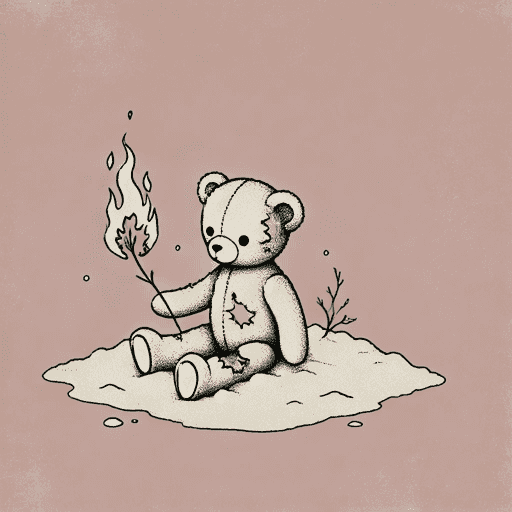
Randall, Mara’s stepfather, embodies negative male entitlement, as he uses both Mara and her mother for his gratification and comfort, whether sexually, domestically, or through emotional abuse. His abuse of Mara was a means of asserting control in a life where he felt his superiority to be threatened: His actions, such as forcing Mara to kneel for hours or burning her beloved teddy bear, were acts of calculated sadism intended to regain a sense of control and power. Tori, Mara’s mother, was and is emotionally and psychologically abusive toward Mara, as well as neglectful. Consumed by jealousy and resentment, she has systematically sabotaged Mara’s self-esteem and ambitions, most notably by destroying her art-school portfolio. Her stream of hateful emails to adult Mara and her attempts to discredit her publicly reveal a woman who cannot tolerate her daughter’s success or independence. Together, Randall and Tori created a home environment devoid of love or safety, establishing the psychological wounds that have made Mara simultaneously crave independence and seek the extreme protection that Cole offers. Their ultimate demise at the hands of Cole and Mara, respectively, provides a violent and cathartic resolution to Mara’s past, representing her final, brutal break from the cycle of victimhood.
Officer Hawks
Hawks is a minor character who represents the failures of the conventional justice system in the novel. He is a diligent and perceptive detective, correctly suspecting Cole’s involvement in criminal activities. However, his focus is misplaced; he pursues Cole relentlessly while the true serial killer, Shaw, continues his rampage. This misdirection suggests the inadequacy of a legal system bound by rules and bureaucracy in catching brilliant and ruthless criminals like Cole and Shaw. This serves to justify the protagonists’ turn to extralegal violence, reinforcing the novel’s central idea that true justice must be seized by personal, violent means.
Sonia
Sonia is a supporting character who functions as Cole’s loyal and highly competent assistant. As a flat and static character, her primary role is to provide insight into Cole’s world and act as an ally to Mara. Her backstory, in which Cole murdered her abusive ex-husband to solve her custody battle, offers an early and crucial example of Cole’s use of violence as a “very generous” act. This establishes Cole’s pattern of using murder as a tool to help those he values, albeit for his own convenience, most especially as a paternalistically protective mode toward women. Sonia’s unwavering loyalty and respect for Cole, despite her awareness of his dangerous nature, helps to humanize him in the novel’s early chapters. Sonia is also a supportive figure for Mara, guiding her through the complexities of the art world and offering her a model of female competence and power.

Unlock analysis of every major character
Get a detailed breakdown of each character’s role, motivations, and development.
- Explore in-depth profiles for every important character
- Trace character arcs, turning points, and relationships
- Connect characters to key themes and plot points