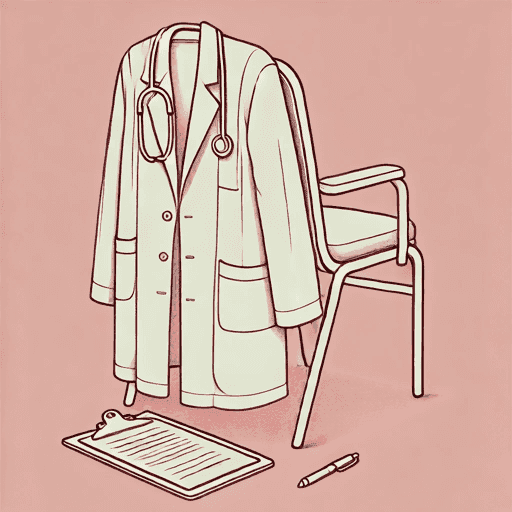
This Is Going to Hurt: Secret Diaries of a Junior Doctor
62 pages • 2-hour read
Adam KayThis Is Going to Hurt: Secret Diaries of a Junior Doctor
A modern alternative to SparkNotes and CliffsNotes, SuperSummary offers high-quality Study Guides with detailed chapter summaries and analysis of major themes, characters, and more.
Introduction-Chapter 2Chapter Summaries & Analyses
Introduction Summary
Content Warning: This section of the guide includes discussion of illness and death, addiction, and suicidal ideation.
In 2016, six years after leaving the medical profession, Adam Kay discovered the diaries he kept as a junior doctor. At the time, politicians in the UK were criticizing junior doctors for striking due to contractual changes. The author hoped that publishing his diaries would give the public an insight into the extreme stress that junior doctors experience.
Chapter 1 Summary: “House Officer”
Kay came from a family of doctors. When he was 16, he chose the A levels required to study medicine without much thought. He explains that the professional hierarchy of doctors is “House Officer, senior House Officer (SHO), registrar, senior registrar, consultant” (4). All doctors are categorized as “junior” until they become consultants. After six years studying at Imperial College, London, Kay became a House Officer. His day shifts involved following senior doctors on the wards and completing numerous administrative tasks. During night shifts, however, he was in charge of the inpatients in the wards while the senior doctors handled ER patients. At these times, Kay and other junior doctors faced continual, challenging emergencies.
Tuesday, 3 August 2004 - Sunday, 17 October 2004
On Kay’s first day at work, he discovered that the email address assigned to him was incorrect, spelling his name as “atom.kay.” Over lunch, he and his fellow junior doctors laughed over patients’ “nonsense ‘symptoms,’” such as itchy teeth. However, no one laughed when junior doctor Seamus described a patient who claimed to be sweating on only one side of his face. Seamus’s colleagues explained this was a symptom of Horner’s syndrome, likely suggesting a lung tumor, and he hurried away to call the patient back.
While Kay was examining a patient, the patient unexpectedly projectile vomited a fountain of blood from his mouth. Drenched in blood, Kay called for the registrar, Hugo. Hugo diagnosed a ruptured esophageal vein and tried to insert a tube down the patient’s throat to stop the bleeding. However, by the time he got the tube in place, the patient was dead.
Tuesday, 9 November 2004 - Monday, 31 January 2005
The European Working-Time Directive stated that no employee should work longer than a 48-hour week. As the junior doctors’ hours far exceeded this, Kay and his colleagues were asked to opt out of the directive. Kay rarely saw his partner, whom he calls “H” in the memoir, due to his long work hours. One evening, he visited a pizza restaurant with H and some friends. When the beeper buzzed to let them know their pizza was ready, Kay jumped to his feet thinking it was his “hospital bleep” and that he needed to see a patient.
Kay felt like a superhero when he saved a life for the first time. He was moved to surgery after six months at the hospital, and he witnessed his “first degloving injury” (16): The 18-year-old patient had torn the skin from his penis while sliding down a lamppost drunk.
Monday, 11 April 2005 - Thursday, 16 June 2005
Patient “MJ” had acute pancreatitis, exacerbated by alcohol addiction. MJ was unhoused, so Kay assured him he could safely recuperate at the hospital for a few nights. However, MJ argued that he was likely to catch a bacterial infection as hospitals were notoriously filthy. Reminding MJ that alcohol made pancreatitis worse, Kay asked him to stop consuming the hospital’s alcogel. MJ observed that the new alcogel formula tasted unpleasant, saying he preferred sucking the sanitizing wipes. Soon afterward, MJ discharged himself.
Another patient threatened to break Kay’s legs when he learned that he must wait a week for an MRI scan. Kay reflected that this injury would at least mean time off work and considered finding a baseball bat to hand to the man.
In the Accident and Emergency Department (A&E), Kay and his colleagues often had to remove surprising objects from patients’ rectums. Most patients claimed they had fallen on the objects concerned. Listening to a patient’s story regarding a remote control, Kay believed it could be true. However, when Kay removed the remote control, he saw that it had a condom on it.
Saturday, 25 June 2005 - Friday, 29 July 2005
Kay felt uncomfortable confirming a patient’s death while the patient’s wife was in the room. The process involved standing motionless while listening for lung or heart sounds with a stethoscope. Eventually, the patient’s wife asked if Kay was okay, and he was forced to confirm the death.
Kay couldn’t attend his best friend Ron’s stag party because the doctor he had swapped shifts with claimed childcare issues. Feeling guilty, Kay sent a bottle of whisky to Ron to apologize. He also booked locum shifts to pay for the weekend he could not attend.
When a major incident was declared after terrorist attacks in London, Kay was asked to clear the wards of patients whose conditions were not life-threatening. Ultimately, the hospital did not receive any casualties, and Kay enjoyed one of his quietest shifts in a hospital with no patients.
Toward the end of his first year as a House Officer, Kay experienced his busiest night shift. As the only doctor on the wards, he had to prioritize a series of urgent cases. At the end of the shift, a nurse messaged to acknowledge his good work. Unaccustomed to professional compliments, he accidentally replied, “Love you, bye” (29), which was his standard sign-off to H.
Chapter 2 Summary: “Senior House Officer—Post One”
In August 2005, Kay progressed to senior House Officer (SHO), a promotion that occurs automatically after 12 months as a House Officer. On becoming SHOs, doctors must choose to either go into general practice or specialize in an area of hospital medicine. Kay chose obstetrics and gynecology, reasoning that treating fertility and delivering babies must be among the most rewarding specialties.
Monday, 8 August 2005 - Wednesday, 16 November 2005
In the labor ward, Kay assessed a patient who had delivered a healthy baby but was feeling unwell. Realizing the woman was hemorrhaging liters of blood, he hit the emergency buzzer while trying to reassure the patient. The patient recovered after surgery and a blood transfusion. Covered in blood for the third time that week, Kay had no clean boxer shorts to change into. He also realized the woman’s blood had soaked through to his groin, proving a potential HIV risk.
Kay checked on a patient after a House Officer alerted him that the woman was not passing urine. He immediately realized that the patient’s catheter was trapped under the bed wheel. Due to the blockage, the patient had a bladder “the size of a space hopper” (35). On another occasion, Kay visited an elderly patient whom a physiotherapist had assessed as “too drowsy to assess” (37). He discovered that the patient was dead.
Tuesday, 22 November 2005 - Sunday, 25 December 2005
Kay performed his first cesarean section under the supervision of a registrar, Ernie. The surgery took longer than average, and Ernie noted that Kay’s incision was “on the wonk” (38). However, the registrar told the patient that the unusual angle was necessary to access the baby.
Kay was woken at 2 a.m. to review a disorientated patient. Convinced the patient was hypoglycemic, he sent a nurse to look for a glucose monitor. Meanwhile, he gave the patient some orange squash that was kept on the ward for such emergencies. Kay was puzzled when the patient did not improve until a healthcare assistant pointed out that the orange squash was sugar-free. A nurse apologized for the mistake, and the patient recovered after eating chocolate.
On Christmas morning, Kay was scheduled to work. Waking to a phone call from the registrar asking where he was, he realized he was in his car in the hospital parking lot. He had fallen asleep there after his shift the previous night, missing several calls from H.
Friday, 27 January 2006 - Tuesday, 20 June 2006
Kay regularly visited Baby L in the Special Care Baby Unit before going home. Baby L was delivered prematurely at 26 weeks and had progressed from “a tiny scrap of a thing” (46) to a healthy baby, well enough to leave the hospital. Kay bought a card for the parents and defied hospital protocol by asking for occasional pictures of Baby L.
Signing letters he had recorded on a Dictaphone, Kay struggled to make sense of one that described seeing patient XA “with her husband, Sam, Esther Sugar and their two children” (47). The hospital’s secretaries previously typed doctors’ letters. However, two months earlier, all medical secretaries had been made redundant in a cost-cutting exercise. From then on, Dictaphone recordings were sent abroad to be transcribed. Listening to his original audio, Kay realized he had dictated “her husband Sam (S for sugar)” (48). A few months later, the hospital computer system was upgraded, slowing down all IT-related tasks.
Kay admitted a woman who was complaining of severe pain after a Medical Termination of Pregnancy. However, the registrar, Ernie, insisted that Kay should send her home. Shortly afterward, Kay assisted Ernie as he performed emergency surgery on the same patient to remove an ectopic pregnancy. Ernie did not apologize for his mistake.
While on call at 2 a.m., Kay saw a Facebook post by a friend’s younger brother, Simon, expressing suicidal intentions. Kay sent Simon his number, urging him to call, and spoke to him for two hours. Finally, he talked Simon into a better frame of mind.
Kay checked on Patient CR, whom he had admitted from the A&E department a week earlier with a suspected ovarian mass. The patient cried as she told Kay she had only a few months to live, describing how she would miss her son’s qualification from medical school and her daughter’s marriage. Kay spent two hours with CR, realizing he was likely the only person to whom she had admitted her true feelings. On the way home, Kay called his mother to say he loved her.
Introduction-Chapter 2 Analysis
In the first chapter, Kay describes his early experiences as a junior doctor and establishes the structure of this memoir. He provides an introduction to each chapter, followed by a collection of diary entries with footnotes. The contextual information provided, in addition to the diary entries, ensures that the medical terminology of the memoir is accessible to general readers, which is a crucial factor in the author’s aim to convey his experiences to the public.
Kay’s memoir joins a tradition of medical memoirs, such as When Breath Becomes Air by Paul Kalanithi and The Man Who Mistook His Wife for a Hat by Oliver Sacks. Kay adopts the standard practice of using pseudonyms (in the form of initials) to protect the identity of his patients and also his partner, “H.” This is Going to Hurt’s comedic writing style distinguishes it from other memoirs in the genre. Kay relates absurd and often grotesque incidents in a wry, humorous tone. This comedic voice often extends even to descriptions of stressful incidents, such as the patient whose esophagus ruptured. Kay conveys his sense of impotence at that moment via a list of absurd solutions to the emergency: “Start looking for the patient’s stopcock? Shove loads of kitchen roll down his throat? Float some basil in it and declare it gazpacho?” (10). Juxtaposing horrific situations with comedy emerges as Kay’s way of articulating the almost inexpressible stress and trauma of working as a junior doctor. He also emphasizes how he and other junior doctors shared comedic anecdotes, such as discussing patients’ “nonsense symptoms.” He illustrates how laughter creates camaraderie and becomes a vital coping mechanism in the face of the challenges of their work. Kay’s description of the shift from levity to gravity as Seamus realized he had failed to diagnose Horner’s syndrome emphasizes the serious issues that underlie these brief moments of release.
Kay conveys the unique rewards of a medical career, describing how he felt like a “superhero” after saving a life for the first time. However, as the memoir begins with the information that Kay resigned from his job in 2010, it builds toward explaining his ultimate disillusionment with the profession. The theme of The Personal Toll of Healthcare Work is introduced in these chapters as the author highlights how the role of House Officer combines long working hours and sleep deprivation with a high level of responsibility. Kay uses metaphorical language to capture the intensity of this pressure and how he felt overwhelmed by it. He compares the role to a firefighter “getting called about a new blaze every five minutes” (28). He also conveys the sensation of drowning, stating “It’s sink or swim, and you have to learn how to swim because otherwise a ton of patients sink with you” (6). The strain on Kay’s health and relationships is illustrated in his account of waking up on Christmas Day in the hospital parking lot and seeing numerous missed calls from H. He emphasizes the disregard for doctors’ welfare by the NHS at management level, recounting how they were asked to opt out of the European Working-Time Directive, which aimed to protect the health and safety of workers. Kay says that his pay rate, which was “slightly more than McDonald’s till staff get, though significantly less than a shift supervisor” (30), in no way reflected the immense personal toll of the job.
Throughout these chapters, Kay humanizes healthcare workers for the reader, developing the theme of The Gap Between Public Perceptions of Healthcare and the Reality. He candidly recounts anecdotes of medical staff’s ineptitude, such as the physiotherapist who assesses a dead patient as “drowsy.” He also confesses to his less-than-perfect first attempt at a cesarean section, leaving the patient with an “on the wonk” scar (38). These stories emphasize that, like everyone else, healthcare workers are fallible. While aware that these revelations may shake readers’ confidence in medics, Kay believes that this humanity is a desirable quality in doctors who should ultimately feel compassion for their patients. He says that only his desire to help other people allowed him to endure the demands of being a junior doctor. Kay’s investment in Baby L’s progress and the time he spends with terminal cancer patient CR demonstrate the emotional connections he builds with those he cares for.

Unlock all 62 pages of this Study Guide
Get in-depth, chapter-by-chapter summaries and analysis from our literary experts.
- Grasp challenging concepts with clear, comprehensive explanations
- Revisit key plot points and ideas without rereading the book
- Share impressive insights in classes and book clubs