This Thing Between Us
47 pages • 1-hour read
Gus MorenoThis Thing Between Us
A modern alternative to SparkNotes and CliffsNotes, SuperSummary offers high-quality Study Guides with detailed chapter summaries and analysis of major themes, characters, and more.
Part 2Chapter Summaries & Analyses
Content Warning: This section of the guide includes discussion of death, racism, substance use, animal death, animal cruelty, graphic violence, addiction, and mental illness.
Part 2 Summary
Thiago is driving to Colorado, where he has bought a cabin. He is awed by the scope of the sky on the plains. The clouds make him feel small but not sad, like they divert attention from him. Gradually, his cell signal disappears, rendering his maps app nonfunctional. He misses a turn for a highway that he thinks he’s supposed to take and encounters an odd sign that reads, “Oasis.” He pulls off and drives five miles before reaching a diner. He worries that it could be a place that’s hostile to people of color, but he needs directions. He sees a worker inside wearing a paper hat and apron. The man’s protruding eyes and gaunt appearance make Thiago uneasy, but he tells Thiago how to reach Colorado. His grill is off, he says, but he offers to make Thiago a milkshake for free.
The cook explains that his father bought the diner when he learned that the highway would go right past it but that the state then changed its plans. Now, the diner can’t compete with places on the interstate. The cook says that it’s enough to make someone feel like the biblical Job and question what one did to deserve such misfortune. Meanwhile, he looks at Thiago with “burning” eyes. He suggests that there might be some “other thing doing all this to you” (94), something “evil, all-powerful.” When Thiago asks why something would do all that, the man pours the milkshake and says, “Maybe this thing hates where it is […]. Maybe you got something he wants, and the only way to get it is if you willingly give it up. So maybe he’s gonna have to trick you” (94). Thiago asks the man why the thing would go to all this trouble if it could just take a person, and the man says that a body “freely given” would survive better than a body taken.
Thiago leaves, and as he drives, he suddenly sees something moving low to the ground. He brakes hard, glancing into his rearview mirror. He sees the cook in the red glow of his brake lights, crawling on the road like a spider. Thiago’s foot hits the gas, and he quickly forgets the incident.
Arriving in Boulder, Thiago is impressed by the scenery. Vera’s friends think that he’s giving up, and he says in his narration that they’re right. He tried unsuccessfully to drop the charges against Esteban: That “only happens in the movies” (98). He’s mourning not only Vera’s death but also the death of the person he was with her. Thiago meets a realtor at his cabin. That night, he drinks a bottle of wine the agent gave him and wakes up vomiting and parched, remembering the altitude change. He dreams of a door made of light that opens onto a forest. He tries to reach it, but it recedes. He screams Vera’s name, realizing that “something” is coming to get him and that he just revealed his location. The next morning, he doesn’t recall the dream until he sees a doe; then, he remembers it all at once.
Thiago finds a hardware store and buys an axe to chop wood. Outside the store, a St. Bernard follows him; the dog is friendly and full of energy, and Thiago likes him immediately. The dog doesn’t seem to belong to anyone, so Thiago takes him to the vet. The only shelter is a town over, and if no one comes for the dog, he’ll be euthanized, so Thiago takes him home. He calls the dog Brimley, after Wilford Brimley, and they camp out downstairs. The house feels too big.
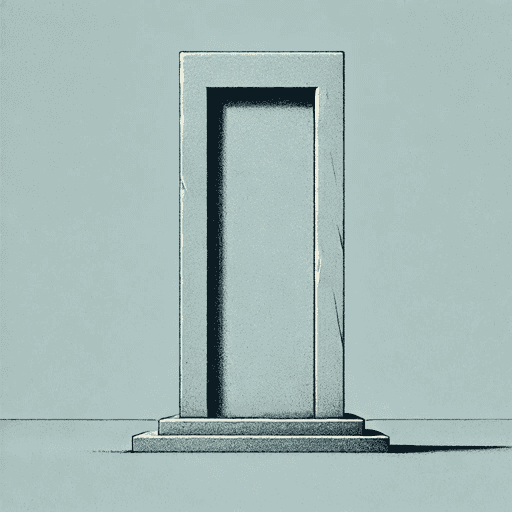
When Thiago lets Brimley outside, the dog takes off, thinking that they’re playing a game. As he chases the dog, Thiago feels like he’s letting down the vet, Dr. Jacobson, just like he let down Diane by failing to protect Vera. After he finds Brimley, they begin to return to the cabin but encounter a massive stone slab, like a wall. Thiago’s intuition warns him away from it: It looks like a giant door, and it inspires the same dread that the condo noises and the Itza did. When they get back to the cabin, Thiago realizes that he spent 10 minutes not thinking of Vera, which makes him feel guilty; he fears losing her again when his memory fades.
Three days later, Diane calls. She has to go back to work soon; it’s been four months since Vera’s death. Thiago invites Diane to visit, drinking whiskey straight from the bottle as they talk. Meanwhile, he’s still thinking about the wall in the woods. Brimley’s presence helps, but it also hurts because Vera will never know him. He buys chicken wire to circle the backyard and a rope to tie Brimley’s collar to the deck. As he marks off the lawn’s perimeter, he notes several mounds in the yard, each one covered with rocks that were clearly placed there intentionally. He inspects one mound and finds what looks like a sprinkler head. Suddenly, he hears a pop and sees something spray out of one sprinkler, coating Brimley’s face in orange powder. The dog shakes his head, drops, and begins convulsing. Thiago rushes him to Dr. Jacobson, but Brimley dies. The vet thinks that the dog triggered a cyanide bomb planted by the Department of Agriculture to keep wolves away. The vet says that he’d sue, but Thiago is uninterested, “tired of getting money in exchange for loved ones” (128).
Thiago goes to the hardware store to get supplies to bury Brimley. When the clerk sees Thiago’s tears, he realizes what happened and gathers what Thiago needs to dig into the frozen ground. Back at the cabin, Thiago grabs the bottle of whiskey before digging a hole and lowering the dog in; he plants a small pine on top, giving Brimley the burial Vera wanted. That night, he falls asleep quickly. He wakes up in the middle of the night and finds the patio doors open to the cold. He looks out into the clearing and sees the stone wall standing at the head of Brimley’s grave. The fir tree he planted is dead, and Thiago decides to destroy the wall. He sprays it with lighter fluid and then tosses a lit match onto it. Next, Thiago gets into his truck and tries to ram the wall, but it disappears, and he hits a tree instead. He knows the whiskey played a role in these decisions. He goes back inside and falls asleep, waking to a dog that looks just like Brimley scratching at the door. The next day, he takes the dog to the vet, who tells Thiago to check the grave to prove to himself that this dog isn’t Brimley.
Back at home, Thiago digs up Brimley’s grave and finds it empty. He watches the new dog, whom he has also named Brimley, eat and play. He pulls a book off the shelf, and there’s a piece of paper stuck between the pages. When he opens to it, he sees the phrase, “Pull me out of the wall” (141), repeated over and over. Thiago calls to Vera and then sees a book fall off the shelf; Thiago’s name is written on every page. He falls to the floor and vomits. He asks where Vera is, and another book falls. Its pages repeat the word “Flux.” If it’s really Vera, he says, he needs proof. The next books he grabs all contain words relevant to their life together.
Since Vera’s death, Thiago has felt that she wasn’t totally gone, but now he fears that he’s losing touch with reality or being tricked. He finds one of Vera’s long hairs in his collar and then looks outside and sees that the wall is back. Suddenly, a huge grave yawns before it, meant for that hair. Thiago stands in front of it and says that he “need[s] more” of Vera than he has. He looks toward the trees and sees a staircase and tiled walls; then, he sees Vera. He runs toward her, but his arms close around empty space as she climbs the steps and then falls, backward, through him. He thinks that there’s no better way to get him to pull her out of the wall than to remind him of all the pain his helplessness and failure caused, but this is what convinces him that the thing communicating with him isn’t Vera. She wouldn’t blame him.
Thiago balls up Vera’s hair and swallows it. He hears Brimley growl, and the dog attacks him. He knows now that it isn’t Brimley at all, and he stabs the dog in the face with his shovel. Thiago runs into the house, and Brimley approaches the patio doors. Thiago tells the bloodied animal to go, and another book slides off the shelf. It says, “I’m sorry, Dave. I’m afraid I can’t do that” (153). Thiago realizes that whatever controlled the Itza is controlling “Not-Brimley,” too. As he uses his air mattress as a shield and makes a run for the truck, he sees Diane pulling up to the cabin in a Lyft. She runs over, and they manage to trap the snarling dog in the truck’s cabin. The Lyft driver calls the police.
Part 2 Analysis
The narrative action and atmosphere become markedly more surreal in Part 2, developing the theme of The Limits of Rational Control. The wall thwarts logical explanation even before it begins disappearing and reappearing, not least because Thiago has an apparent premonition of it in his dream. Likewise, the books that fall off shelves and seemingly answer Thiago’s questions suggest an overarching logic, but not one that Thiago can understand. These hints at something orchestrating events reflect the novel’s debt to cosmic horror, while the introduction of the cook provides the possible agent working behind the scenes. In particular, the description of the cook crawling along the road uses insect-like imagery to evoke the alien intelligence common in the cosmic horror genre.
At the same time, the novel holds open the possibility that the incomprehensible force that is operating behind the scenes may “simply” be grief, exacerbated by addiction and isolation. Thiago drinks heavily throughout this section. When he gets to Colorado, he drinks an entire bottle of wine despite saying, “I don’t even like wine” (104); the implication is that he is drinking simply to be drunk. Further, he mentions the whiskey he drinks directly from the bottle and on a regular basis. He drinks in his living room while he pets Brimley, he drinks when he buries the dog, and he mentions how much he drank when he says that the whiskey influenced his decision to crash his truck into the wall. All of this suggests that he may be experiencing a psychological crisis rather than paranormal phenomena. His isolation introduces further questions about his reliability as a narrator; there is no one to corroborate his account (at least until Diane shows up), and the solitude itself is implied to be unhealthy. Though Thiago insists that it is a relief not to have to pretend to care about people and things, the novel suggests that he does care about Diane, and he comes to care about Brimley and even Dr. Jacobson once he reaches Colorado. At the same time, these new relationships in some ways exacerbate his feelings of grief and isolation because Vera isn’t part of them. The paradoxical qualities of grief—for instance, the way it causes Thiago to simultaneously crave isolation and connection—make it an irrational, inhuman force on par with the monsters of cosmic horror.
The wall is a key symbol in developing The Indescribable Intensity of Grief, as it is consistently associated with death and bereavement: It appears next to Brimley’s grave and then next to the grave into which Thiago feels compelled to place Vera’s hair. Its solidness suggests the weight of grief, its blankness mirrors the difficulty of expressing grief, and its function as a barrier implies the difficulty of moving beyond grief. At the same time, it also functions as a door, hinting that life after loss is possible. The timing of Thiago’s guilt over temporarily “forgetting” Vera is significant in this respect; it occurs just after his first encounter with the wall.
Meanwhile, the movie motif remains central to themes of grief and rationality. During Thiago’s drive to Colorado, the cook who speaks of human suffering refers to The Matrix. He says the movie scared him because it compelled him to wonder, “[H]ow would you ever know you’re in [the matrix]? How would you even know to fight it?” (93). The repeated allusions to The Matrix emphasize the possibility that humans can be deceived by a power that is smarter and stronger, whether that power is grief or the entity seemingly possessing Thiago’s Itza. Later, when Thiago finds the mysterious “wall” in the woods behind his cabin, he says, “Either natural instincts or movie instincts told [him] that this was not a good thing to find” (117), underscoring that there is no logical reason for the stone to be there and thus suggesting that it presages something ominous or even deadly. When Brimley dies in a freak accident, Thiago is struck by the lack of narrative logic: “I wanted to pull out the shooting script to my life and point it to the sky. The bad stuff already happened. We were past that part. This was supposed to be the resolution” (126). Ironically, the dog’s fate and breed, as well as the isolated setting, do follow a narrative pattern; they allude to the horror movie Cujo. Cujo, also a St. Bernard, contracts rabies, transforming him into a bloodthirsty killer that traps the characters in their car on an isolated farm. However, these very similarities (like the motif broadly) suggest that the lines between reality and film are not distinct, which itself defies rational explanation. That Brimley shouldn’t be alive but somehow is further strains any logic to which Thiago still clings.

Unlock all 47 pages of this Study Guide
Get in-depth, chapter-by-chapter summaries and analysis from our literary experts.
- Grasp challenging concepts with clear, comprehensive explanations
- Revisit key plot points and ideas without rereading the book
- Share impressive insights in classes and book clubs