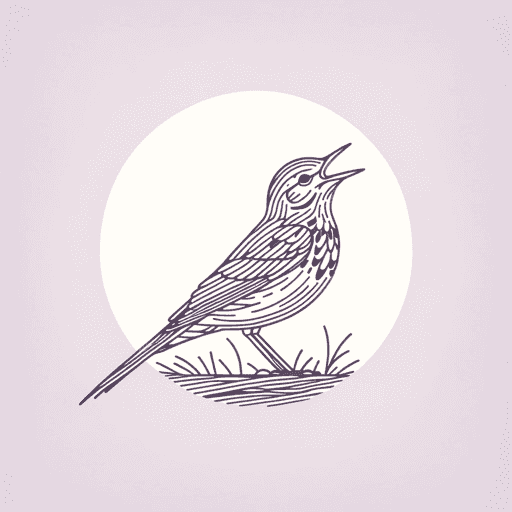
To a Skylark
To a Skylark
A modern alternative to SparkNotes and CliffsNotes, SuperSummary offers high-quality Study Guides with detailed chapter summaries and analysis of major themes, characters, and more.
Themes
The Power of Nature
The central theme in “To a Skylark” is the power of nature. Shelley primarily uses water imagery to convey this concept. There are descriptions of literal rain, such as “vernal showers” (Line 56) that fall on “rain-awakened flowers” (Line 58). Rain is also used to describe music, as seen in the passage “showers a rain of melody” (Line 35). The power of nature increases from gentle showers to more excessive bodies of water. For instance, both the moon and music exude water in excess, or superflux. The “moon rains out her beams, and Heaven is overflowed” (Line 30) and a maiden makes “music sweet as love, which overflows her bower” (Line 45). Both passages use diction related to flooding—“overflow.” This implies the awesome power that belongs to water. However, moonbeams and music are both intangible—that is, they will not cause destruction like a literal flood. Shelley conveys their intangible power by comparing them to a power that can be understood in a tangible, physical way.
The skylark’s song is also described in water-based terms. Humans are unable to match the skylark as it “panted forth a flood of rapture so divine” (Line 65). Terms like “divine” and “Heaven” (Line 30) give the flood a religious power. Heaven is repeated several times in the poem, such as comparing the skylark to a “star of Heaven” (Line 18), and identifying “Heaven, or near it” (Line 3) as the place from where the skylark came. While heaven is a term that usually refers to Christian dogma, floods appear not only in Christianity, but in most types of religious and mythological thought as events caused by a god or gods. In the Bible, the antediluvian period (a period before the flood) is characterized by magic from a modern and mundane world. By making the flood a thing of rapture, Shelley reverses this relationship: The flood of the skylark makes things magical.
The Quest for Joy
“To a Skylark” thematically explores not only an excess, or superflux, of water, but also an excess of joy. The skylark as a “Spirit” (Line 1) or “Sprite” (Line 61) is part of divine nature and has the power to experience joy at a much greater level than humans. Similar to its intangible music, the skylark is “Like an unbodied joy” (Line 15). This reinforces the idea that the bird is more of a spirit one hears rather than a physical creature one can touch. The skylark’s music is described as “Joyous” (Line 60) and “joyance” (Line 76). The repetition is an insistence of the skylark’s excess, or superflux, of joy is something to be admired and emulated.
The human experience Shelley describes is one of pursuing rather than attaining the excessive level of joy that the skylark expresses in its song. Humans do not experience the skylark’s pure joy because their lives are tainted with “love’s sad satiety” (Line 80); “Hate, and pride, and fear” (Line 92); and “pain” (Line 89). The pain of a human existence is contrasted with the “shrill delight” (Line 20) and “sweet thoughts” (Line 62) of the skylark. However, the speaker argues that humans should take on the quest for joy—learn from the skylark—even if they can only learn “half the gladness” (Line 101) of the skylark’s experience.
The Role of the Poet
The humans most influenced by the skylark—and the power of nature—are poets. Shelley examines the role of poetry in “To a Skylark,” asserting that the poet functions as a conduit between nature and other humans. Poetry is deeply associated with song. The skylark offers “profuse strains of unpremeditated art” (Line 5) that come from the heart, echoing the romantic ideal of poetry freely flowing from the poet in an almost ecstatic state. Shelley directly compares the skylark and the poet, describing the poet as “Singing hymns unbidden, / Till the world is wrought / To sympathy with hopes and fears it heeded not” (Lines 38-40). The skylark and poet both serve as messengers, spreading sympathy among humans.
The skylark, however, is far superior to the poet because it is part of the natural world; the poet is meant to study its song—specifically the joy in its song. The skylark has “sweet thoughts” (Line 62) surpassing the joy humans experience because humans’ “sweetest songs are those that tell of saddest thought” (Line 90). The skylark’s music is a purer source of inspiration than any art created by humans. Shelley wants to transfer the skylark’s “skill to poet” (Line 100), or for poets to emulate the natural beauty and joy that exists in a fleeting moment of the bird’s song. The Princeton Encyclopedia of Poetry and Poetics describes this theme as the “idealistic pursuit of evanescent beauty” (p. 422).

Unlock every key theme and why it matters
Get in-depth breakdowns of the book’s main ideas and how they connect and evolve.
- Explore how themes develop throughout the text
- Connect themes to characters, events, and symbols
- Support essays and discussions with thematic evidence