To make a prairie
A modern alternative to SparkNotes and CliffsNotes, SuperSummary offers high-quality Study Guides with detailed chapter summaries and analysis of major themes, characters, and more.
Symbols & Motifs
Prairie
Prairies are habitats and landscapes characterized by their expansive, open spaces that are generally flat and covered in grasses. According to National Geographic,
When people talk about the prairie, they are usually referring to the golden, wheat-covered land in the middle of North America. The Great Plains, in the United States and Canada, has some of the world's most valuable prairies, which grow some of the world’s most important crops (Rutledge, Kim et al. "Prairie." National Geographic, 22 May 2022).
The identification of prairies with North America, specifically with the middle portion of the United States, connects it with American national identity. This national identity also links with the movement of settlers in the early-/mid-1800s westward across the new territories to begin new lives for themselves and their families as part of Manifest Destiny. In this sense, prairies came to represent freedom, opportunity, and the achievement of the overall American Dream. Prairies were the sustenance for these settlers, providing resources they could develop through their perseverance and industriousness. In his article “The Prairie as Perennial Symbol,” Tom Scanlan highlights how prairies on the one hand are “celebrated as the heartland of American democratic vitality and productivity” while on the other hand they have also historically been seen as “barren and boring, a cultural desert” (Scanlan, Tom. "The Prairie as Perennial Symbol." Proceedings of the Twelfth North American Prairie Conference). In her poem, Dickinson leans towards the former, representing prairies as places full of possibilities just waiting to blossom.
Bee
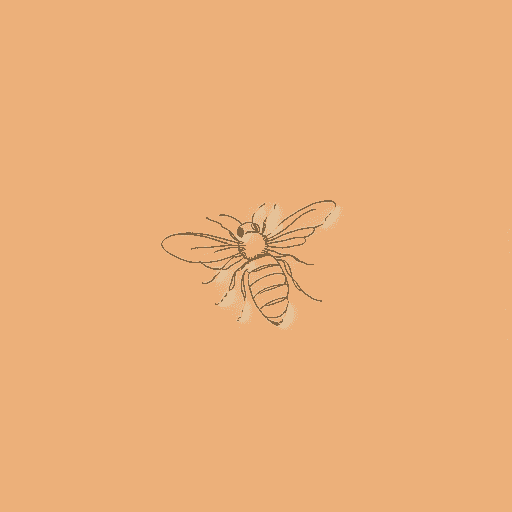
Across time and cultures, bees have represented a number of different attributes. For the Egyptians, bees symbolized royalty and power. For the ancient Greeks, the bee was a symbol of prosperity. In Renaissance paintings, bees were associated with Cupid and therefore with love. With their intricate hive structure and hierarchy, writers throughout the centuries also used the bee to reflect society and various social structures ("Bee Symbolism." History of Honeybees). Some ancient cultures believed that bees could link and travel between the earth and the underworld. Held as sacred by some peoples, bee symbolism spans such subjects as wisdom, rebirth, focus, community, and fertility. In “To make a prairie,” Dickinson draws on a number of these associations. Her bee represents hard work and industry, since only a single bee is required (according to her poem) to create an entire prairie. The bee is a necessary part of the cycle of life, promoting fertility and helping to create new plant life.
Clover
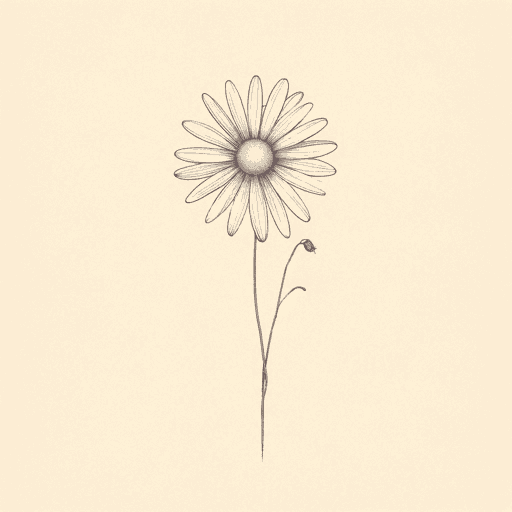
When one hears the word “clover,” one may initially think of the characteristic three-leaf plant representing good luck. This traditional conception of clover was also Christianized, with the three leaves symbolizing the three members of the Trinity: Father, Son, and Holy Spirit. The Latin terms for both white and red clover include the word “Trifolium,” referring to the three leaves. St. Patrick also used the clover as a symbol for Ireland. According to Sue Pike, “The honey bee and the white clover have an intertwined history in this country; Europeans brought both over” (Pike, Sue. "Clover is ‘so much more than a week.’" Seacoastonline, 27 June 2012). Since bees and clover are so inextricable, it is fitting that Dickinson includes them both in her poem together.
Another type of clover, purple prairie clover, is typically found in these Great Plains landscapes. While this clover does not have the three-leaf formation, it does have vibrant purple flowers. The flowers themselves, in the context of Dickinson’s poem, can represent new life, fertility, and joy. The purple of the purple prairie clover is the color of royalty, and the plant provides sustenance to animals in the Great Plains throughout the seasons. Also, from a historical context, “[t]he purple prairie clover (Dalea purpurea) holds a place in American history as one of the plant species collected during the Lewis and Clark Expedition (1804-1806)” (Tucker, Janice. "July: Purple Prairie Clover: Dalea Purpurea." Sante Fe Botanical Garden, 1 July 2018). Whichever clover Dickinson refers to in her poem, their respective symbolism parallels the history of Westward Expansion and Manifest Destiny she invokes as well as the themes of opportunity and optimism.

Unlock the meaning behind every key symbol & motif
See how recurring imagery, objects, and ideas shape the narrative.
- Explore how the author builds meaning through symbolism
- Understand what symbols & motifs represent in the text
- Connect recurring ideas to themes, characters, and events
Related Titles
By Emily Dickinson