To Paradise
To Paradise
A modern alternative to SparkNotes and CliffsNotes, SuperSummary offers high-quality Study Guides with detailed chapter summaries and analysis of major themes, characters, and more.
Summaries & Analyses
Quizzes
NEWReading Tools
Important Quotes
“Was he not also something the house had, if not spawned, then nourished and fed? If he left Washington Square, how would he ever know where he truly was in the world?”
(Book 1, Chapter 2, Page 18)
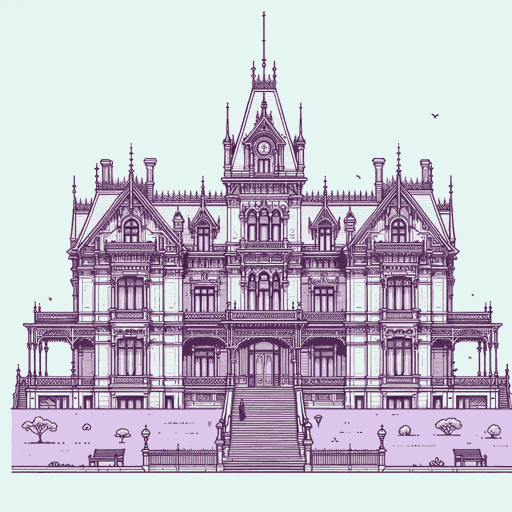
David Bingham is ambivalent toward the mansion in Washington Square, which symbolizes his ambivalence toward his family legacy. David’s language shows how closely he identifies with the house, seeing it as an extension of his self; his language also alternates between the grotesque (“spawned”) and the endearing (“nourished”). David personifies the house as a parental entity that he feels both supported and oppressed by, foreshadowing his central conflict of forming his own independent identity.
“He wondered if he was defective enough so that his grandfather was thinking of him and Charles as belonging on two sides of a ledger: His illnesses for Charles’s lack of refinement.”
(Book 1, Chapter 4, Page 32)
David Bingham speculates about his grandfather’s investment in the match between him and Charles Griffith and fears that he is somehow shameful. David uses a metaphor of a ledger (a tool for recording business transactions) to reveal his sense that his grandfather sees his marriage as purely logical and pragmatic. David is not interested in the marriage to Charles because he associates it with a sense of unworthiness.
“He was a bite of an apple, but Edward Bishop was that apple baked into a pie with a shattery, lardy crust pattered with sugar, and after a taste of that, there was no going back to the other.”
(Book 1, Chapter 4, Page 39)
“He found himself aware that he was having an adventure, and then ashamed at his pride, for, in truth, being a visitor demanded no kind of bravery at all.”
(Book 1, Chapter 5, Page 49)
David is surprised by the modest boardinghouse where Edward lives. David has been so sheltered that he at first sees this as “an adventure,” but he is also self-aware enough to recognize that he is privileged to have a more comfortable life than Edward. The quotation develops David’s character by showing that he is a nuanced and complicated character who has been influenced by his privileged upbringing but is capable of looking beyond it.
“It was as if he had been bewitched and, knowing it, had sought not to fight against it but to surrender, to leave behind the world he thought he knew for another, and all because he wanted to attempt to be not the person he was—but the one he dreamed of being.”
(Book 1, Chapter 5, Page 54)
David’s character develops as he falls in love with Edward. David uses a traditional metaphor of being spellbound or bewitched to convey the depth of his feelings. Very quickly, David’s love spurs him to start imagining new possibilities for himself and his future. David’s love is active, not passive, and prompts an almost total transformation in his vision of who he wants to be.
“In this vision, Washington Square was not a prison, or something to dread—it was his home, their home, and this was their family. The house, he realized, had become his after all—and it had become his because it had become Edward’s, too.”
(Book 1, Chapter 6, Page 66)
David fantasizes about living in the Washington Square mansion with Edward. David is initially ambivalent about growing up and stepping into adulthood, but the love he finds with Edward makes him capable of imagining a happy future. Ironically, David initially imagines Edward joining him in his luxurious life, but he later realizes that he has to give up the life he knows if he wants to be with someone he loves.
“Something about the story upset him, as if it were an echo of another story, a worse story, a story he had heard once but could not, however he tried, recall.”
(Book 1, Chapter 10, Page 90)
David hears a story about how a woman lost her fortune to a faithless lover. David remains insistent that Edward is worthy of his trust, but this quotation shows that he is anxious that Edward might be manipulating him. The quotation hints at David’s sense of foreboding and foreshadows how readers will never know whether Edward betrays David.
“At his feet was a trunk of gold, like something from a fairy tale, and it was his, and a little more than a mile from here was a man who loved him, and together they would travel many more miles, and David would hope that their love would come with them.”
(Book 1, Chapter 19, Page 175)
At the end of David’s narrative, he prepares to say goodbye to his grandfather. David compares himself to someone in a fairy tale to highlight the almost mystical nature of his quest to California. The word “hope” also reveals that David is still not completely certain that he is making the right choice. Nonetheless, he is setting off on a journey, revealing his role as a kind of pioneer or explorer.
“So he would stand here for another moment, the bag leaden in his hand, and then he would take a breath, and then he would make the first step: his first step to a new life; his first step—to paradise.”
(Book 1, Chapter 19, Page 177)
This quotation introduces the convention that marks the end of each narrative in the novel; each character has a vision of achieving a certain kind of paradise. For David, that paradise is a happy, free life in California with Edward.
“He buried it deep in his bag, as if by not reading it he was also making not real whatever the letter said—it was suspended, somewhere between New York and Hawai`i: something that had almost happened, but that he, through not recognizing it, had kept at bay.”
(Book 2, Part 1, Page 191)
Book 2’s David decides to put away the letter he has received from his grandmother and not to read it immediately. The quotation provides insight into David’s character and backstory at a point when not much has been revealed about him. David’s delay here also delays the reader from getting full information about David, building tension. Hiding the letter foreshadows how Charlie’s husband in Book 3 will hide notes and letters from his lover.
“All along he had known that something had been absent from his life, but it wasn’t until he met Charles that he understood that that quality was logic.”
(Book 2, Part 1, Page 201)
David is ambivalent about many things in his relationship because he knows that he and Charles are very different and that Charles wields much more power. However, Charles provides David with something he has always longed for: A reliable, consistent adult who makes sensible decisions. This quotation implies that some of David’s attraction to Charles is rooted in David’s unhappy and unstable childhood caused by his father.
“Preparing to be thirty, much less forty or fifty, was like buying furniture for a house made of sand—who knew when it would be washed away, or when it would start disintegrating, falling apart in chaos?”
(Book 2, Part 1, Page 214)
David and his young, gay friends experience fear and instability during the AIDS epidemic. Because they could get sick and die at seemingly any time, David and his friends live most in the present moment and avoid imagining the future. The metaphor of “buying furniture for a house made of sand” reveals the sense of unstable foundations and alludes to the idea of postponing an adult future.
“It was a noisy time, but he had chosen quiet instead, and although he had been ashamed of his passivity, of his fear, not even shame had been enough to motivate him to seek a greater engagement with the world around him.”
(Book 2, Part 1, Page 223)
This quotation provides an example of a flashforward and retrospective narration. The narrative describes an older David thinking back on his choices as a young gay man during the height of the AIDS epidemic. Looking back, David admits that he did not engage in much activism and quietly accepted his reality instead. This foreshadows how Charlie and Dr. Charles Griffith will behave in Book 3, where they passively accept reality and primarily focus on individual survival.
“What he wouldn’t know until he was much older was that no one was ever free, that to know someone and to love them was to assume the task of remembering, even if that person was still living. No one could escape that duty, and as you aged, you grew to crave that responsibility even as you sometimes resented it.”
(Book 2, Part 1, Page 231)
David feels ambivalent about his relationship with Charles, and his perspective on freedom and relationships gradually changes over time. When he is young, David wants to live without constraints, and that is part of why he is eager to leave home and his family. The quotation reflects themes of legacy, loss, and love; it also shows how David’s initially rigid viewpoints soften over time.
“Now I’m thinking about how I’ll never get out of here, about how my life—my entire life—has been spent in places I can’t escape: Your grandmother’s house. Lipo-wao-nahele. And now here. This island. I could never really leave.”
(Book 2, Part 2, Page 262)
Wika begins his narrative by expressing his regrets about his life. Wika lists places that have been sources of oppression and restriction to him; his comment echoes the resentment that David Bingham felt toward his grandfather’s mansion in Book 1. Wika also thinks of himself very passively and blames external circumstances rather than accepting that he could have made different choices.
“I was Prince Woogawooga, of the Oogaooga, except, instead of running after someone, I was running from him, as if he would pursue me, this man who called himself my subject.”
(Book 2, Part 2, Page 294)
Wika is wandering around New York City after his classmates make racist jokes and mock him. He encounters a Hawaiian man who recognizes Wika as royalty, but Wika is embarrassed and runs away. In the quotation, Wika refers to himself with the fictional, racist name that his classmates made up; this shows that Wika is internalizing the way they denigrate him and his culture. Wika becomes confused about his identity as a Hawaiian and someone with deep cultural history because of how other people disrespect him.
“Soon I would be sick of the terms, as much because I felt accused by them as because I didn’t understand them. All I knew was that a real Hawaiian was something I was not: A real Hawaiian was angrier, poorer, more strident.”
(Book 2, Part 2, Page 315)
Wika grows more conflicted as Edward becomes more strident in his political vision. Ironically, while Wika blindly trusts Edward’s plans and aspirations, he does not actually share many of Edward’s political beliefs. Wika often feels excluded from Edward’s political radicalism because he has mostly lived a privileged and easy life.
“The truth is that I had simply followed someone, and I had surrendered my own life to somebody else, and that, in surrendering mine, I had surrendered yours too.”
(Book 2, Part 2, Page 345)
Wika feels regret when he looks back on his life and the mistakes he has made. Wika is somewhat unique in that many other characters have ambiguous fates, while the narrative makes it clear that Wika made a bad choice when he followed Edward. The quotation shows that Wika is self-aware, but that awareness came too late. Wika also reckons with how his choices impacted his son, demonstrating how characters are interconnected.
“And then I’ll start walking […] I won’t stop, I won’t need to rest, not until I make it there, all the way to you, all the way to paradise.”
(Book 2, Part 2, Page 359)
At the end of Wika’s narrative, he is dying but has a hallucination that he is able to rise out of his bed and begin walking. Wika imagines reuniting with his son, showing the depth of his love for David. Wika imagines the life that David has built for himself as a kind of paradise, which is ironic given that Hawaii is often figured as paradise but has functioned as a kind of prison for Wika.
“Once the population discovers they’ve been lied to, or at the very least kept ignorant, it’ll only lead to mistrust and suspicion, and, therefore, even greater panic. But the government will do anything to delay confronting and correcting the actual problem: Americans’ scientific illiteracy.”
(Book 3, Part 2, Page 401)
Dr. Charles Griffith writes to Peter shortly after he begins his job as a research scientist in Book 3. Charles knows that new viruses will mutate and new pandemics will occur. He correctly predicts that the government will have to make hard choices to manage these outbreaks and points to a key challenge: Most people don’t actually understand how diseases work and thus will be susceptible to false information and manipulation.
“I have never liked it when new things happened, not even when I was a child, and I have never liked it when things aren’t as they’re supposed to be.”
(Book 3, Part 3, Page 433)
Charlie thinks about her desire for safety, calm, and control. She dislikes change and unpredictability because she has lived through so much trauma. Her desire for sameness also reflects how she has adapted to the dystopian environment in which she lives: She has stopped expecting control or hope.
“It’s because of that understandable selfishness, that the government has to involve itself, don’t you see? It’s to keep all the people around her safe, all the people she herself didn’t give a damn about, all the people who’ll lose their children because of her, that they’ve had to intervene.”
(Book 3, Part 4, Page 495)
Dr. Charles Griffith gets into a disagreement with his son and his friends about measures being taken to try to stop the spread of contagious disease. Charles is critical of a woman who was trying to get her baby medical treatment but exposed many others to the virus in the process. He can empathize with the woman’s preoccupation with saving her child, but at this stage, he is focused on what will serve the greater good and keep most people safe.
“I would be once again who I was, a married woman, a lab tech, a person who accepted the way the world I was, who understood that to wish for anything else was useless, because there was nothing I could do, and so it was best not even to try.”
(Book 3, Part 5, Page 546)
Charlie wants to return to how her life was before she encountered David. At the start of her narrative, Charlie is leading a calm and resigned life, even if she is often sad and has nothing to look forward to. David brings a new level of excitement and hope to her life, but also causes her pain after he seems to reject her romantic overtures. Charlie tries to resign herself to her reality, but she has been permanently changed by this relationship.
“That pretty fiction we told ourselves when we were younger, that our friends were our family, as good as our spouses and children, was revealed in that first pandemic to be a lie.”
(Book 3, Part 8, Page 676)
Charles reflects on what he observed about social dynamics during various pandemics and why he is invested in finding a husband for Charlie. Charles believes that the isolation imposed by the pandemic revealed that most people don’t value their friendships that much, and immediate families are much more important. The quotation is proven somewhat ironic because Charlie’s marriage doesn’t prevent her from being lonely, and she forms a deeper social connection with her friend David.
“I lifted my head so I could see who was speaking to me, and where I was going next.”
(Book 3, Part 9, Page 702)
At the end of Charlie’s narrative, the boat she is escaping on is boarded by someone unknown, and she is discovered in her hiding place. It is unknown whether Charlie is successful in her escape attempt. The description of where she is going next refers to Charlie’s unknown fate; she might be going to a new geographic place if she lives, or the place beyond this life if she is killed in her escape attempt.

Unlock every key quote and its meaning
Get 25 quotes with page numbers and clear analysis to help you reference, write, and discuss with confidence.
- Cite quotes accurately with exact page numbers
- Understand what each quote really means
- Strengthen your analysis in essays or discussions