Touch Blue
50 pages • 1-hour read
Cynthia LordTouch Blue
A modern alternative to SparkNotes and CliffsNotes, SuperSummary offers high-quality Study Guides with detailed chapter summaries and analysis of major themes, characters, and more.
Chapters 20-26Chapter Summaries & Analyses
Content Warning: This section of the guide includes discussion of bullying and substance use.
Chapter 20 Summary: “Never Count Your Catch While You’re Fishing, or You Won’t Catch Any More That Day.”
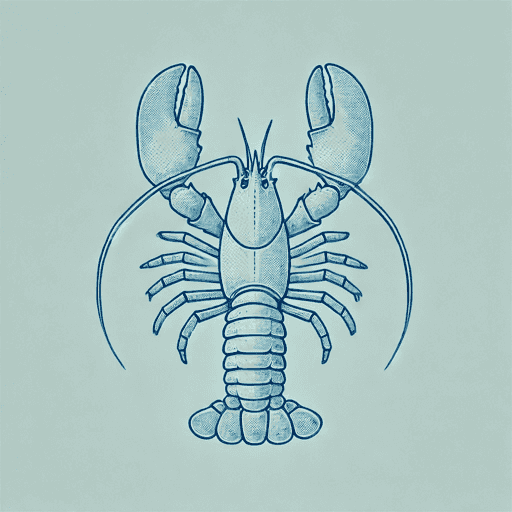
The narrative moves forward to the day before the talent show. Tess’s trap hasn’t caught any adequately sized lobsters in days, but her patience is rewarded when she catches a rare blue lobster. When she explains that the crustacean will likely be put in an aquarium in a city, Aaron is disgusted by the idea of having to “live in a strange place and have people watch you all day” (152). She hopes to sell the lobster for enough money to buy a motor for her boat. An enthusiastic crowd gathers to see Tess’s catch, and Eben stomps off angrily after one look. The blue lobster circles restlessly in its bucket.
Chapter 21 Summary: “An Itch Means a Stranger Is Coming.”
On the morning of the day of the talent show, Tess packs all her good-luck charms and heads downstairs. She’s startled to learn that her mother invited Natalie to attend the performance, and the caseworker expresses her happiness that Aaron is “joining in and becoming a part of things” on the island (156). Mrs. Brooks shares with Natalie that Aaron has been short-tempered with her lately, which Mrs. Brooks sees as a positive sign that the boy trusts her more now.
Tess asks Libby to keep Natalie busy at the talent show so that she won’t notice Ms. Spinney if the other woman comes. Then, she touches her blue sea glass and wishes, “Please let this all work out” (156).
Chapter 22 Summary: “It’s Good Luck to Say ‘Break a Leg’ Before a Performance.”
At the parish hall, Tess looks for Ms. Spinney in the audience but doesn’t see her. She fears that Aaron will be even more determined to run away and see his mother if the woman doesn’t come. The girl’s worries mount when she sees Eben in the crowd. She feels nervous as she and Jenna begin to sing, but she tries to regain the confidence she felt when she was singing with Reverend Beal. Suddenly, she notices Ms. Spinney at the back of the hall.
Chapter 23 Summary: “It’s Unlucky to Give the Last Clap of Applause.”
Tess feels so shocked and frightened when she realizes that Ms. Spinney is there that Jenna has to guide her offstage before her actions raise suspicion. Aaron is the last person to perform, and he grins when he spots his mother in the audience. He plays with more spirit than Tess has ever heard from him, astonishing the audience.
At the end, his mother cries and is the first to give him a standing ovation. Eben stays seated. Mr. Moody congratulates Aaron on his performance, and Mr. Phipps announces that an aquarium in Texas has purchased the blue lobster that Tess caught. Mr. and Mrs. Brooks proudly accept their fellow islanders’ compliments about their talented family. Eben mocks, “Aaron’s not your family […] He’s an orphan” (165). Libby declares that Aaron’s mother is present and points to Ms. Spinney. Realizing what she’s done, the five-year-old apologizes to Tess. As Aaron hurries toward his mother, Mr. Brooks looks at Tess, who is certain she’s in trouble.
Chapter 24 Summary: “When Someone Leaves Your Home, Send Him out by the Same Door He Came In. Otherwise, He’ll Take Your Luck Away With Him.”
The Brooks, the Spinneys, and Natalie gather in the Brooks’s kitchen. Inviting Ms. Spinney to the talent show without the caseworker’s authorization goes against the rules. Ms. Spinney praises Aaron’s musical abilities and tells him that she still has his old toys. He challenges her decision to keep them instead of sending them to him when he moved in with his grandmother.
Ms. Spinney says that not having her son with her is difficult for her, but he accuses her of not trying to become sober so that she can regain custody. She’s unable to describe any of his interests because she hasn’t truly known him for years. Aaron describes how his five-year-old self called 911 when she became unresponsive after drinking: “I tried to get you help, and look what happened! They punished me for it!” (171). He runs to his room.
Ms. Spinney says that she shouldn’t have come, but Mrs. Brooks insists that Aaron deserves answers. Together, Ms. Spinney, Mrs. Brooks, and Natalie go to Aaron’s room. When Mr. Brooks asks Tess to explain herself, she tearfully shares her hope that her foster brother would want to stay with them if his idealized image of his mother were dispelled. She asks if Natalie will relocate Aaron.
Mr. Brooks answers that Tess and Aaron both need to accept that some things are outside of their control and to focus on cultivating intrinsic happiness, even when things don’t turn out the way they want. Mr. Brooks and his daughter listen as Aaron plays a beautiful jazz song on his trumpet. A neighbor asks Mr. Brooks if everything is all right. He answers, “Not yet […] But I hope it will be” (173).
Chapter 25 Summary: “When Beginning a Journey, It’s Unlucky to Look Backward.”
After his mother leaves, Aaron stays in his room. Natalie says that she won’t recommend a new placement for him unless he asks for one. The next morning, Aaron heads to the wharf with Tess and Mr. Brooks but is subdued. Tess goes into Phipps’s Gas and Groceries and scoops her blue lobster into a bucket, much to the surprise of Mr. Phipps, Aaron, and Mr. Brooks.
Reverend Beal offers to hire Aaron as the church organist. Sensing his “longing” to say yes, Tess advocates for her foster brother by saying that the parish hall piano needs tuning. Aaron’s decision to become the church organist gives Tess hope that he wants to stay. When he answers that the school can remain open this way, she urges him to stay because he “can belong in more than one place, and one of [his] places is with [them]” (178). Aaron smiles and carries the heavy bucket for her.
Chapter 26 Summary: “You Make Your Own Luck.”
Aboard the Tess Libby, Tess happily imagines Aaron playing Christmas carols at the island holiday party. She sees Amy’s old house and resolves to write to her again because she wants to hold onto their friendship, even if she is more invested in it than Amy is. She no longer feels guilty for her friendship with Jenna.
Tess cuts the rubber bands off the blue lobster’s claws and hands the crustacean to Aaron so that he can release it. Next, she drops her entire collection of lucky charms into the sea. Although she feels a sense of loss, she knows that she is ready to let go of them. Tess explains that they released the lobster in a different spot than where she caught it but that it “can be a home for him, if he’ll let it be” (184).
Aaron says that he’d like to bring some flowers to the unknown sailor on Dead Man’s Island once her skiff is ready, and she agrees. Mr. Brooks allows Tess to drive the boat for the very first time, saying that it’s an important skill for a fisherman to develop. When some of the fishermen tease Tess about her driving over the radio, Aaron teases back, threatening to use his new position as organist to extend church services if they make fun of his foster sister. Feeling as though her “heart [is] near to bursting” (186), Tess sends the boat racing toward the horizon.
Chapters 20-26 Analysis
The novel’s final section affirms The Importance of Trust when Tess and Aaron’s plan is revealed. The protagonist must face how her scheme has hurt her parents’ trust in her, as well as Natalie’s ability to rely on her parents to care for Aaron. The caseworker’s statement that she must be able to “trust that [her] families will act in the best interests of the children in their care” signals that the unauthorized visit could have jeopardized Aaron’s placement with the Brooks (168), which is the opposite of what Tess intended. The narrative also emphasizes the importance of honesty when Mr. Brooks identifies a positive outcome of the pent-up anger that Aaron voices to his mother: “You might have a chance to really get to know each other now, without those feelings standing in the way” (176). By highlighting the necessity of honesty to authentic relationships, the novel shows both the consequences and unexpected advantages of Tess and Aaron’s plan.
The Need for Connection and Belonging shapes the novel’s nuanced but hopeful resolution. Aaron’s love for his mother and her abandonment of him have a lasting impact on his attachments, emphasizing the realism of the novel through the lack of a neat, idealistic ending. As Mr. Brooks explains to Tess in Chapter 24, “We’ll never be all Aaron needs, but that’s okay […] We’re something to him” (173). The protagonist echoes this sentiment when she encourages Aaron to stay on Bethsaida because he “can belong in more than one place, and one of [his] places is with [them]” (179). Tess and the Brooks family support Aaron’s need for belonging and connection by embracing him, even though his heart remains divided. This ending shows Aaron’s journey toward belonging in the family and community as an ongoing process with a hopeful trajectory.
Tess’s growth in these closing chapters empowers her to let go of her superstitions and accept life’s uncertainties, bringing the theme of Superstition as an Attempt to Cope With Life’s Uncertainties to a close. The buildup to the talent show depicts her reliance on superstition as a way to cope with stress and doubt, and she brings her entire collection of lucky charms to the talent show: “If ever there was a day I needed some good luck, it’s today” (155). Chapter 24 marks a turning point for the theme when Tess’s conversation with her father helps her recognize that her adherence to superstitions stems from an unrealistic desire for control; he tells her, “You […] have to let go of thinking ‘I can only be happy if…’ and find a way to carry your happiness inside you” (173). This exchange radically shifts her view on luck, as evidenced by the last chapter’s title: “You Make Your Own Luck” (181). All the prior chapter titles are specific superstitious beliefs that Tess practices in her daily life, but Chapter 26’s title speaks to her new focus on self-efficacy with a new adage, introduced by her mother. Tess’s inner growth is reflected in the symbolic action of throwing her lucky charms into the sea. An essential part of Tess’s coming-of-age journey is learning to accept that some things are beyond her control and to place her confidence in herself rather than in luck.
The blue lobster crystallizes the novel’s themes and shapes the resolution. When the crustacean first appears in Chapter 20, Tess views it as a powerful good-luck charm due to its “brilliant blue” shell and the high price that it will fetch. However, Aaron’s “disgusted” reaction to her plan to sell the animal to an aquarium challenges Tess’s easy interpretation of the lobster’s meaning. At first, she is resentful, commenting, “I can’t believe he’s trying to make this wonderful gift into a guilty thing” (152), but in the novel’s final chapter, the blue lobster evolves from a manifestation of Tess’s superstition into a point of connection between herself and Aaron. Her decision to release the crustacean reflects Aaron’s empathy for the creature and shows her own empathy for her foster brother, illustrating how he has helped her to grow. This development is foreshadowed by Aaron’s earlier concern for the animal and his gentle, compassionate interactions with the small lobster and the mussels. The lobster’s freedom underscores his personal journey to find a place he belongs, intersecting it with Tess’s movement away from superstition, reflecting both characters’ growth and cementing the novel’s happy ending.

Unlock all 50 pages of this Study Guide
Get in-depth, chapter-by-chapter summaries and analysis from our literary experts.
- Grasp challenging concepts with clear, comprehensive explanations
- Revisit key plot points and ideas without rereading the book
- Share impressive insights in classes and book clubs