Touch Blue
50 pages • 1-hour read
Cynthia LordTouch Blue
A modern alternative to SparkNotes and CliffsNotes, SuperSummary offers high-quality Study Guides with detailed chapter summaries and analysis of major themes, characters, and more.
Chapters 6-11Chapter Summaries & Analyses
Content Warning: This section of the guide includes discussion of illness, death, bullying, and addiction.
Chapter 6 Summary: “Never Whistle on a Boat.”
That night, Tess overhears her parents arguing about whether or not they should punish Aaron for hitting Eben. Mrs. Brooks convinces her husband that they shouldn’t show the boy favoritism, and he has a talk with Aaron.
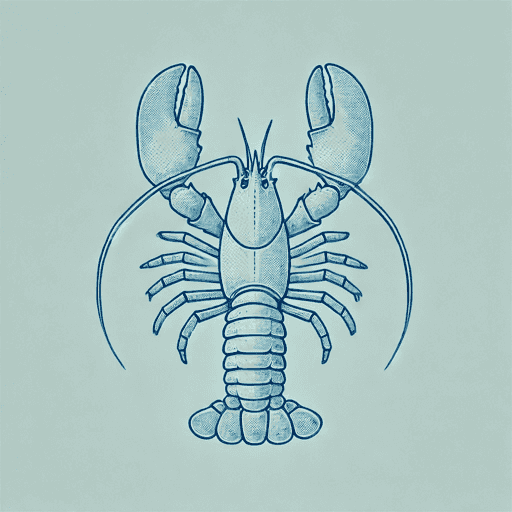
The next morning, Tess wakes up at four o’clock and puts her collection of lucky charms in her jeans pockets, as usual. Although her mother believes that people make their own luck, the girl disagrees and highlights the differences between her own life and Aaron’s as an example. She hopes that Aaron will join her on her father’s lobster boat, the Tess Libby, that morning, but Mr. Brooks says that they should let him rest. He encourages his daughter not to give up on earning the boy’s trust, which strengthens her resolve to keep the letter a secret. She asks about Aaron’s parents, and Mr. Brooks explains that Aaron never knew his biological father and that his biological mother has an alcohol addiction.
Tess admires the view of the bay islands in the early morning and thinks about her dream of becoming a fisherman one day, a dream that her father discourages because it’s “a hard, dangerous way to make a living” (55). Eben interrupts her reverie and says that he’ll get Aaron back for punching him. She urges him to think about the school, but he expresses indifference because his mother has said that she will homeschool him if it closes. Touching her sea glass, Tess wishes that the bully wouldn’t create more trouble for her family.
Chapter 7 Summary: “A Rainbow Means Change Is Coming.”
When Tess tells her father about Eben’s threats, he grows irritated and tells her not to look for trouble. Stung, she thinks about how his life won’t be impacted as much as hers if they have to leave the island because he’ll still be able to fish his usual waters. Mrs. Brooks calls her husband and says that Aaron is on his way to the wharf because it’s been a “hard morning.” Natalie declined his request for a visit with his mother, and Libby has wanted his constant attention. Tess worries that her mother is already regretting becoming a foster parent.
Chapter 8 Summary: “The Bad Luck of Having a Redhead Aboard Can Be Averted If You Speak to Him Before He Speaks to You.”
Tess tries to avert bad luck by greeting the redheaded boy before he boards the boat, but she thinks his presence contributes to her unimpressive catch that day. Mr. Brooks shows Aaron how to use a tool called a bander to put rubber bands around the lobsters’ claws. When the lobsterman identifies a crustacean that is too small to keep, the boy gently returns the creature to the water.
Aaron vomits over the side of the boat when seagulls swoop around the boat to devour the leftover bait. Eben and his father see and mock Aaron over the radio. Mr. Brooks tells them to mind their own business and turns the radio off, something he’s never done before. Feeling sorry for Aaron, Tess gives him a piece of mint candy and tells him that everything will be okay, even though she doubts her own words.
Chapter 9 Summary: “It’s Bad Luck to Change a Boat’s Name.”
The narrative moves forward two weeks. Aaron continues to go lobstering with Mr. Brooks, and Tess wonders if he’s drawn to the man because he doesn’t know his biological father. Aaron usually declines Tess’s invitations to spend time with her, so she’s pleasantly surprised when he offers to help her scrape paint off the skiff she’s repairing. She wants to ask Aaron about his life and whether he likes her and her family, but she remembers that she’s meant to stick to light topics, so she strikes up a conversation with him about ice cream instead. Mentally, she makes a note to add his favorite flavor to the grocery list.
Natalie arrives, and Mrs. Brooks calls Aaron inside. Tess wonders if he’ll share his struggles with his caseworker, like the fact that “he still isn’t comfortable opening the refrigerator or cupboards when he’s hungry” (77). As she listens to the mournful song he plays on his trumpet after Natalie leaves, Tess wishes that Aaron saw his new island home as an adventure instead of a punishment. The Brooks’s neighbor, Doris Varney, comes onto her porch to listen to the boy’s music. Inspired by the woman’s praise for Aaron’s trumpet playing, Tess concocts a plan that she hopes will make the boy feel like he’s part of the community. She hints to Mrs. Varney that the Fourth of July picnic would be a good occasion for everyone to hear Aaron play, and the woman eagerly agrees.
Chapter 10 Summary: “Never Say ‘Drowned’ at Sea.”
The following day, Tess, Aaron, and Mr. Brooks are fishing on the Tess Libby when Mrs. Coombs, who’s in charge of the entertainment for the Fourth of July picnic, calls them on the radio and asks Aaron to play his trumpet at the event. Aaron looks “like he’s looking for a place to run” and protests that he doesn’t have sheet music for the songs that Mrs. Coombs wants him to perform (83). The woman assures him that she has the music and invites him to come over to her home to collect it that evening.
Tess says that she wants to set one of her lobster traps near Dead Man’s Island, and Mr. Brooks explains that it’s called that because the body of an unknown sailor washed ashore and is buried there. Aaron shares that his grandmother, who had cancer, drowned when fluid filled her lungs. Mr. Brooks hugs him and says, “You’ve been through more than any child should have to” (87). Tess expects the boy to withdraw, but Aaron rests his forehead against Mr. Brooks’s shoulder. To cheer him up, Tess points out a diving seal. Seals eat the lobsters out of fishermen’s traps, but Tess thinks that they’re beautiful animals. When they haul up Tess’s empty lobster trap, Aaron surprises Tess by joking that it’s a lucky day to be a seal.
Chapter 11 Summary: “You Can Reverse Bad Luck by Turning Around Three Times Counterclockwise.”
That evening, Tess takes Aaron over to Mrs. Coombs’s house so that they can collect the music book. On their way, she turns in a circle counterclockwise three times to undo the bad luck of Aaron saying “drowned” on the Tess Libby, and he finds her behavior strange. Aaron doesn’t like playing songs that other people choose for him, and he worries that he won’t know the melodies. Tess encourages him to practice on the upright piano in the parish hall, which is left unlocked. The boy hurries inside and eagerly begins playing. He explains that his grandmother taught him how to play the piano and that playing the keyboard was his only time to himself at his first foster home. He asked for a trumpet for Christmas when he was eight and was surprised when he received the gift he requested.
Tess asks if Aaron has written back to his mother, but he says that his attempts come out “wrong” and “angry.” She suggests that they record his performance at the picnic so that she can see it. He grows frustrated and explains that her parents and Natalie would have to decide if he’s even allowed to share something like that with her. Tess cheers him up by showing him some donations for the Ladies’ Aid Society Rummage Sale, and the children enjoy dressing up in the ugliest clothes they can find.
Aaron encourages Tess to sing while he plays the piano. When she protests that she’s not good at singing, he encourages her to pretend to be someone else, which is what he does “when everyone expects [him] to be someone [he’s] not” (97). With his encouragement, she begins singing a church hymn. Reverend Beal enters and praises the children’s musical abilities. He thanks Aaron for agreeing to play at the picnic and joins Tess in singing “Amazing Grace.”
Chapters 6-11 Analysis
Amid the shifts that Tess experiences in this section, she continues to cling to Superstition as an Attempt to Cope With Life’s Uncertainties. Chapter 6 provides insights into her beliefs. She understands that people’s circumstances aren’t determined by merit, and by attributing them instead to luck, she feels a sense of understanding about a seemingly chaotic universe: “How else can you explain why […] I’ve lived in the same house with my own parents my whole life, and Aaron has lived in a string of places and has next to nothing of his own?” (48). Superstition offers Tess a way to cope with the precarity she feels; the only life she’s ever known hinges on the success of Reverend Beal’s plan, and the outcome is almost entirely beyond her control. Chapter 6 also offers a closer look at the protagonist’s lucky charms, which include “[t]wo pennies from the year [she] was born,” a “teeny plastic lobster,” and a “white quartz heart Amy gave [her] last Christmas” (47). The attention that the author gives to this collection conveys the important role they play in Tess’s daily life, not just during major events like Aaron’s arrival. In contrast, Aaron doesn’t know about the island’s superstitions, and his presence challenges Tess to prioritize other things above luck. For example, she refrains from scolding him for saying “drowned” while they’re at sea when he opens up about his grandmother’s death for the first time.
In these chapters, Lord’s structural choices develop the theme of The Need for Connection and Belonging by showing how Aaron’s relationship with his foster family evolves over time. For example, two weeks pass between the end of Chapter 8 and the start of Chapter 9. Despite this time with the Brooks family, Aaron still “pretends he doesn’t want anything to eat until it’s practically forced on him and then eats it all” (79). His behavior indicates that his previous living situations continue to impact his ability to form attachments, and it raises the question of how the Brooks will meet his higher-order needs, like love and belonging, when he doesn’t feel comfortable expressing his most basic needs to them. On the other hand, these chapters offer promising signs that Aaron is beginning to adjust to life with his new foster family. His morning voyages with Mr. Brooks and Tess on the lobster boat become routine, and he develops a particular connection with Mr. Brooks; when Mr. Brooks comforts Aaron, Tess comments, “I expect Aaron to duck out from under Dad’s arm or back away, but he leans his forehead, just enough to touch, against Dad’s shoulder” (88). This scene, in which Aaron allows his foster father to offer him physical comfort and emotional solace as he grieves his grandmother, represents a significant movement forward in terms of Aaron being able to accept help and feel connection.
These chapters solidify music’s role in developing Aaron’s character and as a potential point of connection between him and his new community. Tess arranges for Aaron to play his trumpet at the Fourth of July picnic because she wants to help him bond with the other islanders and feel at home on Bethsaida: “If Aaron could play his trumpet for everyone, they’d be amazed and tell him how wonderful it sounds and how great it is that he’s here” (80). In addition, the narrative portrays music as a source of connection by showing how it helps people feel close to loved ones whom they’ve been parted from. For example, playing the piano reminds Aaron of his late grandmother, who taught him the instrument, and his mother, who “played piano a long time ago” and lost custody of him when he was five (93). Likewise, hearing him play “Taps” helps Mrs. Varney feel close to her late father. By establishing how meaningful music is to the story’s characters, the novel affirms that Aaron’s skill set offers a potential way to connect with his new community. He and Tess bond in Chapter 11 when he speaks about his love of music and plays the parish hall’s piano. His compliments about her “pretty” voice and “good pitch” are some of his first encouraging words to her, offering further evidence that their bond is becoming stronger through music.

Unlock all 50 pages of this Study Guide
Get in-depth, chapter-by-chapter summaries and analysis from our literary experts.
- Grasp challenging concepts with clear, comprehensive explanations
- Revisit key plot points and ideas without rereading the book
- Share impressive insights in classes and book clubs