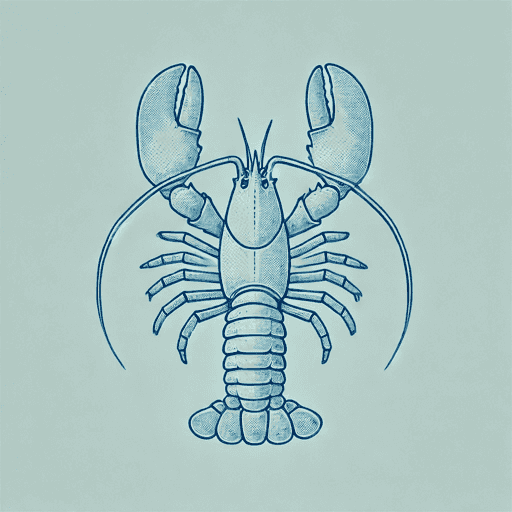
Touch Blue
50 pages • 1-hour read
Cynthia LordTouch Blue
A modern alternative to SparkNotes and CliffsNotes, SuperSummary offers high-quality Study Guides with detailed chapter summaries and analysis of major themes, characters, and more.
Important Quotes
“Across the water the fancy mainland houses with their big windows stare blank-eyed back at me. Funny to think we islanders are their ‘view.’ I stick out my tongue to give them something new to look at.”
(Chapter 1, Page 2)
In literature, personification is a form of figurative language that attributes human characteristics to nonhuman subjects. In this passage, Lord personifies the houses on the mainland by giving them the ability to “stare.” Through precise adjectives like “fancy” and “blank-eyed,” the diction establishes the socioeconomic divisions between the people who live on Bethsaida Island and their more affluent neighbors on the mainland, as well as Tess’s pride in her home and her unwillingness to leave the island.
“He’s probably never seen a seal pop his head up in the water, almost near enough to touch. Or watched a thunderstorm over the ocean, with miles and miles of lightning strikes flashing at once. And I’m extra excited to show Aaron how close it feels to flying when Dad guns the engine of our lobster boat and it skims, fast as a skipping stone, over a flat sea.”
(Chapter 1, Page 3)
Throughout the novel, Lord provides vivid imagery of the environment. By using literary techniques like the repetition in “miles and miles of lightning strikes,” Tess expresses love and awe toward the island’s natural wonders. The simile that describes the Brooks’s lobster boat as “fast as a skipping stone” conveys Tess’s pride in her father’s occupation as a fisherman, which is also her career goal. Tess’s eagerness to share these experiences with her foster sibling shows a desire to cultivate a found family, developing the theme of The Need for Connection and Belonging.
“I’ve never met a foster child before. But I’ve read books about them. There’s Gilly in The Great Gilly Hopkins, Bud in Bud, Not Buddy, and Anne Shirley in Anne of Green Gables. I hope Aaron’s the most like Anne: full of stories and eager to meet us. Of course, he won’t be exactly like Anne, because he’s not eleven years old. Or a girl. Or Canadian.”
(Chapter 1, Page 3)
This excerpt contains allusions to well-known narratives about foster children. The fragments at the end of the passage show the protagonist’s cognizance that Aaron shouldn’t be expected to be like the characters she names, suggesting that fiction may have created a certain image of foster children in the public imagination that doesn’t align with modern realities. The passage signals the author’s awareness of a literary tradition to which this book belongs, while also indicating that she intends to provide some modern updates. Touch Blue contrasts with the novels mentioned because the protagonist is the foster sibling rather than a foster child, offering a different perspective on the system.
“On the metal gangplank, the passengers’ footsteps boom like a thunderstorm. A wet breeze off the water raises goose bumps on my skin, and I rub my arms to warm them. The air smells, a mix of salt water, bait, pine trees, wet wood, and diesel fuel.”
(Chapter 2, Page 12)
This passage combines a simile and onomatopoeia in the verb phrase “boom like a thunderstorm” to convey the loud noise of footsteps on the gangplank as a crowd of passengers disembarks from the ferry. The excerpt also contains tactile imagery, such as “goose bumps,” and olfactory imagery, such as the mingled scents of “salt water, bait, pine trees, wet wood, and diesel fuel.” With language that appeals to multiple senses, the narrative illustrates Tess’s alertness in the moment she’s about to meet Aaron. This emphasizes the significance of this event to the protagonist and to the narrative as a whole.
“Standing on the road beside Aaron, I don’t tell him he hurt my feelings. I don’t ask why he doesn’t try even a little. I don’t point out that he has to live somewhere, and at least we want him. And I don’t admit the thing I’m most scared of. We’ve all made a big mistake.”
(Chapter 4, Page 34)
Anaphora refers to the repetition of a word or phrase at the beginning of consecutive phrases or sentences; in this passage, it manifests through the repetition of “I don’t.” This repetition underscores Tess’s efforts to show her new foster brother patience and understanding while making her frustration and worries clear. By pointing out the many things that she thinks but doesn’t say, Tess emphasizes the initial emotional distance between herself and Aaron. The tense and perspective also add to the passage’s sense of urgency; Tess describes why she is “scared” that her family has “made a big mistake” in her own words, and the present tense portrays the novel’s action as a series of unfolding events without a known outcome.
“Back in my room, I stare up at the ceiling. I hear his footsteps above me, pacing. When he stops, the silence is as lonely as one bird calling.”
(Chapter 5, Page 46)
The simile that describes the silence as “as lonely as one bird calling” accentuates the passage’s wistful mood. The figure of speech advances the theme of the need for connection and belonging by reflecting the loneliness that both Aaron and Tess feel and her desire to bridge the emotional distance between them. The empathy and awareness that Tess shows toward Aaron foreshadow their growing closeness as the novel continues.
“Leaning out over the rail, Aaron sets the lobster into a wave as gently as if he were made of glass. ‘Today’s your lucky day, little one.’”
(Chapter 8, Page 70)
By describing how Aaron returns the little lobster to the sea “as gently” as if the crustacean “were made of glass,” the narrative shows a side of Aaron that Tess hasn’t seen before. Aaron’s empathy toward animals in this passage foreshadows Tess’s decision to let him release the blue lobster, a key event in the novel’s resolution.
“The sound of our scrapers falls into rhythm together. I bite back the urge to keep chattering. The moment feels as fragile as a bubble—one prod too many and it’s likely to break.”
(Chapter 9, Page 77)
The diction in this passage, with words like “rhythm” and “together,” underscores the harmony between Tess and Aaron, while the simile describing the moment as “as fragile as a bubble” expresses her caution lest she accidentally spoil this unexpected closeness. The passage demonstrates that their bond is growing stronger, but they remain tentative around each other. Later in the story, Tess learns that Aaron helped her with her boat in part because he hopes to use the skiff to run away to the mainland, a revelation that makes her question the authenticity of this seemingly promising moment.
“People say it’s better to know the truth, but what if the ending’s a bad one? Is it still better to know? Or is it kinder to keep that string of hope dangling? To believe that maybe if you just wait long enough, everything could still end the way you want.”
(Chapter 10, Page 85)
At a few points in the novel, Lord employs the metaphor of a “string” to underscore how fragile hope can be. The choice of punctuation supports the passage’s meaning and mood: The series of question marks emphasizes Tess’s uncertainty and her reflective nature. Her questions apply both to the family of the unknown sailor and to her current anxieties about Aaron and the possibility of moving.
“On the nearby rocky edge of tiny Sheep Island, a group of seals sun themselves. Their huge round bodies are stretched out, warm and drowsy. They raise their heads, curious, as we go by. A few more seals swim in the water between the island and our boat, the sun flashing off their wet fur.”
(Chapter 10, Page 86)
Tactile imagery, such as “warm” and “wet,” makes the sunning seals seem close enough for Tess to touch. This proximity to nature is one of the things she loves most about her island home. However, even as the passage uses diction to create a calm tone with words like “drowsy,” there’s an undercurrent of unease because Tess is worried that she’ll have to leave her beloved island if Reverend Beal’s plan fails.
“Aaron starts a slow, bluesy piano melody. The low notes pound like waves rolling up and back on the rocks.”
(Chapter 11, Page 94)
The simile comparing the “low notes” that Aaron plays on the piano to “waves rolling up and back on the rocks” merges the boy’s love of music with Tess’s love of nature, underlining how the scene brings the two characters closer. Moments like this establish music as a motif representing the need for connection and belonging.
“You’re the emblems of—the land I looooove […] The home of the free and the brave! BAH-dah-DAH!”
(Chapter 12, Page 102)
Lord uses dashes, creative spelling, and the onomatopoeia “BAH-dah-DAH” to show how Aaron improvises on the traditional song. Exclamation points express the energetic way he plays and the joy music brings him. Just as Aaron’s musical skills shine when he adds his own creative twists, the boy thrives when he’s allowed to be himself rather than conform to others’ expectations.
“The long church supper tables are set up on the grass, covered with pies, cobblers, and slabs of watermelon on paper plates. The Ladies’ Aid Society went red, white, and blue wild this year—from the striped napkins on the table to the little flags stuck upright in the cupcakes to the balloon bouquet attached to the fire hydrant. There are buntings under every window and twisted streamers looped over the parish hall doorway.”
(Chapter 12, Page 103)
This description of the Fourth of July picnic combines details that appeal to the sense of taste, such as “pies, cobblers, and slabs of watermelon,” and visual imagery, such as “red, white, and blue,” to show the island’s preparations for the event. This festive imagery reinforces the event as one that includes the whole community and reflects Tess’s excitement for Aaron’s performance at the picnic. This buildup adds to the impact when his act ends in disaster, illustrating how finding belonging isn’t always a straightforward journey.
“Ahead of me, Aaron runs away down the road. His shoulders are hunched and his head dips forward, like he’s hurrying headlong into a storm, with his trumpet under his arm. I call after him, but he doesn’t look back—not once.”
(Chapter 12, Page 110)
Detailed descriptions of Aaron’s body language and the simile that describes him “like he’s hurrying headlong into a storm” convey the boy’s feelings of hurt and anger. The dash in the last sentence emphasizes how Tess feels shocked and left behind as a scene similar to Aaron’s first day on the island plays out, even though she thought that they had become significantly closer since then.
“All this time, I was hoping Aaron’d be a boy version of Anne of Green Gables, but Gilly Hopkins came instead: angry and tough and not wanting to need anyone.”
(Chapter 14, Page 118)
In this excerpt, Lord revisits literary allusions introduced earlier in the novel to show how Tess sees Aaron at this point in the story. Her choice of references offers insight into the protagonist’s concerns. At the end of The Great Gilly Hopkins, Gilly writes a letter to her biological mother that prompts her grandmother to take the girl away from the foster mother Gilly had come to love. This allusion demonstrates that Tess is now afraid of losing Aaron for the sake of the bond they have developed rather than because she doesn’t want to move.
“The water comes fast, circling my ankle before shrinking down the beach, rolling a clump of seaweed with it. A tiny white crab scuttles sideways on the wet sand, making footprints so light I can barely see them. He scurries past a fray of red-and-white rope, some kelp, a little green lobster band, and—? A button. It’s not much, but I want to give Aaron something. Before I reach down to pick up the button, I walk around it clockwise—once, twice, three times to take away any bad luck leftover from the previous owner. I go around one more time to put some good luck in.”
(Chapter 15, Page 121)
The visual imagery provided by the colorful descriptions of the “tiny white crab,” the “fray of red-and-white rope,” and “a little green lobster band” shows how attentive Tess is to the details of her surroundings. The passage also advances the theme of Superstition as an Attempt to Cope With Life’s Uncertainties. Aaron’s attempt to run away makes Tess feel powerless and afraid, and she attempts to regain a sense of control over the situation by performing a brief ritual meant to transform the button, which may be tainted with bad luck, into a source of good luck.
“Your son, Aaron, lives with my family on Bethsaida Island in Maine. The ‘lives with my family’ sounds like he’s renting a room here. But if I said he’s in my family, would she get mad since he’s her kid, too? I don’t think the right words have been invented for this situation yet.”
(Chapter 16, Page 126)
Tess’s careful diction aligns with the emotionally delicate task of writing to Aaron’s mother. The girl’s struggle to find the right verbiage, such as her dissatisfaction with the phrase “lives with my family,” draws attention to the complexities of human relationships and the limitations of language. It also highlights the emotional complexities of the situation through Tess’s attempts to navigate the web of relationships surrounding Aaron.
“I stare, frozen in place. Inside the trap’s a brilliant blue lobster! Blues are rare, and this one’s the most beautiful color I’ve ever seen: a gleaming, summer-sky blue.”
(Chapter 20, Page 151)
Lord expresses the rarity of Tess’s catch and her excitement through visual imagery, particularly “a gleaming, summer-sky blue.” Tess’s focus on the crustacean’s coloration emphasizes her investment in luck because she considers blue an auspicious color. As the narrative unfolds, the blue lobster evolves from being a manifestation of her superstition into a source of connection between herself and Aaron.
“‘Come on.’ As the applause dies down, Jenna pulls my sleeve toward the edge of the stage. ‘We’re done!’ My legs feel like they weigh a thousand pounds each. In all the times I imagined Aaron’s mother arriving at the talent show, I never imagined I’d feel afraid.”
(Chapter 23, Page 164)
Tess’s observation that her “legs feel like they weigh a thousand pounds each” is an example of hyperbole. This figure of speech emphasizes the sudden dread that weighs her down when Ms. Spinney arrives at the talent show and adds to the scene’s suspense.
“He plays as well as I’ve ever heard him, holding those ending notes long, longer, until it seems like they’ll never stop—then a snappy last note, and it’s over.”
(Chapter 23, Page 65)
Lord utilizes punctuation to express how the passage of time can feel subjective. Commas keep the sentence flowing just as Aaron’s song seems to float on and on, while the dash emphasizes its sudden stop. These authorial decisions convey how Tess and her fellow audience members are transported by Aaron’s song, contributing to the novel’s portrayal of music as a motif supporting the theme of the need for connection and belonging.
“Overhead, a flock of Canada geese flies under the graying clouds. A damp breeze passes, stirring the grass. I cuddle deeper into Dad’s side. His shirt smells familiar and snug, of sea and soap and another smell with no name, just a ‘him’ smell.”
(Chapter 24, Page 74)
The imagery in this passage appeals to sight with mentions of “graying clouds,” the sense of touch with the “damp breeze,” and smell with “sea and soap.” These sensory details illustrate the narrator’s close connections to nature and her father and the feelings of comfort and safety that both offer her. In particular, the “familiar and snug” smell of her father’s shirt restores a sense of calm after the complex emotions and fraught family dynamics of the exchange between Aaron and his biological mother.
“The music is strange and brave and wonderful. I don’t know the words or even what the song is called, but I don’t care. It’s beautiful, and that’s enough.”
(Chapter 24, Page 174)
In literature, polysyndeton refers to the stylistic addition of coordinating conjunctions where none are grammatically necessary. The repetition of the coordinating conjunction “and” in the phrase “strange and brave and wonderful” emphasizes Tess’s admiration for Aaron and the music he plays during his meeting with his biological mother. The passage speaks to the boy’s resilience and contributes to music’s significance in the novel as a point of connection.
“We’re all made up of our bits and pieces. People who love us, places we’ve lived, and the biggest part of all—who we are inside. I don’t know if we’ve done enough to keep our school open or for how long, but I’m willing to believe that Dad’s right about another thing, too. We’ll all go on, whatever comes.”
(Chapter 25, Page 175)
By making the second sentence a fragment, the author emphasizes the point that people are composed of “bits and pieces.” The passage exhibits a calmer tone that reflects Tess’s maturation through the novel’s events and her certainty that she and her loved ones will “all go on, whatever comes.”
“‘No, don’t stay for that reason.’ The bucket handle still cuts into my fingers, and I shift hands. ‘I don’t want to move, but I could. Stay because you want to be here. Stay because we would miss you. And stay because you can belong in more than one place, and one of your places is with us.’”
(Chapter 25, Page 179)
The repetition of the verb “stay” uses anaphora to emphasize Tess’s hope that Aaron will remain on the island because he feels a sense of belonging there, with her family. Her understanding that people “can belong in more than one place” contrasts with her initial conviction that she could never be happy away from the island and adds nuance to the theme of the need for connection and belonging.
“Running my fingers around the sea glass’s smooth-worn edges one last time, I feel queasy, like I’m about to jump off a cliff without knowing what’s waiting at the bottom. I hold my hand over the rail and drop each lucky thing into the ocean so quickly there’s barely a splash.”
(Chapter 26, Page 183)
The simile comparing the “queasy” feeling that Tess experiences as she prepares to let go of her lucky charms to being “about to jump off a cliff without knowing what’s waiting at the bottom” underscores how she has relied on superstition. Her uncertainty and the fact that she lets them go anyway emphasize her courage in embracing life’s uncertainties. By throwing the lucky charms into the sea, Tess demonstrates her newfound self-efficacy, and the theme of superstition, her character arc, and the novel’s resolution all intersect in this moment.

Unlock every key quote and its meaning
Get 25 quotes with page numbers and clear analysis to help you reference, write, and discuss with confidence.
- Cite quotes accurately with exact page numbers
- Understand what each quote really means
- Strengthen your analysis in essays or discussions