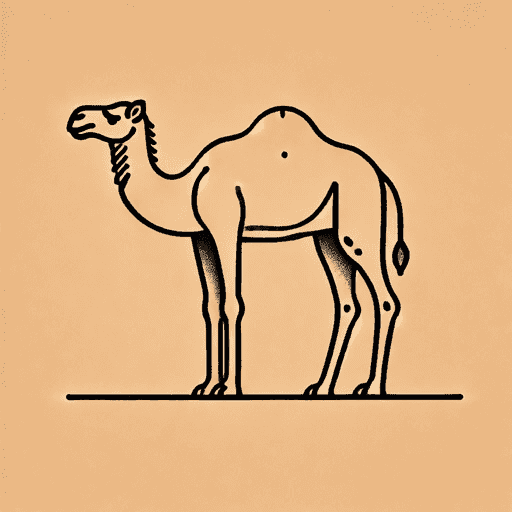
Tracks: A Woman's Solo Trek Across 1700 Miles of Australian Outback
50 pages • 1-hour read
Robyn DavidsonTracks: A Woman's Solo Trek Across 1700 Miles of Australian Outback
A modern alternative to SparkNotes and CliffsNotes, SuperSummary offers high-quality Study Guides with detailed chapter summaries and analysis of major themes, characters, and more.
Part 2Chapter Summaries & Analyses
Content Warning: This section of the guide includes discussion of racism, mental illness, animal cruelty and death.
Part 2: “Shedding Burdens”
Part 2, Chapter 6 Summary
Davidson admits that she doesn’t remember much from her first days in the desert alone, but describes her experiences as best she can. She had learned a lot about tracks and tracking before the trip. Tracks are “marks made across the landscape” by any variety of vehicles (111). While some are on the map, others aren’t; others still lead nowhere at all.
Davidson chose a track and began her trek. She felt positive. She studied the beautiful landscape and mused on all she’d learned about the native plants and animals. After walking 20 miles, she set up camp. Over the following days, she fell into a routine. She had an alarm clock and kept to a specific schedule. Then one day, she got lost. She tried calming herself down and focusing on her surroundings. She worried about the camels, an anxiety that never stopped.
Finally, Davidson found her way and reached Areyonga, a missionary settlement. The people weren’t racist against Aborigines, which comforted Davidson. She spent a few days here, grateful for the Pitjantjara people’s and the white missionaries’ help.
Davidson tries to describe the landscapes she encountered on her next leg but admits it’s difficult to capture this terrain in words. As she continued walking, Davidson got lost again. She was overcome by anxiety and started shaking so badly that she had to lie down. She also got upset with Bub and beat him. She chastised herself for being like Kurt. When she finally calmed down, she found her way and made it to Tempe. In retrospect, this experience taught Davidson about survival. She also realized she needed to be less wedded to a schedule. She now knows that what she feared was chaos.
Part 2, Chapter 7 Summary
Davidson left Tempe and headed toward Ayers Rock. It would take her about two weeks, and she’d meet Rick there. Although he’d annoyed her before, she was looking forward to seeing him again. As the days passed, Davidson felt unchanged. She’d thought that being alone in the desert would remake her but she felt no different. Then she reached Ayers Rock. She was stunned by the site. Even the irritating tourists couldn’t dampen her joy.
Davidson explains the significance of Ayers Rock to the Aborigines. It is “an extremely important site in their mythic culture” (134), originating from what they call dream-time (an era before humans, where gods, spirits, animals, and plants lived in communion).
Davidson met up with Rick at Ayers Rock. He had a bubbly energy Davidson couldn’t understand. He then led her into his caravan, where Jenny was waiting. He had wanted to surprise Davidson by bringing her along. Davidson loved Jenny but felt annoyed. She tried hiding her irritation but there was immediate tension between her and her friend. Throughout their time at Ayers Rock, Davidson and Jenny directed their annoyance at Rick. It was hard for Davidson to say goodbye to Jenny.
Davidson and Rick headed to the Olgas, another series of giant rocks. Davidson was overcome by despair along the 20-mile walk. She was irritated by Rick’s presence. She wanted to be alone and felt that her expectations for the trip had been spoiled. Rick was also mopey, which enraged Davidson. Then one day, he disappeared completely. Terrified, she spent hours searching for him, only to discover that he had been sitting in his caravan reading his book. Then it started to pour. The weather only worsened Davidson’s mood. The whole trip seemed pointless and she loathed herself.
Finally, Davidson decided to make things work with Rick. She insisted that they talk more openly about their dynamic. Either they made amends or she’d have to send Rick away. Rick finally gave in and opened up. Davidson then made the mistake of sleeping with Rick. She says it was a bad choice, but admits that their relationship did somewhat improve in the days following.
They encountered other obstacles as well. The camels got hurt and they struggled to communicate with the Aborigines. These latter issues were aggravated by Rick’s disregard for their privacy. He couldn’t understand why Davidson didn’t think he should photograph them. Another day, they ran into several wild camel bulls. They had to shoot them to protect Zelly, Dookie, and Bub.
At their next stop, Davidson felt better. A group of Pitjantjara women invited her to dance with them. She finally felt welcomed into this community and appreciated their generosity. However, she realized after the dance that the women wanted money. Ashamed, she had nothing but a few coins to give them. Upon leaving, she felt like a failure.
Part 2, Chapter 8 Summary
Davidson headed out alone again. Tired and thirsty, she was overcome by fear when she ran into more wild bulls. Her gun jammed, but the bulls finally left. In the days following, she felt increasingly disassociated from reality. She lost track of time and couldn’t keep track of her schedule. Three voices battled for authority in her head. They either told her to go on or told her to quit. Finally, Davidson found water and got some sleep. In the morning, her despair had dissipated. She reveled in the beautiful landscape. At the end of the day, she ran into a group of Aborigines who welcomed her to their camp that night. In the morning, a man named Eddie agreed to accompany her on the next leg of her journey.
Part 2 Analysis
In the opening chapters of Part 2, Davidson’s early ventures into the desert alone build on the memoir’s explorations of the Interplay Between Solitude and Self-Discovery. Because Davidson has been planning the trip for so long, she has specific expectations for how the trip will go and how it will impact her interior world. When she first parts ways with Rick and her friends, she’s overcome with “a feeling of release; a sustained, buoyant confidence” that ushers her along her first solo ventures (111). However, when her elation in her solitude fades, she finds it “frustrating, and occasionally downright terrifying” to follow the tracks she’s chosen (112). She gets lost repeatedly, is overcome by anxiety, lashes out at her camels, dips into despair, and questions herself constantly. Davidson highlights the way her solitude in the desert creates different challenges than she faced in Alice. In the desert, she has no one to temper her anger, fear, frustration, or depression. As a result, competing voices start to fight for prominence in Davidson’s psyche. On the one hand, she wants to give up and believes that she’s a failure. On the other hand, she knows that if she gets rest, focuses, remains calm, and loosens her mental hold on her schedule she can find meaning again. These complex aspects of Davidson’s internal experience affect a vulnerable mood and illustrate the intense psychological aspects of being on one’s own in an unfamiliar setting for an extended period.
The longer she is alone, Davidson starts to encounter messier aspects of her psyche, compelling her to acknowledge these more fraught traits and finally grapple with them. Being on her own forces her to summon new sorts of energy and strength so that she can stay alive, Finding Empowerment Via Independence and Courage. For example, her reflections on her experience of getting lost in Chapter 6 emphasize the ways each challenge tests her physically and emotionally:
I learnt to conserve energy by allowing at least part of myself to believe I could cope with any emergency. And I realized that this trip was not a game. There is nothing so real as having to think about survival. It strips you of airy-fairy notions. Believing in omens and fate is all right as long as you know exactly what you are doing. I was becoming very careful and I was coming right back down to earth, where the desert was larger than I could comprehend (126).
Here, Davidson pairs a reflective tone with a declarative voice, relaying her lessons from the challenges on the trip and asserting their impact on her. Each obstacle she faces forces her to engage with her surroundings and herself in new ways—a dynamic reflected in the context of Davidson’s interpersonal conflicts as well. When she’s with Rick, meeting up with Jenny, or communicating with Aborigines, she has to be direct, humble, respectful, or sacrificial, depending on the circumstances. These interactions test her strength in new ways but also ask her to balance her independent spirit with her need for help from others.
Davidson’s early days in the desert establish her thematic examination of the Relationship Between Humans and Nature—one of her primary goals for the journey. The longer Davidson is in the bush alone, the more she appreciates and learns from the land. The way she describes her environs enacts her growing love, appreciation, and respect for the natural world. For example, when Davidson reaches Ayers Rock, she sits “on the first sandhill watching the gathering evening changing the bold harsh daylight colors to luminous pastels, then deeper to the blues and purples of peacock feathers” (134). The vivid color imagery and figurative language she uses to translate this moment enact Davidson’s connection with her surroundings. Immersed in the natural world, she gradually learns to let these sights work on her spirit.

Unlock all 50 pages of this Study Guide
Get in-depth, chapter-by-chapter summaries and analysis from our literary experts.
- Grasp challenging concepts with clear, comprehensive explanations
- Revisit key plot points and ideas without rereading the book
- Share impressive insights in classes and book clubs