Traveling through the Dark
18 pages • 36-minute read
William StaffordTraveling through the Dark
A modern alternative to SparkNotes and CliffsNotes, SuperSummary offers high-quality Study Guides with detailed chapter summaries and analysis of major themes, characters, and more.
Background
Literary Context: Environmentalism and Transcendentalist Poetry
In his over 40 years of writing poetry, William Stafford touched on many of his era’s most pressing issues, including racism and the battle for civil rights, the Vietnam War, the nuclear arms race, the emergence of the space age, feminism, and the long-term impact of America’s fascination with technology. Yet few contemporary issues more inspired Stafford than environmentalism, with its urgent warnings about humanity’s ineffectual stewardship of nature. Stafford grew up viewing nature as a teacher and a moral guide; later, he was inspired by his large-scale government conservation work during the Vietnam War, and then by his explorations of the Pacific Northwest while on the faculty of Lewis & Clark College. Confirming Stafford’s respect for the integrity and beauty of nature, “Traveling Through the Dark” is part of the burgeoning campaign among writers in the early 1960s to speak in defense of nature.
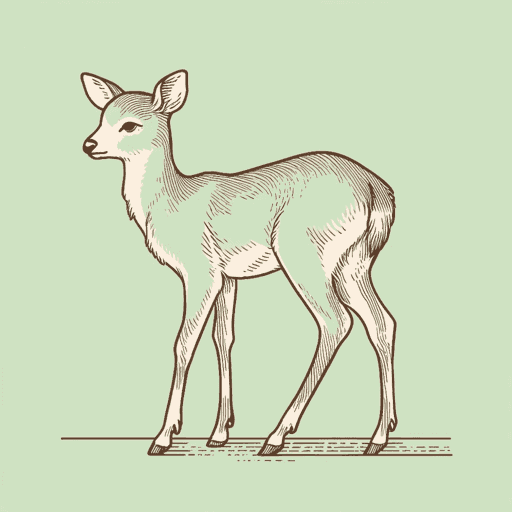
Stafford was also drawing on ideas from the 19th century. “Traveling Through the Dark” channels Walt Whitman, a literary debt Stafford readily acknowledged. A Transcendentalist poet whose writing featured his spiritual view of nature and popularized free verse, Whitman is regarded as one of the most influential writers in the Western canon. Stafford’s poem touches on Transcendentalist themes. The speaker’s encounter with the dead deer quickly becomes more than a practical decision to keep backcountry roads clear of dead animals, as the speaker is briefly overcome by the sublime gravity of the moment: the grandeur of the wilderness and the doomed fawn. Nature comes alive as the speaker feels it watching to see how he responds to the dilemma—a dilemma that encapsulates humanity’s unthinking destruction of the world around them despite being inseparable parts of the same cosmic dynamic.
In the end, however, the poem’s Transcendentalism gives way to unblinking realism, moving away from Whitman’s radiant optimism. The speaker pushes the doe into the canyon’s blackness, helpless to do anything else.
Biographical Context: The Influence of Ruby Stafford
In copious interviews (Stafford was widely regarded as one of the most amiable interviewees among contemporary poets) and in his published essays, Stafford readily acknowledged his many literary debts. He attributed his sense of the extraordinary gift of the ordinary world to E. E. Cummings, his depictions of the invigorating spiritual energy of the natural world to Walt Whitman, his interest in the relevance of the Christian God in a contemporary techno-world to Emily Dickinson, and his learning of ironic parable-lessons from the natural world to Robert Frost.
But when asked about his signature poetic style—the friendly, conversational, and accessible voice that marks his poetry, whatever its subject or however dark its themes—Stafford pointed out that his greatest influence was his mother, Ruby Stafford. Although she was not a published poet and, by Stafford’s account, a modest reader, Ruby had a gift for talking in a way that invited listeners in, rather than theatrically performing for them. From the rhythms of her happy kitchen talks with neighbors and family, Stafford learned how to create his distinctive free verse that seems be to chatting with the reader, by combining unforced vowel and consonant combinations with unexpected pregnant pauses to create an emotional tone that elevates the topic and gives it musicality and gravitas.

Unlock all 18 pages of this Study Guide
Get in-depth, chapter-by-chapter summaries and analysis from our literary experts.
- Grasp challenging concepts with clear, comprehensive explanations
- Revisit key plot points and ideas without rereading the book
- Share impressive insights in classes and book clubs