Upstream: Selected Essays
43 pages • 1-hour read
Mary OliverUpstream: Selected Essays
A modern alternative to SparkNotes and CliffsNotes, SuperSummary offers high-quality Study Guides with detailed chapter summaries and analysis of major themes, characters, and more.
Section 2Chapter Summaries & Analyses
Section 2, Essay 5 Summary: “Blue Pastures”
Oliver describes spending the day fishing with her partner, Molly Malone Cook. Although they repeatedly pulled clean hooks from the water, they never caught a fish. They learned later that they were using the wrong bait and fishing in the wrong spot. However, Oliver and Cook were happy that they did not catch anything. Oliver uses fishing to illustrate the dichotomous pull between appetite and empathy.
Wildlife often exhibits this duality. Oliver describes the many types of fish in the waters near her home: Tuna, flounder, blue fish, striped bass, etc. The poet both craves fish to eat and feels empathy for them. When someone brought Oliver a black duck that had been chased by dogs, she nursed it back to health. A neighborhood cat came through her window, but instead of attacking the duck, it simply walked past. When Oliver released the duck into the water, she saw a shark coming toward the shore. However, the shark did not attack the duck. Instead, a few young men who were standing nearby began to run toward the shark with sticks until Oliver admonished them and sent them away.
She describes nature as a balance between taking and giving. She recalls cleaning a blue fish that a friend gave her, only to discover live sand eels squirming in its stomach. Oliver carried the eels to the water and released them. The moment reminded her of the importance of attention: “Pieces of sand eels fell out, and among them maybe a half dozen were in tact, squirming, unhurt in fact. So quickly, without a moment’s warning, does the miraculous swerve and point to us, demanding that we be its willing servant” (40).
Section 2, Essay 6 Summary: “The Ponds”
In this essay, Oliver describes in great detail the ponds around her home. In the center of Oliver’s landscape is Beech Forest, a wooded area on a sandy peninsula where beeches grow. Although some of them do not have names, she gives them titles. They are occupied by pickerel and frogs and surrounded by cattails. Oliver describes the wildlife that inhabits the ponds as part of a large calendar. Specific faces—like the snapping turtle in April—show up at specific times of year. Great blue herons, green herons, and egrets visit the ponds at different times.
Some Canada geese pass through, while others stay and nest. One family of goslings became familiar with Oliver and climbed over her as she lay on the shore. Despite the way the animals mark the passage of time, Oliver gets the sense that when she is in nature she has escaped the trappings of time. At the end of the essay, a fox appears in summer. It notices the geese, but lazily lies down in the leaves and sleeps.
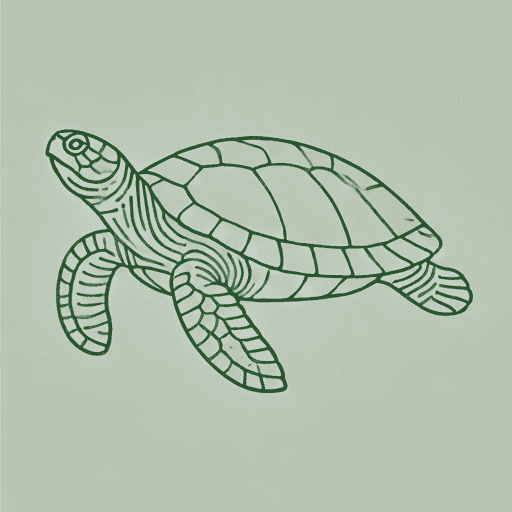
Section 2, Essay 7 Summary: “Sister Turtle”
Oliver dives into how appetite shapes experience. Although Oliver eats little meat, at times she feels driven to consume it. This appetite is a part of life, natural and inevitable. To ignore it is to ignore an important part of the lived experience.
Turtles exhibit the relationship between nature and appetite. Like the animals in the previous essay, turtles live according to a calendar. When female turtles leave the pond in summer, they search for a place to dig their nests and deposit their eggs. Oliver is always happy to see the turtles but sad too. She knows her presence may disturb them from completing their task. When turtles do not lay their eggs, they absorb them back into their bodies.
Once, while walking along the sand with her two dogs on leashes, Oliver noticed the winding tracks of a female turtle looking for a place to nest. She found the turtle, who watched Oliver carefully to determine whether the poet was a threat. Oliver kept walking, leaving the snapping turtle to finish her business.
Despite her appreciation of, and empathy for, wildlife, Oliver feels the pull of her own appetite. She recalls seeing a red-tailed hawk attack a pheasant, leaving it to die on the ground with only a small wound. Oliver quickly thought that she should make the pheasant her meal before another part of herself remembered the red-tailed hawk. To do creative work requires awareness, even awareness of one’s own appetites:
For it is precisely how I feel, who have inherited not measurable wealth but, as we all do who care for it, that immeasurable fund of thoughts and ideas, from writers and thinkers long gone into the ground—and, inseparable from those wisdoms because demanded by them, the responsibility to live thoughtfully and intelligently. To enjoy, to question—never to assume or trample […] to observe with passion, to think with patience, to live always caringly (57).
Later that day, after watching the turtle lay her eggs, Oliver returned to the spot. She dug into the sand and removed half the eggs before carefully recovering those she left behind. She carried them home carefully and scrambled them. She ate them respectfully, remembering that there was no distinction between herself and the turtle, the leaves or the stars.
Section 2 Analysis
In Section 2, Mary Oliver refines a worldview shaped by intentional divergence, profound kinship with the nonhuman world, and an ethic of attention rooted in responsibility. Her reflections on fishing, ponds, turtles, and the interplay of appetite and empathy reveal a writer who sees the natural world as an active teacher.
One of these lessons is The Discipline of Being Different. Oliver’s sense of difference is never merely personal eccentricity; it is a disciplined choice to orient herself against the grain of cultural norms that prioritize dominance and consumption. This discipline becomes clear in the essay recounting a day spent fishing with her partner, Molly Malone Cook. The two women discover they have been using the wrong bait in the wrong place, yet the absence of success brings them relief rather than disappointment. They feel no frustration about going home empty-handed; instead, the lack of a catch confirms a preference for observing rather than taking. This decision not to desire what the activity traditionally promises reveals Oliver’s deeper impulse to resist forms of appetite that diminish her sense of connection.
This commitment surfaces again when she watches young men rush toward a shark with sticks. The scene contrasts sharply with the restraint she herself regularly practices. Instead of treating the appearance of a large predator as an invitation to assert control, she sends the men away and restores the quiet tension of the moment. The shark, like the duck she rescued earlier, becomes a figure calling her away from aggressive impulses that many might take for granted. Oliver’s difference lies in her refusal to respond with fear or dominance; she continually chooses the posture that protects rather than conquers. Even in small actions—such as releasing sand eels she finds inside a caught fish—she refuses the familiar path. Where others might see bait, she sees life still capable of wriggling back into the water.
This cultivated difference is shaped by Oliver’s sense of The Kinship of All Wild Things. The animals that populate these essays—fish, ducks, turtles, frogs, herons, geese—are neighbors whose movements form the calendar by which she measures the year. In “The Ponds,” the landscape around Beech Forest becomes a community defined by seasonal rhythms: Pickerel rising in spring, snapping turtles surfacing in April, herons appearing in their appointed months. A family of goslings climbs over her as though she is simply another element of the shoreline. The passage of time here is not chronological but creaturely. Oliver experiences this world as one in which she is embedded rather than one she oversees. Her kinship is not romanticized; it is observational and embodied, marked by recognition that each animal plays a role in a system larger than individual lives.
The turtles in “Sister Turtle” expand this sense of kinship by inviting Oliver into the cycle of appetite and reproduction that governs their lives. She watches female turtles leave the pond to search for nesting grounds, aware that her presence may disrupt the fragile timing of their labor. She experiences their annual emergence with mixed emotion—delight at encountering them, anxiety about influencing their success. Even when she later returns to the nest and removes half the eggs to eat them, she does so with both respect and sorrow. The act is not taken lightly, as it reinforces her belief that humans are not separate from the cycles of taking and giving that govern animal life. The earth feeds its creatures, and creatures feed the earth, in a web of relationship she sees herself belonging to without exemption.
At the center of these kinship scenes lies Attention as Responsible Practice, the activity that allows her to inhabit difference and kinship responsibly. Attention, for Oliver, is both alertness and service—a readiness to perceive the miraculous in moments that appear mundane. When she discovers the live sand eels inside the blue fish’s stomach, it is her attentiveness that enables her to notice that several are intact and still moving. Without that moment of seeing, the small lives would simply have been discarded. Instead, attention becomes a prompt to act, an immediate reminder that the world continually offers chances to respond with care. This kind of looking demands patience, stillness, and a willingness to let one’s own needs recede long enough to perceive the needs of others.
In “The Ponds,” attention suspends Oliver’s experience of time. Watching the familiar creatures that return each season, she finds herself lifted out of the linear progression of hours and instead placed within the cyclical time of the landscape. The fox that appears in summer and lies down to sleep despite the nearby geese demonstrates how attention opens a space where wildness is gently coexistent. The fox is neither threat nor spectacle; it is simply another presence in a shared world. Such perceptions arise only when Oliver slows herself to match the pace of the place she occupies.
Taken together, these essays reveal a vision of life founded on the interdependence of difference, kinship, and attention. Oliver’s willingness to resist cultural norms, her devotion to the creatures who share her landscape, and her rigorous practice of seeing form a cohesive ethic. Through the wild world, she learns not only how to live but how to live responsibly—aware of her appetites, attuned to the lives around her, and willing to answer the world’s continual invitations with humility and care.

Unlock all 43 pages of this Study Guide
Get in-depth, chapter-by-chapter summaries and analysis from our literary experts.
- Grasp challenging concepts with clear, comprehensive explanations
- Revisit key plot points and ideas without rereading the book
- Share impressive insights in classes and book clubs